


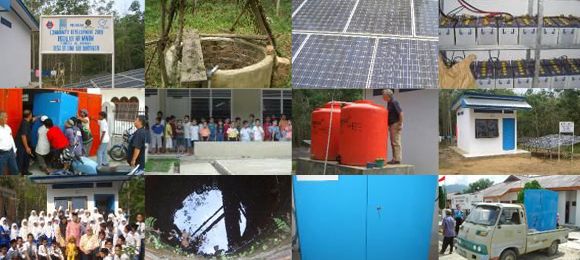







Removing Arsenic From Drinking Water In Small Community Systems
Arsenic in groundwater is a serious public health concern for rural communities, villages, schools, and small utility networks. It is naturally present in certain geological formations and can enter wells as water moves through arsenic-bearing minerals. Industrial activity, mining, and agricultural conditions may also contribute to contamination. Learn more about Case Study A Chemical Free Solution For Arsenic In Bangladesh Groundwater.
Because arsenic is tasteless, odorless, and invisible at typical concentrations, unsafe water can appear perfectly clean. Long-term exposure is associated with skin changes, cardiovascular effects, and an increased risk of several cancers. Reliable removal therefore begins with regular testing and continues with a treatment system designed for the local water chemistry.
Small community systems need a practical balance between treatment performance, affordability, maintenance, and resilience. Chemical-free filtration can be a valuable option where operators want to limit chemical handling, concentrate disposal, and complex infrastructure, but the process must be selected and monitored carefully.
Understanding Arsenic In Groundwater
Arsenic generally occurs in two main forms: arsenite, or As(III), and arsenate, or As(V). Arsenite is often more difficult to remove through adsorption because it is less strongly attracted to many common filter media. Arsenate usually responds better to iron-based adsorption and coagulation processes. The balance between these forms depends on pH, oxygen conditions, redox potential, iron levels, and the geological source of the water.
A treatment design should also account for competing contaminants. Phosphate, silicate, organic matter, manganese, iron, hydrogen sulfide, and suspended solids may affect adsorption capacity or cause premature fouling. Water temperature and seasonal changes can influence flow, reaction time, and microbial activity.
Some treatment technologies use oxidation to convert arsenite into arsenate before filtration. Aeration, catalytic media, or other oxidation methods may be appropriate depending on the raw water. The science behind catalytic filtration also helps explain how catalytic surfaces can support oxidation reactions without requiring continuous chemical dosing, although arsenic treatment still requires site-specific validation.
Testing Before Selecting Equipment
A single arsenic result is not enough to design a dependable small water system. Laboratory analysis should identify total arsenic and, where possible, distinguish arsenite from arsenate. Testing should also cover pH, alkalinity, dissolved iron, manganese, turbidity, hardness, phosphate, silicate, sulfate, nitrate, hydrogen sulfide, and organic carbon.
Samples should represent the water that will actually enter the treatment plant. A properly collected raw-water sample is essential, while treated-water samples show whether the system is meeting its performance objective. If a well experiences seasonal changes, testing during different operating conditions can reveal fluctuations that a one-time sample would miss.
The treatment target should be based on applicable drinking-water regulations and the community’s risk-management policy. Operators should establish an internal action level below the legal limit when practical, leaving room for normal variation. Sampling frequency should increase after installation, media replacement, source changes, or unusual pressure and flow events.
Selecting A Suitable Treatment Process
Adsorptive filtration is often attractive for small communities because it can operate continuously with relatively simple equipment. Iron-based media, activated alumina, titanium-based materials, and other specialized adsorbents can capture arsenic as water passes through a pressurized vessel or gravity-fed filter. The right medium depends on arsenic species, pH, competing ions, and required service life.
Oxidation followed by filtration may improve removal where arsenite is prevalent. Natural aeration, oxygen injection, or catalytic filtration can convert dissolved compounds into forms that are easier to retain. When iron is already present in the groundwater, oxidation may create iron hydroxide particles that help capture arsenic, though the resulting solids must be managed and tested.
Membrane processes, ion exchange, and coagulation-filtration can also provide effective treatment. They may require greater energy use, skilled operation, pretreatment, or management of a concentrated waste stream. For a village or small municipal plant, a robust adsorptive or oxidation-filtration system may be easier to operate, but no technology should be selected without pilot testing or validated performance data.
A chemical-free approach does not mean maintenance-free operation. Filters still require backwashing, flow control, pressure monitoring, media inspection, and periodic laboratory verification. If arsenic accumulates on spent media, disposal or regeneration must follow local requirements. The absence of added chemicals can simplify logistics, but it does not remove the need for responsible residual management.
Comparing Treatment Options
The best solution depends on raw-water chemistry, daily demand, operator capacity, available space, and the destination of backwash water. A compact system for a school or community building may have different requirements from a village network with several wells and elevated storage tanks.
| Treatment approach | Main strength | Key limitation | Suitable application |
|---|---|---|---|
| Iron-based adsorption | Effective for many arsenate-rich waters; simple continuous operation | Media life depends on pH and competing contaminants | Small community wells with stable chemistry |
| Activated alumina | Established option for arsenic adsorption | Sensitive to pH and may require careful regeneration or replacement | Controlled systems with trained operators |
| Oxidation and filtration | Improves removal of arsenite and can address iron or manganese | Requires correct oxidation conditions and solids management | Groundwater with mixed arsenic species |
| Membrane treatment | High removal potential and broad contaminant control | Higher energy use and concentrate disposal needs | Sites requiring advanced purification |
| Coagulation and filtration | Can treat larger flows and multiple contaminants | Chemical storage, dosing, and sludge handling are needed | Centralized systems with experienced staff |
| Ion exchange | Continuous operation and compact equipment | Competing ions can reduce capacity; brine waste may result | Water with suitable chemistry and waste handling |
A pilot unit can reveal pressure loss, breakthrough timing, backwash demand, and actual arsenic removal under local conditions. Pilot testing is especially important when water contains high silicate, phosphate, iron, or manganese, since these substances may reduce media capacity or change filter behavior.
Designing For Reliable Daily Operation
A small treatment plant should be designed around the community’s peak flow, average daily volume, storage capacity, and future demand. Oversized equipment may increase capital cost and reduce the flow conditions needed for effective treatment. Undersized equipment can cause short contact times, frequent backwashing, and early arsenic breakthrough.
Parallel filter vessels provide operational flexibility. One vessel can remain in service while another is being backwashed, inspected, or refilled. Automatic valves may reduce operator workload, but manual controls and clear operating instructions are valuable when power, internet connectivity, or technical support is limited.
Pretreatment is often decisive. Sediment removal protects valves and media, while iron and manganese management can reduce fouling. Flow restrictors, pressure gauges, sample ports, and treated-water bypass protection help operators identify problems before contaminated water reaches consumers.
Monitoring should include routine arsenic tests and operational indicators such as flow rate, pressure drop, pH, turbidity, and backwash frequency. A breakthrough schedule based on actual laboratory results is more reliable than replacing media on a fixed calendar alone. Operators should also keep records of raw-water quality, treated-water results, service hours, and maintenance activities.
Managing Residuals And Community Safety
Arsenic removed from water does not disappear; it is concentrated in spent media, filter solids, or membrane concentrate. The residual stream should be characterized before disposal. Dumping arsenic-bearing material onto open ground or into surface water can create a new environmental hazard and may contaminate soil or shallow groundwater.
Where a system uses iron-rich solids formed during oxidation, the solids may retain arsenic strongly, but this assumption must be verified. Local regulations may define whether spent media can be transported, stored, regenerated, or disposed of as controlled waste. A treatment supplier should provide clear guidance on media handling and replacement.
Public communication also matters. Residents should understand why testing is needed, what the treatment process removes, and how operators confirm that water remains safe. Clear notices, maintenance records, and transparent reporting can build confidence, particularly when a community has relied on the same well for many years.
Planning A Sustainable Community System
Sustainability includes more than low electricity use. A suitable system should minimize chemical deliveries, reduce avoidable wastewater, use durable components, and remain serviceable with locally available skills. Solar power, gravity flow, efficient pumps, and water storage can improve resilience where grid electricity is unreliable.
Designers should consider the entire water chain, from the wellhead to the household tap. Leaking distribution pipes, untreated bypass lines, intermittent pressure, and poorly maintained storage tanks can undermine an otherwise effective arsenic removal process. Treatment performance must be protected through hygienic storage and distribution.
Lessons from larger applications can inform smaller installations. For example, the principles described in this sustainable livestock water system show how water demand, reliability, monitoring, and resource efficiency can be considered together. The scale may differ, but the need for dependable operation remains the same.
Practical design priorities include:
- Confirm arsenic concentration, chemical form, and related water-quality parameters through accredited laboratory testing.
- Select media and pretreatment according to actual groundwater chemistry rather than arsenic concentration alone.
- Include sample ports before and after each major treatment stage.
- Plan for backwash water, spent media, and any arsenic-bearing residuals before commissioning.
- Train local operators in flow control, sampling, pressure monitoring, and emergency response.
A documented operating plan should define who tests the water, how often results are reviewed, when media is replaced, and what happens if arsenic exceeds the action level. Backup water storage or an alternate source can provide protection during maintenance or unexpected treatment failure.
For communities evaluating a chemical-free or low-maintenance solution, a site assessment is the logical next step. Swiss Cleanwater Group can help connect water analysis, treatment selection, system sizing, and long-term operation into a plan suited to local conditions. Contact the company to discuss the raw-water results, community demand, and practical requirements for a reliable drinking-water system.
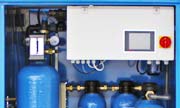
SCM 24
|
|
Cleans 24.000 liters per day
|
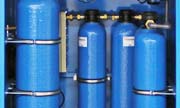
SCM 60
|
|
Cleans 60.000 liters per day
|
Video: How it works

The SCG Advantage
Our market-leading, water cleaning solutions have many advantages. To read more click the items below:
No Chemicals
Our machines and technology does not use any chemicals, at all.
Read more...
No Waste Water
Our machines do not waste any water. Yield = 100%.
Read more...
Low energy use
Uses 50 times less energy than a Reverse Osmosis Machine.
Read more...
Low ownership cost
Lower maintenance and operation costs due to our technology.
Read more...
Easy to install
Simple "plug and play" installation makes for easy deployment.
Read more...
Extremely compact
A compact system, contained in an easy to transport cabinet.
Read more...
Outperforms R.O.
SCG technologies outperform Reverse Osmosis systems.
Read more...
Faster ROI
Get a faster Return on Investment with our systems.
Read more...
Latest News
Latest Blog Posts
| Chemicals in water treatment? |
| Water storage - Whats best for keeping water clean and drinkable? |
| Case: Disaster Management Water Treatment |
Contact SCG
891 Showroom Place
Suite 101
Chula Vista, CA, 91914
Phone: +1 619-878-2730
Contact us by email