









The Science Behind Catalytic Filtration for Removing Hydrogen Sulfide
Hydrogen sulfide is a dissolved gas that can make groundwater smell like rotten eggs, stain plumbing fixtures, corrode equipment, and reduce the acceptability of drinking water. It may occur naturally in deep wells, wetlands, sediment-rich aquifers, and areas where organic matter decomposes without oxygen. Even at low concentrations, its odor can become a serious operational and quality concern.
Catalytic filtration provides a chemical-free or low-chemical approach for controlling this contaminant. The process uses a specially prepared filter medium to accelerate the oxidation of hydrogen sulfide into solid sulfur or sulfate, which can then be captured or carried away during backwashing. Its performance depends on water chemistry, contact time, dissolved oxygen, and correct system design.
Understanding the underlying reactions helps water operators select suitable media, size treatment vessels, and avoid premature media exhaustion. It also clarifies why catalytic filtration is different from ordinary sediment filtration or simple activated carbon treatment.
Understanding Hydrogen Sulfide In Water
Hydrogen sulfide, written chemically as H₂S, is produced when sulfate-reducing bacteria use sulfate in oxygen-poor environments. The gas may enter a well from geological formations or form inside stagnant plumbing, storage tanks, and distribution systems. Its characteristic odor is often detectable before the concentration becomes a direct health concern, although high levels can be hazardous in enclosed spaces.
The amount present in molecular H₂S form depends strongly on pH. At lower pH, more sulfide remains as dissolved H₂S, which is volatile and easily released into air. As pH rises, the balance shifts toward bisulfide and sulfide ions. This acid-base relationship matters because treatment media interact differently with each form, and aeration efficiency also changes with pH.
Hydrogen sulfide can create several secondary problems. Oxidation may generate elemental sulfur, sulfate, or intermediate compounds such as thiosulfate. Sulfur particles can clog fixtures and filters, while sulfide can accelerate corrosion of iron, copper, and steel components. A complete treatment assessment therefore examines odor, iron, manganese, turbidity, alkalinity, pH, and microbial activity together.
How Catalytic Media Accelerate Oxidation
A catalytic filter contains a granular medium with a reactive surface. Depending on the product, that surface may be coated with manganese dioxide, modified with metallic oxides, or manufactured with another oxidizing and catalytic property. The media do not simply trap sulfide like a sieve. They promote electron-transfer reactions that convert dissolved sulfide into less soluble oxidation products.
A simplified reaction is:
H₂S + oxidant → elemental sulfur, sulfate, or other oxidized sulfur compounds
The oxidant may be dissolved oxygen already present in the water, oxygen added through aeration, or an approved chemical such as hydrogen peroxide. In systems designed for minimal chemical use, the catalytic surface makes naturally available oxygen more effective. The exact pathway depends on pH, oxidation-reduction potential, media composition, and hydraulic loading.
The filter bed then retains elemental sulfur and other particles formed during oxidation. Backwashing expands and cleans the granular layer, removing accumulated solids and preventing excessive pressure loss. In some systems, the media can regenerate its catalytic activity when exposed to oxygen or a controlled oxidant. In others, periodic chemical regeneration or media replacement is required.
Water Chemistry Controls Treatment Performance
Catalytic filtration is highly sensitive to the water entering the vessel. Dissolved oxygen supports oxidation, while low oxygen levels can leave sulfide untreated or cause the bed to consume its reactive capacity quickly. Aeration before filtration can improve results by transferring oxygen into the water and releasing part of the volatile H₂S before it reaches the filter.
pH is equally important. Many catalytic media operate efficiently within a defined pH range, often near neutral to mildly alkaline conditions. Iron and manganese may also compete for active sites or create additional solids. A laboratory analysis is therefore more reliable than selecting a filter from odor alone.
Water treatment planning should also account for contaminants that require different technologies. For example, agricultural sources may contain dissolved pesticides that need adsorption, advanced oxidation, or membrane treatment; the subject is explored in agricultural runoff treatment. A sulfide filter should be integrated into the wider treatment train rather than expected to solve every water-quality issue.
| Water condition | Likely effect on catalytic filtration | Common design response |
|---|---|---|
| Low dissolved oxygen | Slower sulfide oxidation and faster media exhaustion | Add aeration or controlled oxidation |
| Acidic water | Greater proportion of volatile H₂S | Adjust pH where appropriate |
| High iron or manganese | Additional solids and pressure loss | Add pretreatment or increase backwash capacity |
| High turbidity | Premature bed fouling | Install sediment removal upstream |
| Elevated sulfide load | Greater sulfur accumulation | Increase bed depth, contact time, or regeneration frequency |
| Limited drain capacity | Incomplete media cleaning | Verify backwash flow and waste handling |
Comparing Catalytic Filtration With Other Methods
Aeration is often effective for low to moderate hydrogen sulfide concentrations. It strips volatile H₂S from water and supplies oxygen for subsequent oxidation. However, the released gas must be safely vented or treated, and an aeration unit alone may not remove all sulfide under variable flow conditions. Pairing aeration with catalytic media creates a more controlled barrier.
Activated carbon can adsorb odor-causing compounds, yet its capacity for hydrogen sulfide is limited and can be consumed quickly when sulfide loading is high. Ordinary sand or multimedia filters remove suspended sulfur particles after oxidation but do not efficiently catalyze the oxidation reaction themselves. Chemical oxidation can provide strong performance, though it introduces chemical storage, dosing control, and residual management.
Ultrafiltration is designed primarily to remove suspended solids, colloids, bacteria, and some larger contaminants. It is not generally a substitute for a sulfide oxidation stage because dissolved H₂S can pass through membrane pores. For applications where microbial safety is also a concern, ultrafiltration for bacteria may be combined with oxidation and filtration as part of a multi-barrier system.
Designing A Reliable Treatment Train
A practical installation often begins with a raw-water pump, followed by aeration or oxidation, a catalytic filter vessel, and a control valve programmed for regular backwashing. Where sediment, iron, or manganese is present, pretreatment can protect the catalytic bed. A final cartridge filter may be useful when fine sulfur particles need to be removed before distribution.
Contact time is a key sizing parameter. Water must remain in contact with the reactive media long enough for oxidation to proceed and for formed solids to be captured. Excessive flow can cause breakthrough, channeling, and poor removal. Vessel diameter affects service flow and backwash velocity, while bed depth influences available reaction and retention capacity.
A system should also have a plan for the gas and solids it produces. Aeration vents require safe discharge, and backwash water may contain sulfur, iron, manganese, or other concentrated pollutants. Automatic controls can monitor pressure differential, initiate backwash, and coordinate pumps or oxidant dosing. These details are especially important in municipal, agricultural, livestock, and remote installations where maintenance access may be limited.
Operating For Long-Term Removal
Routine monitoring confirms whether the process is working under actual conditions. Operators should track hydrogen sulfide at the inlet and outlet, pH, dissolved oxygen, oxidation-reduction potential, pressure loss, flow rate, and the appearance of backwash water. Odor alone is an unreliable performance indicator because human sensitivity varies and masking can occur.
Media life depends on contaminant concentration, water temperature, flow, oxidation conditions, and cleaning frequency. A gradual increase in outlet sulfide may indicate insufficient oxygen, exhausted catalytic capacity, excessive hydraulic loading, or a need for more frequent backwashing. Sudden breakthrough can point to valve failure, channeling, media loss, or an incorrectly adjusted control cycle.
Chemical-free operation does not mean maintenance-free operation. Backwashing must be strong enough to fluidize the bed without washing media out of the vessel. Air scour may improve cleaning for some designs. If an oxidant is used, dosing should be measured and controlled to prevent unwanted residuals, excessive sulfate formation, or damage to downstream equipment.
Building A Treatment Strategy Around The Source
The best hydrogen sulfide solution begins with source characterization rather than equipment selection. A representative laboratory sample should be tested for sulfide, sulfate, pH, alkalinity, temperature, dissolved oxygen, iron, manganese, turbidity, hardness, and microbiological indicators. Sampling at different times can reveal whether concentrations change seasonally or with pumping rates.
Residential wells may need a compact treatment unit, while a municipality, food processor, farm, or livestock operation may require larger vessels, redundant trains, and automated monitoring. Mobile and emergency systems place additional emphasis on rapid setup, low power demand, durable components, and simple backwash or waste procedures.
Swiss Cleanwater Group develops water-treatment technologies for drinking-water production and varied operating environments. Its approach can support evaluation of catalytic filtration alongside aeration, membrane treatment, adsorption, and other processes where several contaminants occur together.
Practical Steps For Better Results
- Test raw water under representative operating conditions before choosing catalytic media.
- Confirm the media’s effective pH range, oxidant requirements, service flow, and backwash specifications.
- Provide pretreatment when turbidity, iron, manganese, or suspended sulfur could foul the bed.
- Measure inlet and outlet sulfide regularly instead of relying only on odor complaints.
- Design safe handling for vent gas, backwash water, and any chemical oxidant used.
Put Water Chemistry To Work
Catalytic filtration removes hydrogen sulfide by accelerating oxidation at the surface of a reactive granular medium, then retaining the sulfur-bearing solids produced by that reaction. Its success depends on matching media chemistry with oxygen availability, pH, contact time, loading, and cleaning conditions.
For a dependable installation, begin with a complete water analysis and define the intended flow, operating schedule, discharge requirements, and maintenance capacity. Contact Swiss Cleanwater Group to assess a treatment configuration that turns raw-water chemistry into a practical, sustainable clean-water system.
SCM 24

|
|
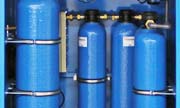
Cleans 24.000 liters per day
|
SCM 60
|
|
Cleans 60.000 liters per day
|
Video: How it works
The SCG Advantage
Our market-leading, water cleaning solutions have many advantages. To read more click the items below:
No Chemicals
Our machines and technology does not use any chemicals, at all.
Read more...
No Waste Water
Our machines do not waste any water. Yield = 100%.
Read more...
Low energy use
Uses 50 times less energy than a Reverse Osmosis Machine.
Read more...
Low ownership cost
Lower maintenance and operation costs due to our technology.
Read more...
Easy to install
Simple "plug and play" installation makes for easy deployment.
Read more...
Extremely compact
A compact system, contained in an easy to transport cabinet.
Read more...
Outperforms R.O.
SCG technologies outperform Reverse Osmosis systems.
Read more...
Faster ROI
Get a faster Return on Investment with our systems.
Read more...
Latest News
Latest Blog Posts
| Chemicals in water treatment? |
| Water storage - Whats best for keeping water clean and drinkable? |
| Case: Disaster Management Water Treatment |
Contact SCG
891 Showroom Place
Suite 101
Chula Vista, CA, 91914
Phone: +1 619-878-2730
Contact us by email