








How a Winery Treats Process Water Without Harmful Additives
A winery’s water demand extends far beyond rinsing grapes. Water is used to clean presses, tanks, bottling lines, floors, barrels, filters, and storage areas. During harvest, these activities create a variable wastewater stream containing suspended solids, organic matter, wine residues, cleaning traces, and microorganisms.
A treatment system must protect product quality while reducing environmental impact. Conventional approaches may rely on disinfectants, coagulants, or other chemicals that create additional handling requirements and secondary residues. For a medium-sized winery seeking a cleaner operating model, the goal was to recover suitable process water with limited waste and no harmful additives.
Swiss Cleanwater Group developed a treatment concept based on physical separation, targeted filtration, and disinfection without chemical dosing. The project shows how a winery can manage changing water quality, reduce freshwater consumption, and maintain reliable sanitation standards through a carefully designed process-water system.
The Winery’s Water Profile
The winery processed grapes seasonally, creating significant fluctuations in water use. During harvest, production ran at high capacity for several weeks, while cleaning and bottling continued throughout the year. Water quality also varied according to the operation: grape reception produced sediment and plant material, tank washing generated concentrated organic residues, and bottling areas required dependable microbiological control.
The site’s original arrangement sent most used water to the drain after basic screening. This approach was simple, but it increased freshwater demand and gave the winery little control over its total water footprint. The management team wanted to separate heavily contaminated streams from recoverable process water instead of treating every discharge in the same way.
A preliminary assessment mapped water sources, flow rates, peak loads, and cleaning schedules. Samples were analyzed for turbidity, suspended solids, organic load, conductivity, and microbial indicators. The results showed that the winery did not need one oversized treatment stage. It needed a flexible sequence that could handle different levels of contamination and provide a consistent final water quality.
Designing A Chemical-Free Treatment Train
The first stage captured coarse material before it could enter the treatment equipment. Grape skins, seeds, stems, label fragments, and other solids were removed through screening and settling. This reduced the burden on downstream filters and allowed the winery to manage organic residues separately, including through agricultural recovery where appropriate.
The next stage used filtration to reduce suspended particles and fine organic matter. Filtration was selected according to the expected particle size and flow pattern, with attention to pressure loss and cleaning requirements. Because winery water can change quickly during production, the system included monitoring points that helped operators identify when a filter needed service rather than relying on fixed replacement intervals.
Disinfection was then applied without adding persistent chemical agents to the recovered stream. A controlled physical disinfection stage helped address microorganisms after clarification and filtration. The treatment design also kept the clean-water circuit physically separated from raw or high-load water, reducing the risk of recontamination during storage and distribution.
This approach reflects the same principle used in other applications: remove contaminants through suitable treatment barriers instead of compensating for poor separation with larger chemical doses. The winery team also reviewed pesticide-related risks associated with incoming grapes and surrounding agricultural activity, using this pesticide guidance to understand why source protection and targeted treatment need to work together.
Measured Results Across The Production Cycle
The installation was evaluated during normal production and during the intensive harvest period. Operators tracked water clarity, filter performance, microbial results, equipment downtime, and the volume of water redirected for suitable non-product-contact uses. The most important improvement was consistency: the winery could manage water quality according to its intended use instead of treating all water as either fresh or waste.
The following figures represent the project’s operating targets and observed performance ranges after the system had been commissioned and adjusted to the winery’s production schedule.
| Performance area | Before treatment | After implementation |
|---|---|---|
| Freshwater used for general process cleaning | 100% baseline | Reduced by approximately 35% |
| Suspended solids in recovered water | Highly variable | Reduced by approximately 90% |
| Chemical additives in the recovery circuit | Used for selected cleaning stages | None in the recovered-water treatment line |
| Water available for approved non-product-contact tasks | Limited | Consistent seasonal supply |
| Filter service planning | Reactive | Based on pressure and quality monitoring |
| Sludge and solids handling | Mixed with general discharge | Separated earlier in the process |
The recovered water was not treated as a universal replacement for potable water. It was assigned to suitable applications such as preliminary equipment rinsing, floor cleaning, crate washing, and selected utility operations. Final product-contact rinsing continued to use water that met the winery’s stricter internal specifications.
This distinction was essential for both safety and operational confidence. A reuse system becomes easier to manage when every outlet has a defined quality requirement. It also prevents unnecessary over-treatment, which can increase energy consumption, maintenance costs, and capital expense without creating a practical benefit.
Protecting Hygiene And Product Quality
Winery sanitation requires a careful balance. Organic residues can support microbial growth, while excessive chemical use may create storage, worker-safety, and wastewater concerns. The treatment solution therefore had to complement the winery’s existing cleaning procedures rather than replace them indiscriminately.
Clean and dirty water circuits were clearly identified with dedicated pipework, storage, and connection points. Operators received simple instructions covering sampling, filter inspection, disinfection verification, and response procedures if water quality moved outside the approved range. These controls reduced the chance of accidental cross-connection during busy harvest shifts.
The project also demonstrated that water reuse should be designed around risk classification. Water used before a final sanitation step has different requirements from water used on a bottling line or in direct product contact. By assigning quality standards to each task, the winery was able to recover water safely while preserving its established hygiene program.
Regular monitoring provided an additional safeguard. Instead of viewing treatment as a set-and-forget installation, the winery treated performance data as part of its quality management system. Trends in turbidity, pressure, flow, and microbiological results helped identify changes in production conditions before they caused disruption.
Lower Waste And More Predictable Operations
Removing the need for chemical additives in the recovery line simplified storage and procurement. The winery no longer needed to handle treatment chemicals for that part of the process, reducing the risk of spills and limiting the number of consumables required for routine operation. Chemical cleaning remained available where it was appropriate for sanitation, but it was no longer used as the primary answer to every water-quality problem.
The system also reduced the volume of water discharged after a single use. This lowered the pressure on the site’s wastewater infrastructure during peak harvest and gave the winery more flexibility when production volumes changed. Separating solids earlier improved waste handling because grape residues and concentrated organic material could be managed independently from the cleaner water fraction.
Energy use was considered during equipment selection and operation. Pumps, filters, storage, and disinfection units were sized for actual flow requirements rather than an extreme theoretical peak. Automated controls allowed the plant to operate at lower intensity outside harvest, while monitoring supported preventive maintenance and minimized unnecessary backwashing or equipment cycling.
For the winery, the business value extended beyond the water bill. A more controlled process reduced interruptions, improved environmental reporting, and supported customer expectations around responsible production. The treatment plant became part of the winery’s resource-management strategy rather than an isolated wastewater expense.
Applying The Model Beyond Wine Production
The same treatment logic can be adapted to food processing, farming, livestock operations, industrial facilities, and public buildings. Each application begins with a water map: where water enters, where contaminants are introduced, which streams can be separated, and what quality is required at each point of reuse.
Mobile and remote operations require an even stronger focus on compact equipment, low maintenance, and dependable performance under variable conditions. Swiss Cleanwater Group also applies its water-treatment expertise to military water solutions, where systems may need to operate away from fixed infrastructure and produce safe water with limited supplies and logistical support.
A winery project can therefore serve as a practical example of a broader principle. Sustainable treatment does not mean treating every litre to the highest possible standard. It means matching treatment intensity to the intended use, removing contaminants at the right stage, and avoiding unnecessary waste wherever safe reuse is possible.
A Practical Path To Implementation
A successful installation depends on preparation as much as equipment. Before selecting a system, a winery should document seasonal water demand, identify high-strength wastewater sources, and define which uses can accept recovered water. Samples should be collected during ordinary production and peak harvest because a single low-load sample rarely represents actual operating conditions.
The following steps provide a useful basis for planning:
- Separate grape residues, cleaning water, and relatively low-load rinse streams at the source.
- Define water-quality requirements for every proposed reuse point.
- Test turbidity, suspended solids, organic load, conductivity, and microbiological indicators across the production cycle.
- Select filtration and disinfection stages that can be monitored and maintained by on-site staff.
- Establish clear pipe identification, sampling routines, maintenance schedules, and backup procedures.
A site-specific design can then balance treatment performance, footprint, energy demand, maintenance access, and future expansion. The most effective solution is rarely the most complicated one; it is the system that operators can understand, verify, and run reliably during the busiest days of the year.
For wineries seeking to reduce freshwater demand without introducing harmful additives, this project offers a practical route from assessment to operation. Contact Swiss Cleanwater Group to discuss your water sources, process loads, reuse goals, and treatment requirements, and develop a solution suited to the realities of your production site.
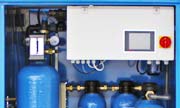
SCM 24
|
|
Cleans 24.000 liters per day
|
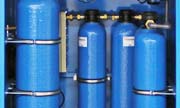
SCM 60
|
|
Cleans 60.000 liters per day
|
Video: How it works
The SCG Advantage
Our market-leading, water cleaning solutions have many advantages. To read more click the items below:
No Chemicals
Our machines and technology does not use any chemicals, at all.
Read more...
No Waste Water
Our machines do not waste any water. Yield = 100%.
Read more...
Low energy use
Uses 50 times less energy than a Reverse Osmosis Machine.
Read more...
Low ownership cost
Lower maintenance and operation costs due to our technology.
Read more...
Easy to install
Simple "plug and play" installation makes for easy deployment.
Read more...
Extremely compact
A compact system, contained in an easy to transport cabinet.
Read more...
Outperforms R.O.
SCG technologies outperform Reverse Osmosis systems.
Read more...
Faster ROI
Get a faster Return on Investment with our systems.
Read more...
Latest News
Latest Blog Posts
| Chemicals in water treatment? |
| Water storage - Whats best for keeping water clean and drinkable? |
| Case: Disaster Management Water Treatment |
Contact SCG
891 Showroom Place
Suite 101
Chula Vista, CA, 91914
Phone: +1 619-878-2730
Contact us by email