









Removing Pesticides From Drinking Water At Home
Pesticides can enter drinking water after agricultural spraying, accidental spills, runoff, or seepage through soil into groundwater. The term covers a broad group of herbicides, insecticides, fungicides, and their breakdown products, each with different chemical properties. A treatment method that works well for one compound may be less effective for another.
A homeowner’s first step should be to identify whether pesticides are present, which substances have been detected, and at what concentration. Water testing provides the evidence needed to choose suitable filtration rather than relying on a generic cartridge or an attractive product claim.
Treatment can be installed at a single tap or at the point where water enters the property. The right location depends on the intended use, the condition of the incoming water, and whether the concern involves drinking and cooking only or the entire household supply.
Find Out What Is In The Water
Start by reviewing local water-quality reports if the home is connected to a public supply. These reports may list regulated pesticide residues, monitoring results, and the source of the water. A private well requires more direct attention, especially after intensive farming nearby, flooding, changes in taste or odor, or a new agricultural operation in the area.
Use a laboratory that follows recognized drinking-water testing procedures. Ask for a pesticide panel appropriate to the region and land use rather than requesting only a basic bacteria test. A standard analysis may also include nitrate, arsenic, manganese, uranium, hardness, pH, and turbidity because these characteristics can affect treatment performance.
Keep the laboratory report and record the sample location, date, and conditions. A single result is useful, but repeated testing can show whether contamination is seasonal or persistent. Water from a private well should also be tested after repairs, flooding, or any change in the surrounding land.
Understand Which Treatment Methods Work
Granular activated carbon is widely used for pesticide reduction because its porous surface can adsorb many organic compounds. Performance depends on the pesticide, carbon quality, contact time, flow rate, temperature, and the presence of competing organic matter. A small under-sink cartridge may provide useful protection, but it cannot be assumed to treat every contaminant indefinitely.
Reverse osmosis can reduce a broad range of dissolved substances, including certain pesticides, when the membrane and system are properly selected. It generally produces a concentrated reject stream and uses electricity through a pressurized pump in many installations. A prefilter is often needed to protect the membrane from sediment and chlorine, while post-treatment can improve taste.
Ultrafiltration and microfiltration are valuable for particles, bacteria, and some larger compounds, but they are not universal solutions for dissolved pesticide molecules. Ultraviolet treatment can inactivate microorganisms, yet it does not remove pesticide residues. Ion exchange is highly effective for selected charged contaminants, though many pesticide molecules are neutral and require another process.
Some advanced oxidation systems break down organic contaminants through reactive chemical processes, but they require careful design and monitoring. A treatment specialist should confirm that the process does not create undesirable by-products and that the system is appropriate for residential operation.
Match The Filter To The Contaminant
Pesticides vary in size, polarity, solubility, and resistance to degradation. Activated carbon may be a strong choice for one compound while a membrane, specialty adsorbent, or combined process is more suitable for another. The laboratory report should therefore be compared with the manufacturer’s performance data for the specific substance detected.
Look for independent certification or test documentation that identifies the contaminant, reduction percentage, operating conditions, and replacement interval. A statement such as “removes chemicals” is too broad to support a purchasing decision. The system should also specify its rated flow and capacity, since performance can decline when water passes through too quickly.
Treatment design may involve several stages. Sediment removal protects downstream equipment, activated carbon targets many organic compounds, and reverse osmosis provides an additional barrier for selected dissolved contaminants. This arrangement is not automatically necessary for every home, but it illustrates why water analysis should come before equipment selection.
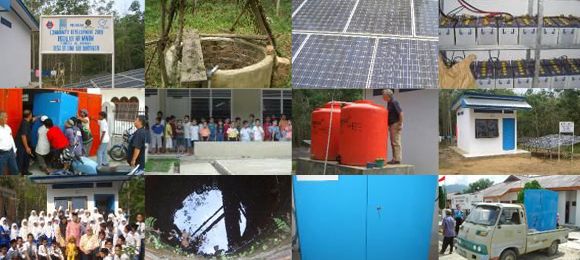
Projects serving remote communities demonstrate the importance of evaluating the whole water source and operating environment. The experience described in this mountain village case study shows why reliable treatment must be matched to local conditions, access, maintenance capacity, and long-term water demand.
| Treatment approach | Potential role in pesticide reduction | Main considerations |
|---|---|---|
| Activated carbon | Adsorbs many organic pesticides and improves taste and odor | Media can become saturated; replacement must follow testing or rated capacity |
| Reverse osmosis | Reduces many dissolved contaminants when properly specified | Requires pressure, maintenance, and management of reject water |
| Ultrafiltration | Removes particles and microorganisms | Usually insufficient for dissolved pesticide molecules |
| Ultraviolet light | Inactivates bacteria and viruses | Does not remove chemical residues |
| Ion exchange | Works for selected ionic contaminants | Effectiveness depends strongly on pesticide chemistry |
| Combined treatment | Adds multiple barriers for complex water quality | Requires careful design, monitoring, and service |
Choose Between A Tap Filter And Whole-House Treatment
A point-of-use system is installed at the kitchen faucet or another drinking-water outlet. It is often the most economical option when testing shows that pesticides are a concern for drinking and cooking but not for bathing, laundry, or cleaning. It also limits treated-water volume, which can reduce operating costs and maintenance.
Point-of-entry treatment handles water for the entire property. This may be appropriate when contamination affects the well supply broadly, when residents want protection at every outlet, or when volatile compounds could be released during showering. Whole-house systems usually require more space, higher flow capacity, and a plan for managing treated-water quality throughout the plumbing network.
Do not ignore untreated bypasses. A kitchen filter cannot protect a second drinking tap, refrigerator dispenser, or outdoor kitchen unless those outlets are connected to the treated line. Conversely, whole-house equipment should not be purchased solely because it sounds more comprehensive. The installation should reflect measured risk and actual household use.
Plan For Maintenance And Verification
Every treatment system has a service limit. Carbon media eventually loses adsorption capacity, membranes foul, ultraviolet lamps age, and seals or pumps require replacement. A cartridge that still looks clean may already be exhausted, so replacement should follow the manufacturer’s capacity rating, water volume, or a verified monitoring schedule.
Installers should explain pressure requirements, drain connections, storage tanks, electrical needs, and alarm functions before installation. A system that is difficult to maintain may receive less attention over time, reducing its protective value. Keep a written service record with installation dates, filter changes, laboratory results, and any changes in water taste or pressure.
After installation, test the treated water to confirm that the selected process is working. Repeat testing at intervals appropriate to the contamination risk. If pesticide levels are elevated or changing rapidly, bottled water or an alternative approved supply may be needed until treatment performance has been verified.
Consider Chemical-Free And Low-Waste Options
Some homeowners prefer systems that minimize chemical dosing, wastewater, and energy use. Adsorption media, pressure-driven filtration, and carefully designed treatment trains can support those goals, although every method has a resource cost. Activated carbon must be replaced or regenerated, reverse osmosis produces concentrate, and pumps consume electricity.
The phrase “chemical-free” should be interpreted precisely. A system may avoid adding treatment chemicals while still using physical separation, adsorption, ultraviolet energy, or mineral media. Ask what happens to the captured pesticide, how spent media are disposed of, and whether the process creates a concentrated waste stream.
Water-treatment projects also involve contaminants beyond pesticides. For example, a rural arsenic case study illustrates why a treatment solution must address the full analytical profile rather than focusing on a single headline contaminant. A professional assessment can identify compatible technologies and prevent one filter from being overloaded by several water-quality problems.
Make A Practical Household Decision
A sound decision combines test results, health guidance, equipment data, and the realities of daily use. If a public authority has issued a restriction, follow it immediately while a permanent remedy is assessed. For private wells, seek advice from a qualified water-treatment professional and the relevant health or environmental authority.
Use these actions as a starting point:
- Test the source water through an accredited laboratory, including pesticides relevant to local agriculture.
- Compare treatment claims with data for the exact compounds and concentrations detected.
- Decide whether protection is needed at one drinking tap or throughout the property.
- Set reminders for cartridge changes, membrane service, and follow-up laboratory testing.
- Ask how the system handles spent media, reject water, power outages, and changing contaminant levels.
A well-selected system can reduce pesticide exposure while supporting dependable access to clean drinking water. Swiss Cleanwater Group provides water-treatment information and technology for applications ranging from homes and buildings to municipalities, farms, industry, and mobile projects. Contact the company with your laboratory report and site details to discuss a treatment approach based on the actual water rather than a generic promise.
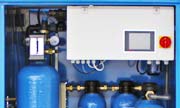
SCM 24
|
|
Cleans 24.000 liters per day
|
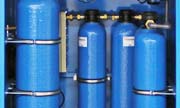
SCM 60
|
|
Cleans 60.000 liters per day
|
Video: How it works
The SCG Advantage
Our market-leading, water cleaning solutions have many advantages. To read more click the items below:
No Chemicals
Our machines and technology does not use any chemicals, at all.
Read more...
No Waste Water
Our machines do not waste any water. Yield = 100%.
Read more...
Low energy use
Uses 50 times less energy than a Reverse Osmosis Machine.
Read more...
Low ownership cost
Lower maintenance and operation costs due to our technology.
Read more...
Easy to install
Simple "plug and play" installation makes for easy deployment.
Read more...
Extremely compact
A compact system, contained in an easy to transport cabinet.
Read more...
Outperforms R.O.
SCG technologies outperform Reverse Osmosis systems.
Read more...
Faster ROI
Get a faster Return on Investment with our systems.
Read more...
Latest News
Latest Blog Posts
| Chemicals in water treatment? |
| Water storage - Whats best for keeping water clean and drinkable? |
| Case: Disaster Management Water Treatment |
Contact SCG
891 Showroom Place
Suite 101
Chula Vista, CA, 91914
Phone: +1 619-878-2730
Contact us by email