






Granular Activated Carbon Vs. Catalytic Media for Pesticides
Pesticides can enter drinking-water sources through agricultural runoff, leaching from soil, accidental spills, and atmospheric deposition. Even when concentrations are low, repeated exposure and the presence of several compounds can make treatment selection a demanding technical task. A reliable solution must address the specific pesticide profile, seasonal changes, flow rate, and required water quality.
Granular activated carbon (GAC) is a familiar adsorption medium with a long record in municipal and industrial water treatment. Catalytic media, by contrast, covers several engineered materials, including catalytic carbon and mineral-based media that promote oxidation or other surface reactions. Their performance against pesticides varies considerably, so the label alone is not enough to select the right filter.
The most useful comparison considers removal mechanisms, operating conditions, maintenance, and the possibility of breakthrough. When the treatment objective includes other contaminants such as bacteria, manganese, arsenic, or uranium, pesticide removal should also be assessed as part of a complete treatment train rather than as an isolated process.
How Each Medium Removes Pesticides
GAC removes pesticides primarily through adsorption. Its porous structure provides a large internal surface where dissolved organic molecules attach through physical and chemical interactions. The effectiveness depends on pore-size distribution, surface chemistry, pesticide polarity, molecular size, concentration, and the amount of competing natural organic matter in the water.
Many common herbicides and insecticides respond well to activated carbon, especially when they are moderately hydrophobic. However, highly soluble or very small molecules may be less strongly retained. GAC does not destroy the pesticide; it transfers the contaminant from water to the media. Once adsorption sites become occupied, the bed can experience breakthrough and require replacement or regeneration.
Catalytic media can work through adsorption, surface catalysis, oxidation, or a combination of mechanisms. Catalytic activated carbon may retain organic molecules while accelerating reactions that transform them. Other catalytic materials are designed mainly for oxidation reactions and may require oxygen, ozone, hydrogen peroxide, or another oxidant to function effectively.
This distinction matters because “catalytic media” is not a single standardized product category. A catalytic carbon bed may behave similarly to GAC while offering improved reaction potential, whereas a manganese dioxide or other mineral medium is generally selected for iron, manganese, or oxidation-related applications rather than broad pesticide adsorption. The manufacturer’s test data should therefore identify the exact medium and treatment chemistry.
Performance Depends on Water Chemistry
Water chemistry can change pesticide removal substantially. Natural organic matter competes for adsorption sites in GAC and can coat the media surface, reducing capacity. Turbidity and suspended solids may clog the bed, while iron and manganese can create fouling layers. Pretreatment for particles and oxidized metals can preserve hydraulic performance and extend media life.
pH influences the charge and behavior of both the pesticide and the filter surface. Temperature, alkalinity, dissolved organic carbon, and pesticide concentration also affect mass transfer. A result obtained in clean laboratory water may not represent performance in a well, river intake, irrigation reservoir, or storm-affected source.
Catalytic systems introduce additional variables. If oxidation is required, the available oxidant, contact time, pH, and reaction by-products must be controlled. Some pesticide transformation products can remain in the water and may require further adsorption or biological treatment. A process that reduces the parent compound is not automatically a complete treatment solution.
For these reasons, pilot testing or a representative bench-scale study is valuable. Testing should use the actual source water, several target pesticides, expected flow conditions, and enough operating time to observe capacity loss. Short contact tests can indicate initial removal but may not predict long-term breakthrough.
Comparing Operating Characteristics
GAC is often attractive where a straightforward, chemical-free adsorption step is desired. It can be installed in pressure vessels or gravity filters, scaled for individual buildings or large facilities, and combined with sediment filtration and disinfection. Its main operating concern is media exhaustion, which requires monitoring and a defined replacement or regeneration schedule.
Catalytic media may offer greater selectivity or reaction potential when the water contains compounds that are difficult to remove through adsorption alone. In some designs, the medium can support oxidation without continuous chemical dosing, while other systems require an oxidant and careful control equipment. Energy use, backwashing, media conditioning, and disposal requirements should be included in the lifecycle assessment.
| Consideration | Granular Activated Carbon | Catalytic Media |
|---|---|---|
| Primary mechanism | Adsorption onto porous carbon | Adsorption, catalysis, oxidation, or a combination |
| Pesticide coverage | Often broad for hydrophobic and moderately polar compounds | Highly dependent on the specific material and process |
| Chemical requirement | Usually none for adsorption | May be chemical-free or may require an oxidant |
| Main capacity limit | Occupied adsorption sites and competing organic matter | Catalyst fouling, exhaustion, reaction conditions, or adsorption capacity |
| By-product concern | Pesticides remain concentrated in spent media | Transformation products may form during oxidation |
| Monitoring priority | Effluent pesticide concentration and breakthrough | Effluent pesticide concentration, oxidant control, and by-products |
| Typical selection basis | Reliable adsorption data and contact time | Verified reaction data, water chemistry, and process configuration |
Neither option should be judged only by its initial removal percentage. A medium that achieves high removal for a few days may perform poorly over a full operating cycle. The better choice is the one that maintains the required quality with predictable maintenance, manageable waste, and acceptable operating costs.
Contact Time and Filter Design
Empty bed contact time (EBCT) is a central design parameter for carbon and catalytic filtration. Water needs enough time to move through the media so that adsorption and reaction can occur. Higher flow rates shorten contact time and may reduce removal, particularly when the bed is nearing exhaustion.
Bed depth, particle size, loading rate, pressure loss, and backwash conditions also influence results. Fine media can provide strong mass transfer but may create higher head loss. A deeper bed can improve contaminant capture and delay breakthrough, though it increases vessel size and initial media volume.
Pesticide treatment may require multiple stages. A sediment or ultrafiltration step can protect the main media from suspended solids and microorganisms. For projects where microbial safety is also important, information on ultrafiltration for bacteria can help clarify how membrane treatment fits alongside adsorption or catalytic processes.
Flow control is especially important in variable-demand applications such as farms, livestock operations, swimming pools, and mobile water units. A filter sized for average flow may be overloaded during peak use. Automatic valves, parallel vessels, and standby capacity can make maintenance possible without interrupting the water supply.
Monitoring Breakthrough and Maintenance
Pesticide filters need a monitoring plan that reflects the risk of breakthrough. Sampling only at the beginning of a filter run can give a misleading impression of long-term performance. Source-water testing, treated-water verification, pressure-drop records, and flow totals should be reviewed together.
For GAC, the service life may be estimated from laboratory isotherms, supplier data, historical consumption, and pilot testing. The final decision should be based on verified effluent quality rather than on a calendar interval alone. When several pesticides are present, the compound that breaks through first may determine the replacement schedule.
Catalytic media require additional checks when oxidation is involved. Operators may need to measure oxidant residual, oxidation-reduction potential, pH, and relevant transformation products. Media can also lose activity through fouling even when hydraulic flow remains acceptable, so pressure readings alone cannot confirm continued pesticide removal.
Spent carbon and exhausted catalytic media must be handled responsibly. Depending on the contaminant load and local regulations, media may require controlled disposal, thermal reactivation, or specialized recovery. A chemical-free treatment process can still create a concentrated waste stream, making end-of-life planning part of responsible system design.
Selecting the Right Treatment Approach
The best choice begins with a complete contaminant and operating profile. Identify the pesticide names, concentrations, detection frequency, source-water variability, flow rate, temperature, pH, organic carbon, turbidity, and any co-contaminants. A generic claim that a medium removes “pesticides” is insufficient for engineering decisions.
GAC is commonly the practical starting point when the target compounds are adsorbable, the water has manageable organic loading, and simple operation is preferred. Catalytic media become more compelling when validated reaction performance, improved removal of a difficult compound, or integration with an oxidation process offers a clear benefit.
A treatment provider should be able to explain expected service life, required contact time, regeneration or replacement procedures, analytical verification, and performance under real water conditions. For a broader assessment of sustainable purification systems and applications across municipalities, agriculture, industry, and mobile projects, the Swiss Cleanwater Group provides relevant technology and project information.
Practical Selection Recommendations
A disciplined evaluation helps prevent overdesign, premature media exhaustion, and incomplete contaminant control. Use these priorities when comparing suppliers and treatment configurations:
- Test the actual source water for target pesticides, natural organic matter, turbidity, pH, iron, manganese, and microbial indicators.
- Request compound-specific performance data rather than relying on general claims about activated or catalytic media.
- Compare EBCT, bed depth, flow rate, pressure loss, expected service life, and backwash requirements.
- Confirm whether the catalytic process needs an oxidant and identify any transformation products that require follow-up treatment.
- Establish a sampling and breakthrough plan before commissioning the equipment.
Pesticide removal should also be coordinated with treatment for bacteria, metals, uranium, and other site-specific contaminants. A staged system can protect the main adsorption or catalytic bed, improve reliability, and reduce the risk that one contaminant will compromise performance for another.
When the water analysis and operating profile are available, Swiss Cleanwater Group can help evaluate whether GAC, catalytic media, membrane filtration, or a combined process is appropriate. Contact the company to discuss a treatment concept based on measured contaminants, required flow, and sustainable operation.
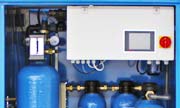
SCM 24
|
|
Cleans 24.000 liters per day
|
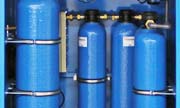
SCM 60
|
|
Cleans 60.000 liters per day
|
Video: How it works
The SCG Advantage
Our market-leading, water cleaning solutions have many advantages. To read more click the items below:
No Chemicals
Our machines and technology does not use any chemicals, at all.
Read more...
No Waste Water
Our machines do not waste any water. Yield = 100%.
Read more...
Low energy use
Uses 50 times less energy than a Reverse Osmosis Machine.
Read more...
Low ownership cost
Lower maintenance and operation costs due to our technology.
Read more...
Easy to install
Simple "plug and play" installation makes for easy deployment.
Read more...
Extremely compact
A compact system, contained in an easy to transport cabinet.
Read more...
Outperforms R.O.
SCG technologies outperform Reverse Osmosis systems.
Read more...
Faster ROI
Get a faster Return on Investment with our systems.
Read more...
Latest News
Latest Blog Posts
| Chemicals in water treatment? |
| Water storage - Whats best for keeping water clean and drinkable? |
| Case: Disaster Management Water Treatment |
Contact SCG
891 Showroom Place
Suite 101
Chula Vista, CA, 91914
Phone: +1 619-878-2730
Contact us by email