


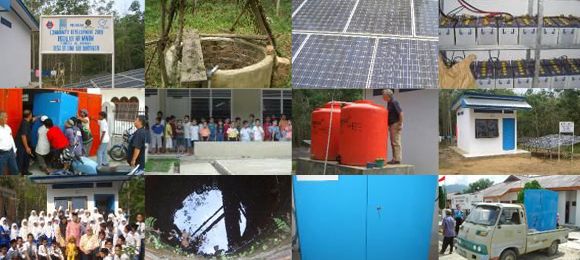







Designing Mobile Water Treatment Systems For Disaster Relief
When floods, earthquakes, storms, or armed conflicts disrupt water infrastructure, a mobile treatment unit can restore access to safer drinking water without waiting for a permanent plant to be rebuilt. The system must be transported quickly, installed with limited tools, and operated by personnel who may be working under pressure and changing field conditions.
A successful design begins with the water source and the relief mission, rather than with a particular filter or container. Floodwater, shallow wells, reservoirs, and damaged municipal networks present different risks. The treatment train must address those risks while fitting available power, transport, storage, staffing, and maintenance capabilities.
Swiss Cleanwater Group develops sustainable purification technologies for applications ranging from municipalities and government projects to farming, livestock, industry, and mobile operations. Its water treatment solutions provide a useful reference point for planning systems that reduce contaminants with limited chemical use, waste, and energy demand.
Define The Relief Mission And Water Source
The first design decision is the required volume of potable water. A small medical post may need a compact skid producing several hundred litres per hour, while a displaced population may require a containerized plant operating continuously. Calculations should include drinking, food preparation, clinical use, hygiene, and losses during backwashing or cleaning.
Source characterization is equally important. A river after flooding may contain suspended sediment, pathogens, fuel residues, pesticides, and industrial pollutants. A borehole may appear clear while carrying arsenic, manganese, uranium, or excessive salinity. Water testing should cover microbiological indicators, turbidity, pH, conductivity, hardness, organic matter, and locally suspected contaminants before final equipment selection.
Emergency teams should also plan for source variation. A treatment unit that performs well on a clean borehole may clog rapidly when connected to turbid surface water. Intake screening, raw-water storage, and an adjustable pretreatment stage create a buffer when the source changes during the response.
Build A Treatment Train Rather Than A Single Device
Mobile purification works best as a sequence of barriers. Coarse screens and settling remove leaves, grit, and large particles. Multimedia filtration or another suitable pretreatment step reduces turbidity and protects downstream membranes, adsorbents, or disinfection equipment. The final configuration depends on the contaminants identified during testing.
Biological hazards require a validated disinfection barrier. Ultraviolet treatment can provide rapid microbial inactivation when water has low enough turbidity and the lamp receives adequate power. Membrane processes can offer physical removal of bacteria, protozoa, and some viruses, while a carefully managed residual disinfectant may protect water during storage and distribution. The selected approach must be verified against the organisms and operating conditions expected in the field.
Chemical contaminants need targeted technology. Adsorptive media may address arsenic, pesticides, or specific dissolved compounds; oxidation and filtration can help manage manganese and iron; membrane systems may be considered for uranium or other dissolved constituents. No method should be described as universal. Media capacity, breakthrough behavior, regeneration or replacement requirements, and disposal arrangements must be included in the design.
Water intended for agricultural emergency operations also needs a different quality assessment from drinking water. Salts, alkalinity, and trace elements can affect crops and fertigation even when water meets basic hygiene requirements. Guidance on greenhouse water quality illustrates why end use should influence the treatment target, especially when relief projects support temporary food production.
Design For Transport, Power, And Rapid Setup
A mobile plant should be treated as a logistics system. Skids, trailer units, containerized modules, and compact carts each offer different advantages. Trailers can reach remote communities over roads, while container systems provide weather protection, storage space, and straightforward lifting at larger sites. Every module should have clearly marked lifting points, hose connections, drain lines, and electrical interfaces.
Power availability often determines the practical treatment method. Diesel generators may be accessible during the first response but difficult to fuel over weeks. Solar-assisted systems with battery storage can reduce fuel dependence, although their output varies with weather and treatment demand. Pumps, ultraviolet units, control panels, compressors, and heating systems should be listed in a complete energy budget rather than evaluated separately.
The design should support rapid commissioning without sacrificing safety. Color-coded pipework, quick-connect couplings, simple control screens, and preassembled dosing or filtration assemblies reduce installation time. Operators need clear instructions for startup, shutdown, backwash, filter replacement, alarms, sampling, and winterization. A unit that requires specialist intervention for every adjustment is poorly suited to a prolonged emergency.
Mobility also affects water storage. Raw-water tanks provide settling time and protect the plant from sudden source changes, while treated-water tanks create a reserve between production and distribution. Tanks must be food-safe, covered, cleanable, and protected from recontamination by hoses, taps, dust, animals, or untrained handling.
Match Technologies To Field Conditions
The following comparison can help planners narrow the design before detailed engineering. Actual performance depends on feed-water quality, pretreatment, flow rate, operating pressure, temperature, and validated testing.
| Treatment approach | Useful role in emergency systems | Main strengths | Key limitations |
|---|---|---|---|
| Screening and settling | Removing debris and heavy suspended solids | Simple, low energy, protects later stages | Does not remove dissolved contaminants or pathogens |
| Multimedia filtration | Reducing turbidity, iron, and manganese after suitable conditioning | Robust and scalable | Requires backwashing and proper media management |
| Membrane filtration | Removing particles and many microorganisms | Compact, high-quality treated water | Sensitive to fouling; may need significant pressure and cleaning |
| Adsorptive media | Targeting arsenic, pesticides, uranium, or other dissolved compounds | Selective treatment when correctly specified | Media capacity varies and spent media needs controlled disposal |
| Ultraviolet disinfection | Inactivating microorganisms in clear water | Fast treatment without a chemical residual | Requires reliable power and low turbidity |
| Chlorination | Disinfection and protection in distribution | Provides a residual in storage and pipelines | Requires chemical handling and careful dose control |
A hybrid system may be more reliable than a single treatment technology. For example, a flood-response unit could combine intake screening, a settling tank, filtration, targeted contaminant removal, ultraviolet treatment, and a controlled final disinfection stage. The exact order matters: disinfection equipment should not be placed where turbidity or organic loading can reduce its effectiveness.
Waste streams deserve early attention. Backwash water, concentrate from membrane systems, exhausted media, and contaminated sludge may carry the substances removed from the source. Discharging them beside a temporary camp or back into the intake area can recreate the original hazard. The emergency plan should define containment, transport, storage, and disposal responsibilities.
Operate With Verification And Human Factors
Water quality monitoring should be built into the equipment package. Field staff may use portable meters for turbidity, conductivity, pH, temperature, and disinfectant residual, while laboratory partners confirm microbiological and chemical results. Sampling points should be located at the raw-water inlet, after critical treatment stages, in treated storage, and at distribution taps.
Automation can protect the process, but it should not hide failure. High-turbidity alarms, low-flow cutoffs, pressure indicators, ultraviolet intensity sensors, and tank-level controls help prevent unsafe operation. Manual bypasses should be restricted, physically identified, and governed by written procedures. A bypass that is easy to open can become an unnoticed route around critical treatment.
Training must reflect the people who will actually run the system. Relief operators may have experience with pumps but not membrane fouling, or may understand sanitation without knowing how to interpret an arsenic test. Short visual procedures, translated labels, spare-parts kits, and practical drills are often more valuable than lengthy technical manuals.
Preventive maintenance should continue after the initial response. Filters need scheduled inspection, pumps need seals and lubrication, sensors require calibration, and disinfection components have service lives. A remote support channel and a documented inventory of consumables can prevent a small fault from stopping water production.
Procurement Priorities For A Reliable System
Emergency procurement should evaluate the complete operating cycle, not just the quoted production rate. A unit rated for a high flow under ideal laboratory conditions may deliver far less when treating muddy floodwater or operating from a small generator. Ask for performance data using a representative source profile and define the treated-water quality required for each intended use.
The following priorities help organizations compare suppliers and build a practical specification:
- Require source testing and a written treatment rationale before selecting process equipment.
- Specify delivered water quality, production volume, startup time, energy demand, and expected operating hours.
- Include pretreatment, storage, sampling points, waste handling, spare parts, and operator training in the scope.
- Request validation records for pathogen reduction and targeted removal of contaminants such as arsenic, manganese, pesticides, or uranium.
- Assess lifecycle costs, local service capacity, consumable availability, and safe disposal of residuals.
Procurement documents should also define acceptance testing at the deployment site. The supplier and relief agency can confirm flow, pressure, energy consumption, alarm functions, treated-water quality, and operator usability before the system is handed over. This creates a clear baseline for future maintenance and accountability.
Turn A Treatment Concept Into Field Capacity
The most effective mobile water treatment system is one that can be moved, commissioned, monitored, and maintained under real emergency conditions. Its value comes from the complete chain: reliable intake, suitable treatment barriers, protected storage, trained operators, verified quality, and responsible handling of waste.
Organizations preparing for disaster response can begin with a site-specific water risk assessment and a modular process concept. Contact Swiss Cleanwater Group to discuss source testing, contaminant removal requirements, mobile equipment configuration, and the operational conditions that will determine a safe and sustainable deployment.
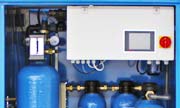
SCM 24
|
|
Cleans 24.000 liters per day
|
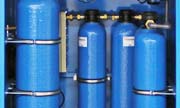
SCM 60
|
|
Cleans 60.000 liters per day
|
Video: How it works
The SCG Advantage
Our market-leading, water cleaning solutions have many advantages. To read more click the items below:
No Chemicals
Our machines and technology does not use any chemicals, at all.
Read more...
No Waste Water
Our machines do not waste any water. Yield = 100%.
Read more...
Low energy use
Uses 50 times less energy than a Reverse Osmosis Machine.
Read more...
Low ownership cost
Lower maintenance and operation costs due to our technology.
Read more...
Easy to install
Simple "plug and play" installation makes for easy deployment.
Read more...
Extremely compact
A compact system, contained in an easy to transport cabinet.
Read more...
Outperforms R.O.
SCG technologies outperform Reverse Osmosis systems.
Read more...
Faster ROI
Get a faster Return on Investment with our systems.
Read more...
Latest News
Latest Blog Posts
| Chemicals in water treatment? |
| Water storage - Whats best for keeping water clean and drinkable? |
| Case: Disaster Management Water Treatment |
Contact SCG
891 Showroom Place
Suite 101
Chula Vista, CA, 91914
Phone: +1 619-878-2730
Contact us by email