








Treating water for a greenhouse: preventing nutrient imbalance
Greenhouse crops depend on a carefully balanced supply of water, dissolved minerals, oxygen, and fertilizer. When irrigation water contains excess salts, bicarbonate, iron, manganese, or other contaminants, the nutrient solution can drift away from its intended composition. Plants may then show deficiencies even when the fertilizer recipe appears correct.
Water quality affects every stage of crop production, from seedling establishment to fruit development. The same source can behave differently throughout the year as rainfall, groundwater levels, temperature, and agricultural activity change. A reliable treatment strategy therefore begins with analysis and continues with regular monitoring.
The goal is not to remove every mineral from the water. It is to control harmful contaminants and unstable compounds while preserving an efficient, predictable environment around the roots. Proper filtration and disinfection can reduce plant stress, protect irrigation equipment, and make fertigation more precise.
Water quality shapes nutrient availability
Irrigation water contributes its own dissolved ions to the nutrient recipe. Calcium and magnesium may be useful in moderate amounts, while sodium and chloride can accumulate in the root zone and interfere with water uptake. High bicarbonate levels can raise pH and cause iron, manganese, zinc, and phosphorus to become less available to plants.
Electrical conductivity, or EC, provides a broad indication of dissolved salts, but it does not identify which salts are present. Two water sources may have a similar EC while creating very different crop responses. A laboratory analysis should therefore include pH, alkalinity, hardness, sodium, chloride, sulfate, iron, manganese, and any locally relevant contaminants.
Water temperature and biological quality also matter. Bacteria, algae, and organic particles can obstruct emitters and create uneven irrigation. In recirculating systems, contaminants may become more concentrated over time unless the water is treated or a controlled portion is replaced.
Common source-water risks in protected cultivation
Groundwater often has elevated hardness, iron, manganese, bicarbonate, or hydrogen sulfide. These substances may stain equipment, produce unpleasant odors, form deposits, and change the chemistry of fertilizer concentrates. Hydrogen sulfide can also indicate reducing conditions that deserve closer investigation before the water enters a greenhouse distribution system.
Surface water and collected rainwater present different concerns. Surface sources may contain sediment, pesticides, microorganisms, and organic matter. Rainwater is frequently low in mineral content, which can be beneficial for blending but may leave the grower responsible for supplying all calcium, magnesium, and alkalinity through the nutrient program.
Water from a municipal supply can contain disinfectant residuals that are acceptable for drinking but potentially damaging to sensitive biological systems or beneficial microbes. A source assessment should consider seasonal variation rather than relying on a single sample collected at a convenient time.
Match treatment to the contaminant
Treatment should be selected from the laboratory results, crop requirements, and water-use pattern. Sediment filtration protects pumps and drip lines, while media filtration can target specific metals or odors. Catalytic processes are useful where hydrogen sulfide is present; growers can review the hydrogen sulfide filtration science before choosing an installation.
Iron and manganese removal may involve oxidation followed by filtration, depending on their concentration and chemical form. Hardness reduction can limit scale in pipes and injectors, while activated carbon may help reduce certain organic compounds or disinfectant residues. Ultraviolet treatment can control microorganisms in clear water, although it does not remove dissolved salts or particles that shield microbes from the light.
Reverse osmosis is appropriate when dissolved salts, sodium, chloride, arsenic, or other ions must be reduced substantially. It produces a low-mineral water that can be blended with untreated water and then rebuilt with a precise fertilizer formulation. Because reverse osmosis creates a concentrate stream and uses more energy than basic filtration, the system should be sized around actual crop demand and recovery targets.
| Water issue | Possible greenhouse effect | Common treatment direction | Important caution |
|---|---|---|---|
| High bicarbonate or hardness | Rising pH, scale, blocked emitters | Acid management, softening, or membrane treatment | Avoid changing alkalinity without recalculating fertilizer doses |
| Iron and manganese | Staining, sediment, restricted flow | Oxidation and catalytic or media filtration | Test whether metals are dissolved or particulate |
| Sodium and chloride | Root-zone salinity and leaf-edge burn | Reverse osmosis, blending, or source change | Track concentrate disposal and total water use |
| Bacteria and algae | Biofilm, clogging, crop-health concerns | UV, validated disinfection, and prefiltration | UV requires clear water and correct lamp maintenance |
| Hydrogen sulfide | Odor, corrosion, reduced water quality | Catalytic filtration or oxidation-based treatment | Test source conditions because concentrations can vary |
| Pesticides or organic contaminants | Phytotoxicity and inconsistent growth | Activated carbon or specialized treatment | Identify the compound before selecting media |
Build treatment into the fertigation routine
Treatment equipment should be installed as part of a complete water-management sequence. A typical layout may include source protection, coarse screening, sediment removal, contaminant-specific filtration, disinfection where required, nutrient injection, and final distribution. Each stage should have a clear purpose and an accessible point for inspection.
Fertilizer injection must be calibrated after treatment changes. A reverse osmosis system, softener, or blending valve can alter the starting EC and alkalinity enough to make an old recipe inaccurate. The injector ratio, stock-tank concentration, irrigation volume, and drainage percentage should be checked together.
Clean water does not compensate for poor hydraulic design. Uneven pressure, undersized pipes, clogged filters, or poorly positioned emitters can create different nutrient concentrations across the greenhouse. Pressure gauges before and after filters, flow meters, and routine emitter checks make it easier to identify a mechanical problem before changing the crop recipe.
Water-saving irrigation also supports nutrient stability. Applying smaller, well-timed doses can reduce leaching and limit sharp swings in root-zone EC. In recirculating systems, however, the returning solution requires careful testing because plants remove water and nutrients at different rates.
Preserve useful minerals while removing harmful substances
A treatment system should be selective whenever possible. Removing calcium and magnesium from water that already has a suitable mineral profile may create a new deficiency and increase fertilizer costs. Conversely, retaining sodium, chloride, or toxic trace elements can make the water unsuitable for repeated irrigation.
Blending is often a practical solution. A grower may combine treated water with a clean untreated stream to reach a target EC, alkalinity, and mineral balance. The blend must be tested after mixing, because the final chemistry can differ from the values predicted from separate source samples.
Treatment also needs to avoid creating unnecessary waste. Technologies that use fewer chemicals, limit reject water, and operate with reasonable energy demand can support a more sustainable greenhouse operation. For larger irrigation networks, the experience described in efficient irrigation water management offers useful context on protecting water resources while maintaining reliable coverage.
Monitor the root zone, not just the source
Source-water analysis is essential, but it does not show the full effect of irrigation. Drainage or pour-through testing reveals what is accumulating around the roots. Comparing input EC and pH with root-zone and drainage values can identify salt buildup, excessive leaching, or an imbalance caused by selective nutrient uptake.
Visual symptoms should support, rather than replace, measurements. Interveinal chlorosis may indicate iron or magnesium problems, but high pH, damaged roots, excessive salts, or poor oxygenation can produce similar signs. Tissue analysis is valuable when symptoms persist or when several possible causes overlap.
A simple monitoring schedule can include source-water testing at least seasonally, daily or weekly EC and pH checks depending on crop intensity, periodic alkalinity testing, and routine filter-pressure readings. Record treatment settings, fertilizer batches, irrigation volumes, weather conditions, and crop symptoms so that trends become visible.
A practical greenhouse water checklist
Use the following actions to keep treatment and fertigation aligned:
- Test the source for pH, EC, alkalinity, hardness, sodium, chloride, iron, manganese, microorganisms, and site-specific contaminants.
- Identify the crop’s preferred root-zone EC, pH, calcium, magnesium, and alkalinity range before selecting treatment equipment.
- Install prefiltration and pressure monitoring to protect pumps, membranes, injectors, and drip emitters.
- Recalculate fertilizer recipes after adding reverse osmosis, softening, blending, or contaminant-specific filtration.
- Compare irrigation water with drainage or root-zone readings and keep records of seasonal changes.
These steps help distinguish a water-quality problem from a fertilizer, irrigation, or root-health problem. They also support preventive maintenance, since a rising pressure differential or gradual EC increase can reveal a developing fault before plants show visible damage.
For complex sites, treatment should be planned around the complete operating profile: daily flow, peak irrigation demand, source variability, greenhouse size, discharge requirements, and the level of automation available. A system that works for a small nursery may be unsuitable for a commercial facility with recirculation and multiple crop zones.
Stable irrigation water gives growers greater control over nutrient uptake, crop uniformity, and resource use. Swiss Cleanwater Group provides water-treatment technologies for contaminants such as manganese, arsenic, bacteria, pesticides, and uranium, with solutions designed for agricultural and other demanding applications. Contact the company to discuss source-water testing, treatment selection, and a greenhouse system built around reliable nutrient management.
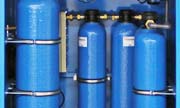
SCM 24

|
|
Cleans 24.000 liters per day
|
SCM 60
|
|
Cleans 60.000 liters per day
|
Video: How it works

The SCG Advantage
Our market-leading, water cleaning solutions have many advantages. To read more click the items below:
No Chemicals
Our machines and technology does not use any chemicals, at all.
Read more...
No Waste Water
Our machines do not waste any water. Yield = 100%.
Read more...
Low energy use
Uses 50 times less energy than a Reverse Osmosis Machine.
Read more...
Low ownership cost
Lower maintenance and operation costs due to our technology.
Read more...
Easy to install
Simple "plug and play" installation makes for easy deployment.
Read more...
Extremely compact
A compact system, contained in an easy to transport cabinet.
Read more...
Outperforms R.O.
SCG technologies outperform Reverse Osmosis systems.
Read more...
Faster ROI
Get a faster Return on Investment with our systems.
Read more...
Latest News
Latest Blog Posts
| Chemicals in water treatment? |
| Water storage - Whats best for keeping water clean and drinkable? |
| Case: Disaster Management Water Treatment |
Contact SCG
891 Showroom Place
Suite 101
Chula Vista, CA, 91914
Phone: +1 619-878-2730
Contact us by email