









Designing a Mobile Water Treatment Trailer for Disaster Relief
When floods, earthquakes, wildfires, or infrastructure failures interrupt a public water supply, communities need more than bottled water. They need a reliable source that can treat local water, operate with limited utilities, and move quickly between affected areas. A mobile water treatment trailer can provide that flexibility when its capacity, treatment process, and logistics are planned around real field conditions.
The most effective units are designed as complete water-production systems rather than as filtration equipment placed on a trailer. They combine intake, pretreatment, purification, disinfection, storage, power, controls, operator access, and safe distribution. Every component must continue working despite variable raw-water quality, difficult roads, weather exposure, and limited technical support.
Swiss Cleanwater Group develops water-treatment solutions for applications where dependable purification and efficient operation are essential. Its approach can support emergency systems intended to reduce chemical use, minimize reject water, and limit energy consumption while addressing contaminants such as bacteria, manganese, arsenic, pesticides, and uranium.
Define The Relief Mission First
A trailer for a rural flood response will have different requirements from a unit serving a damaged urban network. Before selecting pumps or membranes, define the population served, daily drinking-water demand, expected deployment period, source-water type, transport limitations, and distribution method. A small unit may supply a medical post or livestock operation, while a larger system may need to support a temporary settlement.
The source could be a river, shallow well, borehole, reservoir, or tanker delivery. Each option creates different risks. Floodwater may contain high turbidity, pathogens, fuel residues, pesticides, and sewage. Groundwater may look clear while containing dissolved iron, manganese, arsenic, or uranium. A useful reference for understanding these naturally occurring and human-made water concerns is the company’s guide to water quality.
Set performance targets in practical terms: treated-water output per hour, daily operating window, start-up time, storage volume, and acceptable downtime. The design should also state whether the product water is intended for direct drinking, cooking, hygiene, medical use, livestock, or industrial cleaning. These uses may require different treatment barriers and verification procedures.
Build A Treatment Train Around Risk
A robust mobile plant normally begins with screened intake protection and a raw-water pump. Coarse solids, leaves, silt, and debris should be removed before water reaches sensitive equipment. Depending on the source, the next stages may include sedimentation, multimedia filtration, cartridge filtration, activated carbon, ultrafiltration, reverse osmosis, ultraviolet treatment, or another validated disinfection barrier.
No single technology removes every contaminant. Ultrafiltration is valuable for suspended solids, bacteria, and many microorganisms, while activated carbon can reduce selected pesticides, taste, and odor compounds. Reverse osmosis can address dissolved salts and several challenging contaminants, but it produces a concentrate stream and requires suitable pretreatment. Oxidation and specialized filtration may be appropriate for manganese, iron, or arsenic under defined water chemistry.
The treatment sequence should be based on laboratory analysis or rapid field testing rather than assumptions about the source. A modular arrangement makes it possible to bypass an unnecessary stage, add polishing capacity, or isolate a failed component. Chemical-free operation may be achievable for some source waters, but the design must still include a dependable disinfection strategy and a method for preventing microbial regrowth in storage tanks and hoses.
| Design Priority | Suitable Approach | Main Planning Consideration |
|---|---|---|
| Heavy sediment and flood debris | Screens, settling, and staged filtration | Protect pumps and fine membranes from rapid fouling |
| Bacteria and microorganisms | Ultrafiltration, ultraviolet light, or validated disinfection | Confirm performance under changing turbidity and flow |
| Manganese and iron | Oxidation, catalytic media, or specialized filtration | Test pH, dissolved oxygen, and oxidation demand |
| Arsenic or uranium | Selective media, membrane treatment, or a combined process | Manage residuals and verify treated-water concentration |
| Pesticides and organic compounds | Activated carbon or advanced membrane treatment | Monitor breakthrough and replace or regenerate media |
| Salinity and dissolved solids | Reverse osmosis or another desalination process | Provide pretreatment, energy, and concentrate management |
Engineer The Trailer As A Complete System
The chassis must carry the treatment equipment, tanks, pipework, electrical distribution, control cabinet, hoses, spare parts, and safety accessories without exceeding road limits. Weight should be distributed to maintain stability during transport, and heavy tanks should be mounted as low as practical. Hydraulic connections need flexible sections and secure supports so vibration does not damage pumps or fittings.
A weather-resistant enclosure protects the process from rain, dust, heat, and freezing conditions. At the same time, operators need safe access to filters, valves, chemical-free media, sample points, and control screens. Walkways, lighting, ventilation, drainage, and lockable storage are important details, especially when the trailer is used at night or in an unsecured emergency location.
Separate raw-water and treated-water circuits prevent accidental cross-connection. Clearly marked fittings reduce setup errors when different teams operate the unit. The trailer should include a clean-water outlet suitable for tank filling, a low-point drain for winterization, and a method of containing process water during maintenance. If reverse osmosis is used, concentrate should be directed to an approved disposal point rather than discharged where it could contaminate the source.
Plan Power, Transport, And Site Setup
Emergency locations may have unstable electricity or no grid connection. The trailer can be configured for generator power, battery-supported operation, solar assistance, or a hybrid arrangement. Pumps and high-pressure membrane systems are usually the largest energy loads, so variable-speed drives, efficient motors, automatic shutdowns, and operating schedules can reduce fuel consumption.
Power planning must include start-up surges, cold-weather performance, cable lengths, earthing, and protection from wet conditions. A generator should be positioned where exhaust cannot enter the treatment enclosure or nearby shelters. Fuel storage, noise, maintenance access, and fire safety deserve attention before deployment, not after arrival.
Transportability also depends on setup time. A practical trailer should require minimal lifting equipment and use standardized hose connections, quick electrical interfaces, and adjustable supports for uneven ground. The site plan should identify the intake point, raw-water exclusion zone, treated-water filling area, wastewater route, generator position, and vehicle access path. These controls prevent clean and contaminated activities from becoming mixed during a hectic response.
A well-planned mobile system can also support longer-term resilience. Water recovered from certain treatment processes may be reused for non-potable duties when quality and local regulations permit. Guidance on process water reuse can help engineers consider how to reduce discharge and operating costs once the immediate emergency has passed.
Make Monitoring And Safety Operational
Water quality testing cannot be treated as a final inspection. Operators should be able to measure turbidity, conductivity, pH, temperature, flow, pressure, and disinfectant performance where relevant. Sampling points before and after key treatment stages help identify a blocked filter, exhausted media bed, membrane failure, or contamination event before unsafe water reaches users.
Controls should display alarms in plain language and record operating data for traceability. Automatic shutdowns can respond to low feed pressure, high differential pressure, tank overflow, power faults, or abnormal product-water conductivity. Manual override functions are useful, but they should be protected against accidental activation and limited to trained personnel.
Hygiene procedures are equally important. Hoses, tanks, couplings, and filling points must be cleaned and protected from contact with soil, standing water, and unclean containers. Operators need written instructions for startup, shutdown, filter replacement, sampling, spill response, and emergency isolation. Practical answers to common treatment and maintenance concerns are available in the company’s water treatment FAQ.
Prepare People And Prove Performance
A trailer may be technically advanced, but it will fail in the field if operators cannot understand its controls or obtain replacement parts. Training should cover the treatment sequence, alarm response, basic water testing, personal protective equipment, sanitation, and safe handling of residuals. Instructions should be visual and multilingual when the unit may be deployed internationally.
Commissioning should reproduce expected emergency conditions as closely as possible. Test with different flow rates, high turbidity, low temperatures, power interruptions, tank changes, and a controlled range of source-water chemistry. Verify the actual treated-water quality through accredited laboratory analysis, not only through instrument readings.
Create a deployment kit containing spare cartridges, seals, connectors, lamps, fuses, test reagents, tools, protective equipment, hoses, and documentation. Digital records can track run hours, water volumes, maintenance tasks, and laboratory results. This information makes future deployments faster and shows whether the system is meeting public-health and sustainability targets.
Prioritize These Design Decisions
The following recommendations help convert a general-purpose trailer into a dependable disaster-response asset:
- Size the treatment capacity around realistic population demand, peak draw, storage volume, and available operating hours.
- Base the process train on source-water testing, with modular stages for turbidity, pathogens, dissolved metals, pesticides, and salinity.
- Include independent raw-water and treated-water circuits, secure sampling points, clear labeling, and hygienic filling connections.
- Design for low-energy operation, manageable residuals, simple maintenance, and compatibility with local power and transport resources.
- Validate the complete trailer through field trials, operator training, laboratory testing, and documented emergency procedures.
A mobile treatment trailer should be judged by the quality of water it produces, the speed at which it can be deployed, and the confidence it gives operators under pressure. Early collaboration with a water-treatment specialist helps align contaminant removal, energy use, residual management, trailer engineering, and long-term maintenance.
Contact Swiss Cleanwater Group to discuss a mobile purification system suited to disaster relief, municipal backup, remote communities, agriculture, livestock, or industrial emergency response. A clear source-water profile and deployment brief can be the starting point for a practical, sustainable design.
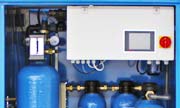
SCM 24
|
|
Cleans 24.000 liters per day
|
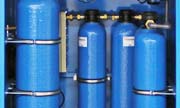
SCM 60
|
|
Cleans 60.000 liters per day
|
Video: How it works
The SCG Advantage
Our market-leading, water cleaning solutions have many advantages. To read more click the items below:
No Chemicals
Our machines and technology does not use any chemicals, at all.
Read more...
No Waste Water
Our machines do not waste any water. Yield = 100%.
Read more...
Low energy use
Uses 50 times less energy than a Reverse Osmosis Machine.
Read more...
Low ownership cost
Lower maintenance and operation costs due to our technology.
Read more...
Easy to install
Simple "plug and play" installation makes for easy deployment.
Read more...
Extremely compact
A compact system, contained in an easy to transport cabinet.
Read more...
Outperforms R.O.
SCG technologies outperform Reverse Osmosis systems.
Read more...
Faster ROI
Get a faster Return on Investment with our systems.
Read more...
Latest News
Latest Blog Posts
| Chemicals in water treatment? |
| Water storage - Whats best for keeping water clean and drinkable? |
| Case: Disaster Management Water Treatment |
Contact SCG
891 Showroom Place
Suite 101
Chula Vista, CA, 91914
Phone: +1 619-878-2730
Contact us by email