









Industrial Process Water Reuse: Reducing Waste and Operating Costs
Water is a production input, a cooling medium, a cleaning agent, and a carrier for heat and contaminants. When it is used once and discharged, a facility loses far more than the water itself. It also pays for intake, pumping, heating, treatment, wastewater handling, and regulatory compliance.
A well-designed reuse strategy turns selected wastewater streams into dependable process water. The goal is not to recycle every drop indiscriminately. It is to identify suitable sources, remove the contaminants that matter, and return the treated water to an application where its quality is adequate.
For manufacturers, farms, food processors, mines, energy facilities, and large buildings, this approach can lower freshwater demand while improving operating resilience. It also creates a practical path toward sustainable water management without compromising production standards.
Why Reuse Matters For Industrial Operations
Industrial water consumption often includes several separate loops. Cooling towers may require make-up water, boilers need carefully conditioned feedwater, and washing lines can consume large volumes that leave with suspended solids, oils, salts, or biological contaminants. Treating these streams as one combined wastewater flow can make recovery unnecessarily expensive.
Segregation is usually the first efficiency gain. A relatively clean rinse stream may need only filtration before reuse, while a concentrated process discharge could require advanced treatment. Keeping streams separate preserves water quality and prevents easy-to-treat water from being contaminated by a more difficult wastewater source.
Reuse also reduces the volume sent to a municipal sewer or on-site treatment plant. Lower discharge flows can mean lower fees, reduced chemical consumption, less sludge, and smaller equipment requirements. In areas affected by drought, supply interruptions, or strict abstraction limits, the value of dependable internal water availability can be just as important as direct cost savings.
Map The Water Cycle Before Choosing Equipment
A useful water audit starts with a flow diagram. Record where water enters, how much each operation consumes, what contaminants it acquires, and where it leaves the site. Measurements taken across shifts and production seasons are more valuable than a single daily estimate because demand and wastewater strength often fluctuate.
The audit should distinguish between continuous and intermittent flows. Cooling circuits may operate all day, while cleaning wastewater appears in short, highly concentrated batches. Temperature, pH, turbidity, conductivity, hardness, organic load, metals, pesticides, and microbiological activity all influence the most suitable treatment train.
Source separation can make reuse financially attractive. For example, backwash water, filter rinse water, or lightly contaminated final-rinse water may be collected for non-potable applications. More complex streams can be directed to dedicated treatment rather than mixed with water that could otherwise be recovered through simpler methods.
Agricultural and food-processing sites may also face pesticide residues in runoff or washwater. Guidance on pesticide contamination treatment can help operators consider contaminant behavior before selecting filtration, adsorption, membrane separation, or another process.
Match Water Quality To The Next Use
Reuse does not always require drinking-water quality. The correct target depends on the application. Water for floor washing, dust suppression, irrigation, cooling-tower make-up, toilet flushing, or equipment rinsing may have different limits for suspended solids, dissolved minerals, microbes, and organic compounds.
Cooling systems illustrate the importance of matching quality to use. Reclaimed water with excess hardness or silica can cause scaling, while high biological activity can create fouling and corrosion. Treatment may include clarification, fine filtration, disinfection, softening, or membrane processes, followed by monitoring of conductivity and concentration cycles.
Boiler feedwater generally requires a tighter specification because dissolved minerals can damage equipment and reduce heat-transfer efficiency. In contrast, an initial wash stage may tolerate a broader quality range. Using fit-for-purpose water avoids the expense of producing highly purified water where it provides no operational benefit.
Treatment specialists can combine physical filtration, adsorption, membrane separation, ultraviolet treatment, and other technologies according to the source water. Swiss Cleanwater Group describes a broad range of water purification solutions for applications where contaminant removal, energy use, and chemical demand must be considered together.
Compare Treatment Routes And Operating Demands
No single technology is ideal for every industrial wastewater stream. A coarse filter may protect downstream equipment, while activated media can target specific dissolved compounds. Ultrafiltration is useful for suspended solids and microorganisms, and reverse osmosis can reduce many dissolved contaminants when a high-quality reuse stream is required.
The practical choice depends on both removal performance and lifecycle cost. Operators should evaluate power consumption, pressure requirements, membrane replacement, backwash frequency, reject-water volume, operator skill, cleaning needs, and the consequences of a temporary treatment interruption.
| Treatment route | Common role in reuse | Main operating considerations | Suitable reuse examples |
|---|---|---|---|
| Coarse and multimedia filtration | Removes grit, suspended solids, and turbidity | Requires backwashing and solids management | Wash water, irrigation, cooling pre-treatment |
| Activated media or adsorption | Targets selected organic compounds and taste or odor compounds | Media capacity and replacement intervals affect cost | Process rinsing, agricultural runoff treatment |
| Ultrafiltration | Reduces fine particles, colloids, and many microorganisms | Needs pretreatment and periodic cleaning | Cooling make-up, washdown, membrane pretreatment |
| Reverse osmosis | Removes many dissolved salts, metals, and trace contaminants | Uses pressure and creates a concentrate stream | Boiler feed, high-quality process water |
| Ultraviolet or comparable disinfection | Controls biological contamination without adding a residual chemical | Requires clear water and reliable lamp or system monitoring | Final rinse, closed-loop process applications |
A staged system often performs better than a single advanced unit. Pretreatment protects sensitive equipment, targeted removal limits energy use, and final disinfection supports microbiological control. The design should also include an outlet for concentrate, sludge, or backwash water so that reuse does not simply transfer waste to another part of the site.
Control Contaminants And Protect Reliability
Industrial reuse systems need more than initial treatment capacity. They require instrumentation and operating rules that show when water quality is changing. Flow meters, pressure gauges, conductivity sensors, turbidity monitors, pH measurement, and microbiological testing can reveal fouling or breakthrough before it affects production.
Source water can contain contaminants that are easy to overlook. Metals such as manganese may stain equipment and interfere with downstream processes. Arsenic requires particular attention because it can be present in groundwater and may not be removed by basic filtration. Facilities using groundwater should review arsenic removal methods when planning a recovery loop or evaluating an existing supply.
Storage tanks and pipework must also be designed for reclaimed water. Poorly sized tanks can create long residence times, temperature problems, or biological growth. Separate identification, backflow protection, sampling points, and automatic diversion to drain help prevent unsuitable water from reaching a sensitive process.
Reliability improves when equipment is modular and maintainable. Parallel filters, standby pumps, accessible media vessels, and clear alarm thresholds can allow production to continue during service work. A reuse project should define what happens during an upset condition rather than assuming the system will always operate at its design value.
Calculate The Business Case Over The Full Life
The financial case includes more than the price of incoming water. A proper calculation considers abstraction or supply charges, sewer tariffs, discharge permits, heating and pumping energy, wastewater chemicals, sludge disposal, production losses, and the cost of expanding treatment capacity. It should also assign value to reduced exposure to water restrictions.
Capital expenditure may include tanks, pipework, pumps, instrumentation, civil works, treatment equipment, and installation. Operating expenditure includes electricity, replacement media, membrane cleaning, laboratory analysis, maintenance, and staff time. A system with a lower purchase price may become more expensive if it consumes considerable energy or requires frequent intervention.
The strongest projects often begin with a high-volume, predictable stream and a nearby reuse point. Short pipe runs reduce pumping costs, while consistent water quality simplifies treatment. Pilot testing can confirm recovery rates, contaminant removal, reject volumes, and maintenance intervals before full-scale construction.
Performance should be tracked with clear indicators: cubic metres of freshwater avoided, percentage recovery, cost per cubic metre, discharge reduction, energy per cubic metre, and the number of quality-related production incidents. Reviewing these measures monthly helps identify drift and demonstrates the value of the system to management.
Practical Priorities For A Reuse Program
A phased program makes industrial water recovery easier to manage and finance. Begin with measurement and source separation, then address the simplest reuse opportunity. Once operators understand the water balance and treatment behavior, more demanding loops can be added without overbuilding the first installation.
Useful priorities include:
- Audit every intake, process loop, wastewater outlet, and seasonal variation before specifying equipment.
- Separate clean, lightly contaminated, and highly contaminated streams at the point of generation.
- Define water-quality targets according to the next use rather than automatically pursuing potable standards.
- Include monitoring, maintenance access, reject management, and emergency bypasses in the original design.
- Compare lifecycle cost, energy demand, chemical use, and freshwater savings over the expected service life.
A qualified treatment partner can support sampling, pilot trials, equipment selection, installation planning, and operator training. The final design should reflect the facility’s actual chemistry, production schedule, discharge requirements, and available space rather than relying on a generic package.
Industrial water recovery becomes most effective when it is treated as a production improvement rather than an isolated environmental project. Start by mapping the site’s water flows, identify a controllable reuse loop, and assess the treatment requirements with representative samples. Contact Swiss Cleanwater Group to discuss a practical system for reducing freshwater demand, wastewater volume, and long-term operating costs.
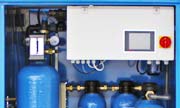
SCM 24
|
|
Cleans 24.000 liters per day
|
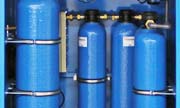
SCM 60
|
|
Cleans 60.000 liters per day
|
Video: How it works
The SCG Advantage
Our market-leading, water cleaning solutions have many advantages. To read more click the items below:
No Chemicals
Our machines and technology does not use any chemicals, at all.
Read more...
No Waste Water
Our machines do not waste any water. Yield = 100%.
Read more...
Low energy use
Uses 50 times less energy than a Reverse Osmosis Machine.
Read more...
Low ownership cost
Lower maintenance and operation costs due to our technology.
Read more...
Easy to install
Simple "plug and play" installation makes for easy deployment.
Read more...
Extremely compact
A compact system, contained in an easy to transport cabinet.
Read more...
Outperforms R.O.
SCG technologies outperform Reverse Osmosis systems.
Read more...
Faster ROI
Get a faster Return on Investment with our systems.
Read more...
Latest News
Latest Blog Posts
| Chemicals in water treatment? |
| Water storage - Whats best for keeping water clean and drinkable? |
| Case: Disaster Management Water Treatment |
Contact SCG
891 Showroom Place
Suite 101
Chula Vista, CA, 91914
Phone: +1 619-878-2730
Contact us by email