


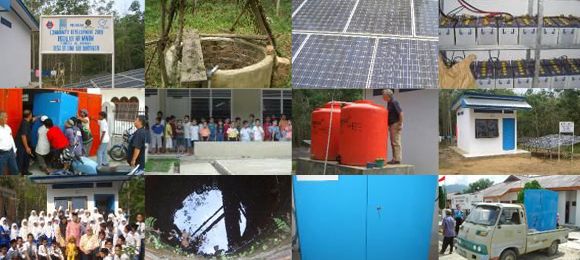







Achieving EPA Arsenic Compliance Without Treatment Chemicals
Arsenic in drinking water is a regulatory, operational, and public-health concern. In the United States, the Environmental Protection Agency (EPA) limits arsenic in public drinking water to 10 micrograms per litre, or 10 parts per billion (ppb). Meeting this limit requires more than installing a filter: a water supplier must understand the source, select a suitable treatment barrier, verify performance, and maintain reliable records.
Non-chemical treatment methods can help utilities and private operators reduce arsenic without routine dosing of coagulants, oxidants, or other reagents. Depending on the water chemistry, these methods may include adsorptive media, membrane separation, physical filtration, aeration combined with capture, or electrochemical processes. The best solution depends on arsenic concentration, species, pH, competing contaminants, flow rate, and the required operating profile.
A chemical-free approach should also be defined accurately. It generally means that the process does not require regular chemical addition during normal operation. It does not mean that the system creates no residuals, uses no replacement media, or eliminates every waste stream. Responsible design accounts for spent media, concentrate, backwash, sludge, and safe disposal from the beginning.
Understand The EPA Arsenic Standard
The federal arsenic maximum contaminant level is 0.010 mg/L, equivalent to 10 ppb. This standard applies to public water systems covered by the Safe Drinking Water Act, including community systems and many non-transient, non-community systems. States with primacy may impose additional monitoring, approval, reporting, or operator requirements, so federal compliance is only the starting point.
Compliance is normally evaluated at the entry point to the distribution system, using the monitoring schedule established by the applicable state authority. Sampling frequency can depend on system size, source-water results, treatment changes, and prior compliance history. A plant that produces occasional low readings but has unstable performance may still create a regulatory risk if quarterly or annual results exceed the allowable level.
Treatment planning should therefore include sampling, laboratory methods, reporting, and consumer communication. The design target should usually be below 10 ppb rather than exactly at the limit, creating an operating margin for changes in raw-water quality, media age, temperature, flow, or pH.
Characterize The Source Before Selecting Equipment
Arsenic is commonly found as arsenite, As(III), and arsenate, As(V). These species behave differently in water. As(V) is often easier to capture with iron-based adsorptive media, while As(III) may require oxidation or a treatment process capable of removing it directly. Total arsenic results alone are not enough for reliable process selection.
A proper baseline should examine total and dissolved arsenic, arsenic speciation, pH, alkalinity, iron, manganese, phosphate, silica, sulfate, total dissolved solids, turbidity, organic matter, and microbial indicators. Competing ions can occupy adsorption sites or change membrane performance. Manganese and iron may foul equipment, while high silica or salinity can affect adsorption and reverse osmosis recovery.
Seasonal sampling is valuable when wells, surface water, or blended sources change throughout the year. Pilot testing with representative water is preferable to relying only on manufacturer data. A pilot can reveal breakthrough timing, pressure loss, cleaning requirements, concentrate volume, and the effect of realistic flow variations.
Choose A Non-Chemical Treatment Barrier
Adsorptive media can remove arsenic by retaining it on a reactive surface, often one based on iron or another selective material. These systems can operate without continuous chemical dosing and are relatively straightforward to automate. Their useful life depends on arsenic loading and the presence of phosphate, silica, natural organic matter, and other contaminants.
Membrane systems such as reverse osmosis and nanofiltration use pressure to separate dissolved contaminants from treated water. They can achieve substantial arsenic reduction and address several other dissolved pollutants at the same time. Their design must account for energy use, pretreatment, recovery, cleaning, membrane replacement, and management of the concentrated reject stream.
Aeration alone generally does not remove arsenic from water. It may help convert As(III) to As(V), but the converted arsenic still needs to be captured by media or another separation process. Physical filtration can remove arsenic-bearing particles, but it is not a dependable solution for dissolved arsenic unless it forms part of a complete treatment train.
Electrochemical or electrocoagulation systems can generate reactive iron or other capture mechanisms without dosing liquid coagulants. These systems may reduce chemical storage and handling, yet they still produce a residual that requires management. The appropriate choice is the process that delivers stable treated water with a manageable lifecycle burden—not simply the technology with the fewest visible inputs.
Control pH And Water Chemistry
pH is one of the most important variables in arsenic removal. It affects arsenic charge, media surface chemistry, oxidation reactions, membrane rejection, and the interaction between arsenic and competing ions. A system that performs well during one season may lose efficiency when source-water pH or alkalinity shifts.
Operators should establish a practical control range through laboratory and pilot testing. If pH adjustment is necessary, the project should compare the environmental and operational effects of chemical dosing with other methods, including source blending, media selection, or process sequencing. A chemical-free system may still need careful water-quality control to preserve its treatment capacity.
The relationship between pH and contaminant removal is explained in this pH treatment guidance, which is useful when comparing chemical-free treatment options. Understanding these interactions also helps prevent premature media exhaustion and unexpected breakthrough.
| Treatment approach | Suitable application | Main operating burden | Compliance considerations |
|---|---|---|---|
| Iron-based adsorptive media | Small to medium flows with stable chemistry | Media replacement and breakthrough monitoring | Confirm arsenic capacity with local water and test treated water routinely |
| Reverse osmosis or nanofiltration | High dissolved-contaminant loads or complex water | Energy, pretreatment, membrane cleaning, and reject handling | Verify recovery, rejection, concentrate disposal, and continuous performance |
| Oxidation followed by capture | Water containing significant As(III) | Oxidation control and downstream media or filtration | Oxidation is not removal by itself; validate the complete treatment train |
| Electrochemical treatment | Sites seeking reduced liquid-chemical handling | Electrical control, electrode or component replacement, and residual management | Demonstrate stable removal, residual quality, and approved disposal procedures |
| Blending with protected sources | Sources with manageable arsenic variability | Reliable supply management and ongoing sampling | Confirm blended water remains below the compliance target under all operating conditions |
Validate Performance At Full Scale
A compliance-ready design includes measurable performance targets. These may cover raw-water arsenic, finished-water arsenic, flow, pressure, pH, conductivity, turbidity, media contact time, membrane recovery, and alarm limits. Online sensors can support operational control, but laboratory arsenic analysis remains essential for regulatory verification.
Pilot results should be converted into an operating envelope: minimum and maximum flow, expected media life, backwash frequency, membrane replacement interval, allowable pH range, and response steps for an alarm. Sampling points should include raw water, intermediate stages where relevant, and the final entry point. The plan should also specify who reviews results and how quickly corrective action is taken.
Lifecycle economics matter because a low purchase price can conceal high energy use, frequent media replacement, or expensive residual disposal. A structured return on investment analysis can compare capital expenditure, operating costs, avoided chemical handling, maintenance, water loss, and expected service life before a project is approved.
Operate, Document, And Improve
EPA compliance depends on consistent operation after installation. Operators need clear procedures for start-up, shutdown, sampling, media changeout, membrane cleaning, bypass prevention, alarm response, and emergency water supply. Automatic controls should fail safely and prevent untreated water from reaching the distribution network during a process upset.
Documentation should include equipment specifications, commissioning results, calibration records, laboratory reports, maintenance logs, media certificates, residual-disposal records, and communication with the state drinking-water authority. These records demonstrate that the treatment system is being operated as designed and provide evidence during inspections or compliance reviews.
Performance should be reviewed when a new well is added, source-water chemistry changes, production increases, or arsenic results begin trending upward. A modular system can make future expansion easier, but only if hydraulic capacity, contact time, control logic, and residual handling were considered during the original design.
Implementation Priorities
A practical compliance program can be organized around the following actions:
- Test total arsenic and arsenic species across seasonal source-water conditions.
- Measure pH, iron, manganese, phosphate, silica, alkalinity, turbidity, and competing dissolved constituents.
- Compare adsorption, membrane, oxidation-and-capture, and electrochemical options through pilot testing.
- Define finished-water targets, alarm points, sampling frequency, residual handling, and state approval requirements.
- Calculate total lifecycle cost, including energy, replacement media, maintenance, water loss, and disposal.
The selected process should be matched to the site rather than chosen from a generic equipment list. Municipal systems may prioritize redundancy and remote monitoring, while farms, livestock operations, buildings, mobile units, and industrial facilities may need compact equipment, variable flow control, or rapid deployment. In every setting, treatment verification and operator access are as important as contaminant-removal capacity.
Swiss Cleanwater Group develops water-treatment systems for applications that require reliable contaminant reduction with limited chemical use, waste, and energy demand. To move from source-water results to an engineered arsenic-control strategy, contact the company with laboratory data, flow requirements, and operating conditions for a site-specific evaluation.
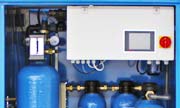
SCM 24
|
|
Cleans 24.000 liters per day
|
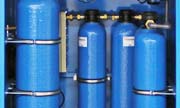
SCM 60
|
|
Cleans 60.000 liters per day
|
Video: How it works
The SCG Advantage
Our market-leading, water cleaning solutions have many advantages. To read more click the items below:
No Chemicals
Our machines and technology does not use any chemicals, at all.
Read more...
No Waste Water
Our machines do not waste any water. Yield = 100%.
Read more...
Low energy use
Uses 50 times less energy than a Reverse Osmosis Machine.
Read more...
Low ownership cost
Lower maintenance and operation costs due to our technology.
Read more...
Easy to install
Simple "plug and play" installation makes for easy deployment.
Read more...
Extremely compact
A compact system, contained in an easy to transport cabinet.
Read more...
Outperforms R.O.
SCG technologies outperform Reverse Osmosis systems.
Read more...
Faster ROI
Get a faster Return on Investment with our systems.
Read more...
Latest News
Latest Blog Posts
| Chemicals in water treatment? |
| Water storage - Whats best for keeping water clean and drinkable? |
| Case: Disaster Management Water Treatment |
Contact SCG
891 Showroom Place
Suite 101
Chula Vista, CA, 91914
Phone: +1 619-878-2730
Contact us by email