









How pH Shapes Chemical-Free Contaminant Removal
Water treatment performance depends on more than the choice of filter, membrane, or oxidation process. The pH of the source water influences contaminant chemistry, mineral surfaces, microbial activity, oxidation reactions, and the stability of the treated water. In systems designed to operate without added chemicals, this influence becomes especially important because the process must work with the water’s natural properties.
A chemical-free treatment plant may use aeration, catalytic filtration, biological activity, adsorption, ultrafiltration, or combinations of these technologies. Each method has an effective operating range. When pH moves outside that range, a system can remove less manganese, retain less arsenic, or experience faster media fouling even when flow rates and maintenance routines remain unchanged.
Understanding the relationship between pH and contaminant removal helps engineers select suitable treatment stages and helps operators identify the cause of changing water quality. It also supports lower waste production and reduced energy consumption, which are central aims of sustainable drinking-water treatment.
Why pH Controls Treatment Chemistry
pH describes the balance between acidic and alkaline conditions in water. A small numerical change can alter whether a contaminant remains dissolved, attaches to a filter surface, reacts with oxygen, or forms a particle that can be separated. The same pH shift may improve the removal of one substance while making another more difficult to capture.
pH also affects alkalinity, oxidation-reduction potential, and the electrical charge of treatment media. Mineral-based filtration materials often develop different surface charges as pH changes. This can strengthen or weaken the attraction between the media and dissolved pollutants. For this reason, a treatment assessment should measure pH alongside conductivity, alkalinity, hardness, dissolved oxygen, and the target contaminants.
Natural groundwater can vary seasonally or across nearby wells. Rainfall infiltration, geological formations, agricultural activity, and pumping conditions may all influence pH. A system sized from a single laboratory sample may therefore perform differently once it receives water from the full production well or an expanded catchment.
Manganese And Iron Depend On Oxidation
Manganese is frequently found in groundwater in a dissolved form that passes through ordinary sand filters. Chemical-free treatment commonly relies on aeration or another oxygen-transfer step, followed by catalytic or biological filtration. pH influences how quickly manganese oxidizes and how effectively the resulting manganese oxides remain attached to the filter media.
At a suitable pH, oxygen can convert dissolved manganese into an insoluble oxide that is easier to retain. If the water is too acidic, this oxidation may be slow, increasing the risk that manganese will pass through the filter. Iron generally oxidizes more readily than manganese, so a plant may show acceptable iron removal while still struggling with manganese breakthrough.
The interaction between pH and filtration media is equally significant. Manganese oxide coatings can become active surfaces that support further removal, but their performance depends on adequate oxygen, contact time, and regular backwashing. A detailed explanation of manganese groundwater treatment shows why process conditions must be evaluated as a connected system rather than as isolated equipment specifications.
Arsenic And Uranium Change Form
Arsenic removal is strongly influenced by chemical form. Arsenite, often called As(III), is generally more difficult to adsorb than arsenate, or As(V). Oxidation can convert arsenite into arsenate, after which adsorption onto iron-rich media may become more effective. pH then affects the charge of both the arsenate species and the filter surface.
In many adsorption processes, a moderately acidic to near-neutral range improves arsenic capture. At higher pH, negatively charged arsenate may be repelled by similarly charged media surfaces. Natural phosphate and silicate in groundwater can compete for adsorption sites, reducing performance even when the pH appears suitable. Monitoring these competing ions is important when arsenic levels vary.
Uranium chemistry is also pH-sensitive. In oxygenated groundwater, uranium can form dissolved uranyl-carbonate complexes, particularly where alkalinity is high. These complexes may be more mobile and harder to remove with some adsorption media. Membrane treatment, selective adsorption, or ion exchange may respond differently to the same pH conditions, so pilot testing is often needed before selecting a full-scale process.
| Contaminant or concern | How pH can affect removal | Operational focus |
|---|---|---|
| Manganese | Changes oxidation rate and catalytic filtration performance | Check pH, dissolved oxygen, and contact time |
| Iron | Influences oxidation and particle formation | Provide suitable aeration and backwashing |
| Arsenic | Alters arsenic speciation and media surface charge | Assess oxidation state, phosphate, and silicate |
| Uranium | Affects carbonate complexes and adsorption behavior | Test alkalinity and selectivity of the treatment medium |
| Bacteria | Influences biological activity and disinfectant-free barriers | Control residence time, turbidity, and media hygiene |
| Pesticides | Changes charge, solubility, and adsorption strength | Match media type to the specific compound |
Biological Activity And Microbial Stability
Some chemical-free systems encourage beneficial biological activity on filter media. These biofilters can support the oxidation of manganese and ammonium while reducing the need for chemical oxidants. pH affects microbial growth, enzyme activity, and the balance between different organisms in the filter bed.
A stable biological filter usually needs consistent water chemistry. Sudden pH changes can reduce treatment efficiency or disturb the established microbial community. Low pH may slow certain oxidation pathways, while excessive alkalinity can favor other reactions or change the solubility of metals. Operators should interpret a rise in treated-water manganese or ammonium together with pH, temperature, dissolved oxygen, and filter pressure data.
Chemical-free does not mean maintenance-free. Biological and catalytic filters still require appropriate backwashing, hydraulic control, and protection from excessive turbidity. If backwashing removes too much active biomass or fails to release trapped solids, the relationship between pH and contaminant removal can be masked by clogging or media aging.
pH And Physical Separation
Membrane systems are affected by pH through surface charge, scaling potential, and the solubility of minerals. A change in pH can increase the likelihood of calcium carbonate scaling or alter the rejection of charged dissolved compounds. Pretreatment is therefore essential when groundwater contains hardness, iron, manganese, or high alkalinity.
Adsorption systems also have a defined pH window. At the correct value, contaminant molecules can attach to activated carbon, iron hydroxide, manganese oxide, or other specialized media. Outside that window, adsorption capacity may decline, and a compound that was previously retained may appear in the treated water.
Pesticides illustrate why contaminant-specific testing matters. Their removal depends on molecular size, polarity, charge, and hydrophobicity. pH can change these properties for ionizable pesticides, affecting whether carbon adsorption or membrane separation is the stronger barrier. A broad claim that one pH range removes every contaminant is therefore unreliable.
Designing Around A Stable Operating Range
The most effective approach is to identify the natural pH range of the source water before choosing the treatment sequence. Historical sampling should cover different seasons and operating conditions where possible. Laboratory jar tests, column tests, and pilot installations can reveal how pH interacts with the selected media and actual groundwater chemistry.
pH adjustment may be appropriate in some plants, but adding acid or alkali would change the process from purely chemical-free operation. Where no dosing is desired, engineers can often compensate through aeration, media selection, staged filtration, longer contact time, or a different separation technology. The practical choice depends on contaminant concentration, flow, land availability, waste handling, and the required drinking-water standard.
Useful design and operating priorities include:
- Measure pH at the raw-water inlet, after aeration, through each filter stage, and at the treated-water outlet.
- Pair pH readings with alkalinity, dissolved oxygen, redox potential, temperature, and contaminant analysis.
- Test the selected media across the expected pH range instead of relying on a single ideal laboratory value.
- Track breakthrough trends and pressure loss so chemical changes are not confused with clogging or exhausted media.
- Reassess performance after seasonal groundwater changes, well modifications, or significant shifts in pumping rates.
Reliable treatment also depends on clear records and practical operator support. The history of water treatment shows how solutions have evolved from simple physical separation toward integrated systems that respond to source-water chemistry; this broader water treatment history provides useful context for today’s low-impact technologies.
pH should be treated as a control variable rather than a number recorded only for compliance. Automated monitoring, alarm limits, and periodic laboratory verification can help operators detect gradual changes before they lead to contaminant breakthrough. This is especially valuable for remote installations, municipal wells, agricultural facilities, and mobile treatment units where troubleshooting resources may be limited.
A well-designed chemical-free plant uses the natural chemistry of water to its advantage. When pH, oxidation, adsorption, biological activity, and hydraulic performance are considered together, treatment can remain effective without unnecessary reagents, excessive energy demand, or avoidable waste. Contact Swiss Cleanwater Group to discuss source-water testing, pilot evaluation, and a treatment configuration suited to the contaminants and pH conditions of a specific application.
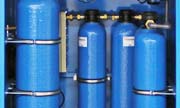
SCM 24

|
|
Cleans 24.000 liters per day
|
SCM 60
|
|
Cleans 60.000 liters per day
|
Video: How it works

The SCG Advantage
Our market-leading, water cleaning solutions have many advantages. To read more click the items below:
No Chemicals
Our machines and technology does not use any chemicals, at all.
Read more...
No Waste Water
Our machines do not waste any water. Yield = 100%.
Read more...
Low energy use
Uses 50 times less energy than a Reverse Osmosis Machine.
Read more...
Low ownership cost
Lower maintenance and operation costs due to our technology.
Read more...
Easy to install
Simple "plug and play" installation makes for easy deployment.
Read more...
Extremely compact
A compact system, contained in an easy to transport cabinet.
Read more...
Outperforms R.O.
SCG technologies outperform Reverse Osmosis systems.
Read more...
Faster ROI
Get a faster Return on Investment with our systems.
Read more...
Latest News
Latest Blog Posts
| Chemicals in water treatment? |
| Water storage - Whats best for keeping water clean and drinkable? |
| Case: Disaster Management Water Treatment |
Contact SCG
891 Showroom Place
Suite 101
Chula Vista, CA, 91914
Phone: +1 619-878-2730
Contact us by email