









How Small Towns Can Choose Chemical-Free Water Filtration
A small town water supply has to deliver safe, reliable drinking water every day, often with limited staff, a modest operating budget, and infrastructure that cannot be taken offline for long. Choosing a chemical-free filtration system therefore involves more than selecting a unit with the highest removal rate. The technology must suit the source water, daily demand, available space, energy supply, and maintenance capacity.
Chemical-free treatment can reduce the risks associated with chlorine storage, dosing errors, chemical transport, and residual by-products. Depending on the water chemistry, a suitable system may remove manganese, arsenic, uranium, pesticides, bacteria, hydrogen sulfide, turbidity, or other contaminants through adsorption, oxidation, biological action, membrane separation, or physical filtration.
The best decision begins with verified water data and ends with a practical operating plan. Municipal leaders should consider the entire treatment process, including pretreatment, backwashing, monitoring, filter replacement, sludge or concentrate management, and the protection of water quality throughout the distribution network.
Start With The Water Source
A filtration system should be selected from a complete water analysis rather than from a single reported contaminant. Groundwater may contain dissolved iron, manganese, arsenic, uranium, or hydrogen sulfide, while surface water can present greater variation in turbidity, bacteria, algae, pesticides, and organic matter. Seasonal changes can alter both contaminant levels and flow requirements.
Collect samples from each well, intake, or storage point that will feed the plant. Test for regulated contaminants as well as pH, alkalinity, hardness, conductivity, temperature, turbidity, and dissolved oxygen. These supporting measurements affect how well a filter performs. For example, a medium that removes manganese under one pH range may perform poorly when the water chemistry changes.
The town should also examine its future water demand. A system sized only for average consumption may struggle during summer irrigation, firefighting, tourism, or population growth. Peak hourly flow, daily production, contact time, and storage capacity are essential design inputs.
Match The Technology To The Contaminant
Chemical-free filtration is not one universal process. Adsorptive media can capture arsenic, uranium, pesticides, or other dissolved compounds, but the media must be selected for the specific water chemistry and replaced when its capacity is reached. Catalytic or biologically active media may address iron, manganese, or hydrogen sulfide without continuous chemical dosing.
Membrane systems can provide a high level of separation for dissolved salts and many contaminants, although they may require higher pressure, careful pretreatment, and management of a concentrated reject stream. Ultraviolet treatment can inactivate bacteria, viruses, and other microorganisms without adding a disinfectant, but it does not remove dissolved chemicals and requires low turbidity and dependable electrical power.
Odor also deserves careful attention. Hydrogen sulfide can create a rotten-egg smell and may accelerate corrosion. Towns comparing treatment options can review this guidance on hydrogen sulfide odor to understand how source conditions influence a chemical-free design. A system that addresses the odor but fails to control the underlying compound will provide only a temporary solution.
Evaluate The Complete Treatment Train
A reliable plant often uses several physical treatment stages rather than one all-purpose filter. A coarse screen or sediment filter may protect downstream equipment, followed by a contaminant-specific media bed, membrane, or disinfection stage. The arrangement should prevent one treatment step from shortening the useful life of another.
Ask suppliers to explain what happens during normal operation, backwashing, cleaning, media exhaustion, and unexpected water-quality changes. Chemical-free does not mean maintenance-free. Filters may still require periodic backwash water, replacement cartridges, media reconditioning, membrane cleaning, lamp replacement, or inspection of pumps and valves.
The design should also include water-quality monitoring. Depending on the hazards, this may involve online turbidity, flow, pressure, conductivity, ultraviolet intensity, or oxidation-reduction measurements, supported by regular laboratory testing. Automatic alarms and simple operating instructions help a small public works team identify problems before treated water reaches customers.
| Selection Factor | Why It Matters | Questions For The Supplier |
|---|---|---|
| Contaminant profile | Determines the suitable media or process | Which compounds are removed, and under what pH and temperature conditions? |
| Flow and demand | Prevents low pressure and inadequate contact time | What are the average, peak-hour, and future design capacities? |
| Residual management | Chemical-free systems may still create backwash or concentrate | How much waste stream is produced, and how is it handled? |
| Energy supply | Pumps, UV units, and controls need dependable power | What is the energy use, backup requirement, and restart behavior? |
| Maintenance capacity | Simple service is vital for small municipal teams | Which tasks are required weekly, monthly, and annually? |
| Verification | Demonstrates that public-health objectives are being met | What pilot testing, performance data, and monitoring plan are available? |
Compare Costs Beyond The Purchase Price
A low equipment price may conceal significant operating expenses. Municipal buyers should calculate the full life-cycle cost over at least ten years, including electricity, replacement media, membranes, cartridges, laboratory tests, spare parts, labor, backwash water, building modifications, and disposal or treatment of residuals.
Chemical-free equipment can reduce costs associated with chemical storage, dosing pumps, safety procedures, and chemical deliveries. However, those savings should be weighed against the cost of specialized media or higher-pressure pumping. A sound financial comparison uses the same water volume, treatment target, service life, and reliability assumptions for every option.
Ask for a written estimate of treated-water cost per cubic meter or thousand gallons. Request separate figures for routine operation and major maintenance. The supplier should state expected media life using the town’s actual contaminant concentrations, not only laboratory conditions or idealized flow rates.
Plan For Local Operation And Resilience
Small communities benefit from systems that operators can understand and service locally. Clear control panels, accessible valves, standard replacement parts, and remote alerts can make a significant difference. Training should cover water sampling, pressure changes, alarm response, backwashing, safe isolation, and documentation of maintenance.
Resilience is equally important. Consider whether the system can operate during grid interruptions, extreme weather, source-water changes, or a temporary shortage of trained personnel. Solar power, battery storage, gravity-fed sections, or an emergency bypass may support continuity, but every backup arrangement must preserve treatment safety.
A documented emergency plan should identify what happens if a filter is exhausted, a pump fails, a microbial result is unacceptable, or an intake becomes contaminated. The municipality should know when to stop distribution, switch to another source, notify health authorities, and restore service after testing.
Verify Performance Before Full Installation
Pilot testing is one of the most effective ways to reduce procurement risk. A small skid-mounted unit can show how the proposed process responds to local water chemistry, seasonal temperatures, actual flow rates, and the intended operating schedule. Testing should measure both removal performance and practical factors such as pressure loss, backwash frequency, water recovery, and operator workload.
Performance guarantees should be specific. They should identify the influent concentration, treated-water target, flow rate, operating conditions, testing method, and remedy if the system fails to meet the agreed standard. Generic claims such as “removes contaminants” are insufficient for a public water project.
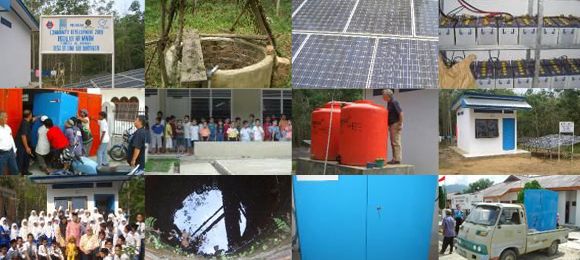
Independent laboratory verification and references from comparable installations add confidence. A school or community project using solar-powered filtration can also illustrate how treatment equipment performs where grid power, technical support, or infrastructure may be limited. The most useful case studies provide source-water data, capacity, operating history, maintenance requirements, and measured results.
Build A Practical Selection Brief
Before requesting proposals, the town should prepare a concise technical brief. It should describe the water sources, laboratory results, required production, peak demand, treatment objectives, available building space, power conditions, discharge limits, and operator resources. This gives suppliers a common basis for design and makes proposals easier to compare.
The brief should also state whether the municipality prefers a modular plant, containerized equipment, a mobile unit, or a permanent installation. Future expansion is easier when pipework, controls, and foundations are designed for additional capacity from the beginning.
Useful selection criteria include:
- Verified removal of every relevant contaminant at the town’s measured concentrations
- Stable operation during average and peak flow conditions
- Low chemical dependence, manageable energy use, and limited water waste
- Straightforward maintenance with locally available parts and clear training
- Monitoring, alarms, backup power, and documented emergency procedures
Move From Water Data To A Reliable Plant
Choosing chemical-free filtration is a public-health and infrastructure decision, not simply an equipment purchase. The strongest solution combines accurate testing, contaminant-specific treatment, transparent life-cycle costs, resilient operation, and measurable performance after commissioning.
Swiss Cleanwater Group provides water-treatment technologies and project guidance for municipal, rural, industrial, agricultural, and mobile applications. Contact the company with your latest laboratory results, flow requirements, and treatment goals to develop a practical filtration assessment and compare a system designed for your town’s actual conditions.
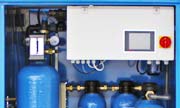
SCM 24
|
|
Cleans 24.000 liters per day
|
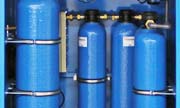
SCM 60
|
|
Cleans 60.000 liters per day
|
Video: How it works
The SCG Advantage
Our market-leading, water cleaning solutions have many advantages. To read more click the items below:
No Chemicals
Our machines and technology does not use any chemicals, at all.
Read more...
No Waste Water
Our machines do not waste any water. Yield = 100%.
Read more...
Low energy use
Uses 50 times less energy than a Reverse Osmosis Machine.
Read more...
Low ownership cost
Lower maintenance and operation costs due to our technology.
Read more...
Easy to install
Simple "plug and play" installation makes for easy deployment.
Read more...
Extremely compact
A compact system, contained in an easy to transport cabinet.
Read more...
Outperforms R.O.
SCG technologies outperform Reverse Osmosis systems.
Read more...
Faster ROI
Get a faster Return on Investment with our systems.
Read more...
Latest News
Latest Blog Posts
| Chemicals in water treatment? |
| Water storage - Whats best for keeping water clean and drinkable? |
| Case: Disaster Management Water Treatment |
Contact SCG
891 Showroom Place
Suite 101
Chula Vista, CA, 91914
Phone: +1 619-878-2730
Contact us by email