








How to Remove Manganese and Iron Together in One Filtration Step
Iron and manganese often occur in the same groundwater source. Both metals can enter water naturally as minerals dissolve from rock and soil, yet they create different treatment problems from ordinary suspended particles. Iron may cause reddish staining, metallic taste, and turbidity, while manganese can produce black deposits, unpleasant taste, and concerns when concentrations exceed drinking-water limits.
A properly designed combined filtration system can remove both contaminants in one treatment stage. The key is to create the right oxidation conditions and choose filter media that can retain the resulting particles. This approach can reduce chemical consumption, simplify plant operation, and produce stable water quality for municipalities, farms, buildings, and industrial facilities.
A single filtration step does not mean that raw water can always pass directly through a tank without preparation. In many installations, air contact, oxidation inside the filter bed, or catalytic activity on the media provides the conditions needed for iron and manganese removal. Water analysis and process design determine which configuration is suitable.
Why Iron And Manganese Require Careful Control
Dissolved iron is often present as ferrous iron, while manganese commonly occurs as soluble manganese ions. In these forms, the contaminants are too small to be captured by a standard sediment cartridge. They must first be oxidized into insoluble particles, such as ferric hydroxide and manganese dioxide, which can then be trapped in a filter bed.
Iron generally oxidizes more easily than manganese. Manganese removal often requires a higher pH, stronger oxidation potential, longer contact time, or a media surface that accelerates the reaction. If a system is designed only around the iron concentration, manganese may pass through even when the water looks clear.
The two contaminants can also affect each other. Iron deposits may coat filtration media and reduce its ability to catalyze manganese oxidation. Organic matter, hydrogen sulfide, ammonia, alkalinity, and other dissolved substances may further change the treatment response. A combined design therefore has to consider the complete water chemistry rather than relying on a universal filter specification.
Test The Water Before Choosing A Filter
A laboratory analysis should identify total iron, dissolved iron, manganese, pH, alkalinity, turbidity, hardness, temperature, dissolved oxygen, and organic content. Where relevant, testing should also include arsenic, uranium, bacteria, pesticides, and other contaminants that could influence the treatment train. Seasonal sampling is useful when groundwater chemistry changes during wet and dry periods.
The analysis should distinguish between dissolved and particulate metals. A source with already oxidized iron may need mainly physical filtration, whereas water containing soluble ferrous iron and manganese needs an oxidation and adsorption process. Flow rate, daily volume, peak demand, backwash water availability, and the required treated-water quality are equally important.
Pilot testing is valuable when manganese levels are high, the pH is low, or the water contains competing contaminants. A small test column can show whether a selected medium removes both metals at the intended loading rate and when backwashing is required. It can also reveal whether pH adjustment or an additional oxidation stage is necessary.
How Combined Filtration Removes Both Metals
The central process is oxidation followed by filtration. Oxygen from air can convert dissolved iron into particles that settle onto or within the media. Manganese is more difficult to oxidize, so a catalytic filter surface may be needed to promote the reaction without continuous chemical dosing.
Several media types can support this process. Natural or manufactured manganese dioxide media provide catalytic surfaces, while other coated or activated materials may combine oxidation with adsorption. The correct choice depends on contaminant levels, pH, hydraulic loading, required operating cycle, and the supplier’s performance data.
In a pressure vessel or gravity filter, raw water enters the media bed and contacts the active surface. Iron and manganese are oxidized and retained as the water moves through the bed. Periodic backwashing expands the media, removes accumulated solids, and restores hydraulic capacity. With suitable design, both contaminants can be treated in the same vessel and discharged as a single filtration stream.
The phrase “chemical-free” should be used carefully. Some systems rely on atmospheric oxygen and catalytic media, while others use air injection or an oxidant such as chlorine, ozone, or permanganate. A chemical-free design may be practical when the source water and target concentrations allow it, but it still requires monitoring, backwashing, and maintenance.
Treatment Options At A Glance
Different technologies can remove iron and manganese together, but their operating requirements vary. A simple aeration filter may be sufficient for moderate concentrations and favorable pH. More demanding water may require catalytic media, oxidation control, or a staged process.
| Treatment approach | Main operating principle | Typical strengths | Important design considerations |
|---|---|---|---|
| Aeration with catalytic filtration | Adds oxygen, then filters oxidized metals | Low chemical use and straightforward operation | Needs adequate contact time, air transfer, and backwashing |
| Manganese dioxide media | Catalyzes oxidation and retains metal oxides | Effective for combined iron and manganese removal | Media grade, pH, loading rate, and regeneration requirements vary |
| Biological filtration | Microorganisms oxidize and capture metals | Can reduce chemical and energy demand | Requires stable conditions and careful commissioning |
| Chemical oxidation with filtration | Uses an oxidant before or within the filter | Handles difficult concentrations and variable water | Requires dosing control, residual management, and operator oversight |
| Membrane treatment | Separates dissolved contaminants through a membrane | Produces highly consistent treated water | Higher energy use, concentrate management, and pretreatment needs |
The most sustainable option is not automatically the one with the fewest components. A filter that frequently clogs, requires excessive backwashing, or loses performance under changing conditions may use more water and energy over its service life. Life-cycle performance should include media replacement, pumping, cleaning, waste handling, and operator requirements.
Swiss Cleanwater Group focuses on treatment solutions that can address contaminants while limiting chemicals, waste, and unnecessary energy use. For a project requiring direct technical discussion, teams can arrange contact through the company’s Skype contact page, particularly when source-water data and application details are available.
Design Details That Determine Performance
pH is one of the most important design parameters. Iron removal may work at a lower pH than manganese removal, so a source that is acceptable for iron alone may need pH correction for joint treatment. Alkalinity and carbon dioxide levels can influence how easily the water can be adjusted and whether the final water remains stable.
Hydraulic loading also matters. If water moves too quickly through the filter, it may not spend enough time in contact with the catalytic surface. Excessive flow can carry fine metal oxides through the bed, causing discoloration or elevated manganese in the outlet. Correct vessel diameter, bed depth, distribution, and empty-bed contact time help maintain removal efficiency.
Backwashing must be designed around the media rather than treated as an afterthought. The flow must expand the bed enough to release trapped solids without washing valuable media out of the vessel. Backwash frequency may be controlled by time, pressure loss, treated volume, or water-quality measurements. The system should also have a practical method for managing iron- and manganese-rich backwash water.
Where oxygen transfer is needed, an air injector, diffuser, packed tower, or dedicated aeration stage may be integrated with the filter. A well-designed arrangement can still function as one filtration step from an operational perspective, because the oxidation occurs immediately before or within the same treatment unit. However, the actual configuration should be selected from measured water chemistry and validated under realistic flow conditions.
Monitor The Filter From Commissioning To Routine Use
A combined iron and manganese filter should be monitored during startup, after backwashing, and at regular operating intervals. Useful measurements include raw-water and treated-water concentrations, pH, turbidity, pressure loss, flow rate, dissolved oxygen, and the timing of backwash cycles. Trends are often more informative than isolated readings.
A gradual increase in treated manganese may indicate exhausted catalytic capacity, insufficient pH, media fouling, inadequate oxygen transfer, or excessive hydraulic loading. Rising pressure loss usually points to solids accumulation or an ineffective backwash. Early diagnosis can prevent breakthrough and extend media life.
Maintenance should include inspection of valves, air systems, distribution components, and control instruments. If the installation serves drinking-water users, sampling should follow the applicable regulatory requirements. Iron and manganese removal should also be assessed alongside microbiological safety and any other source-specific risks.
Energy use deserves attention in larger installations. Pump selection, pressure-vessel sizing, air delivery, backwash frequency, and water reuse can significantly affect operating costs. Guidance on reducing purification energy costs can help industrial operators evaluate efficiency across the complete treatment system rather than focusing only on the filter vessel.
Practical Recommendations For A Reliable System
- Analyze dissolved and total iron, manganese, pH, alkalinity, turbidity, organic matter, and other relevant contaminants before selecting media.
- Use pilot testing when manganese is elevated, water chemistry is variable, or the required treated-water quality is strict.
- Match media depth, vessel size, flow rate, and backwash conditions to the manufacturer’s verified operating range.
- Monitor treated-water manganese, pressure loss, pH, and backwash performance instead of relying only on visual clarity.
- Compare capital cost, energy use, chemical demand, wastewater handling, and media replacement over the full service life.
Removing iron and manganese together is technically achievable with one well-designed filtration stage when oxidation, catalytic activity, contact time, and backwashing are properly matched to the water source. The best solution may be an aerated catalytic filter, a specialized manganese dioxide bed, or another low-input treatment arrangement validated through testing.
For a site-specific design, provide a current water analysis, required flow rate, operating schedule, and target water quality to a qualified treatment specialist. Swiss Cleanwater Group can use those details to assess an efficient purification configuration for drinking-water, industrial, agricultural, municipal, or mobile applications.
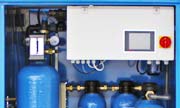
SCM 24
|
|
Cleans 24.000 liters per day
|
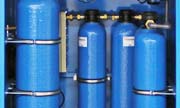
SCM 60
|
|
Cleans 60.000 liters per day
|
Video: How it works
The SCG Advantage
Our market-leading, water cleaning solutions have many advantages. To read more click the items below:
No Chemicals
Our machines and technology does not use any chemicals, at all.
Read more...
No Waste Water
Our machines do not waste any water. Yield = 100%.
Read more...
Low energy use
Uses 50 times less energy than a Reverse Osmosis Machine.
Read more...
Low ownership cost
Lower maintenance and operation costs due to our technology.
Read more...
Easy to install
Simple "plug and play" installation makes for easy deployment.
Read more...
Extremely compact
A compact system, contained in an easy to transport cabinet.
Read more...
Outperforms R.O.
SCG technologies outperform Reverse Osmosis systems.
Read more...
Faster ROI
Get a faster Return on Investment with our systems.
Read more...
Latest News
Latest Blog Posts
| Chemicals in water treatment? |
| Water storage - Whats best for keeping water clean and drinkable? |
| Case: Disaster Management Water Treatment |
Contact SCG
891 Showroom Place
Suite 101
Chula Vista, CA, 91914
Phone: +1 619-878-2730
Contact us by email