







Removing Manganese From Water Without Hazardous Waste
Manganese occurs naturally in many groundwater sources and can enter wells through mineral deposits, soil, and industrial activity. In small amounts it may be harmless to visible water quality, yet elevated concentrations can create black or brown staining, metallic taste, cloudy water, and deposits in plumbing. Long-term exposure to high levels may also raise health concerns, particularly for infants and sensitive populations.
Traditional treatment can solve the problem, but some methods produce chemical sludge, concentrated brine, or spent media that requires careful disposal. A more sustainable approach focuses on converting dissolved manganese into a solid form that can be separated efficiently, while limiting chemical use, energy demand, and waste volume.
The right system depends on manganese concentration, pH, oxygen availability, water temperature, flow rate, and the presence of iron, arsenic, ammonia, bacteria, or organic matter. Testing the source water before selecting equipment is essential because manganese removal is a water chemistry process rather than a one-size-fits-all filter installation.
Why Manganese Is Difficult To Filter
Dissolved manganese is often present as Mn²⁺, a colorless form that can pass through ordinary sediment filters and activated carbon cartridges. Because the particles are too small to trap, water may look clear when it enters the treatment system. Oxidation is usually required before filtration can work effectively.
When manganese is oxidized, it forms insoluble manganese oxides or hydroxides. These particles can then be captured by a suitable filter bed. Iron often behaves similarly, but manganese may require a higher oxidation potential, a different pH range, or a specialized catalytic surface.
Water chemistry can complicate the process. Low pH slows oxidation, while organic matter can consume oxidants and interfere with filtration. Ammonia, sulfide, and high iron levels may compete for treatment capacity. A complete laboratory analysis helps establish whether aeration, biological treatment, catalytic media, or another process is appropriate.
Sustainable Treatment Without Chemical Sludge
Aeration is one of the cleanest ways to support manganese oxidation. By bringing water into contact with air, the system adds oxygen without dosing chlorine, potassium permanganate, or other chemical oxidants. The oxidized material is then retained by a filter designed for manganese-bearing water.
Air-based treatment works best when the water chemistry supports oxidation and the contact time is sufficient. Some systems use diffusers, air injection, spray aeration, or a dedicated reaction chamber. The process may require additional filtration and periodic backwashing, but it avoids the storage, handling, and disposal of oxidizing chemicals.
Catalytic filtration can improve performance by providing a surface that accelerates manganese oxidation. Once conditioned, certain filter media promote the conversion of dissolved manganese into particles that remain in the bed. The media must be selected and operated correctly; otherwise, manganese can break through, accumulate unevenly, or reduce hydraulic flow.
Sustainable water treatment does not mean that no residual material ever exists. Manganese removed from the water has to go somewhere. The objective is to create a manageable, low-toxicity residual stream rather than hazardous chemical waste. Backwash water can often be collected, settled, tested, and discharged or reused according to local regulations.
Comparing Removal Methods
Different technologies have different operating requirements. A treatment designer should compare the quality of the finished water, the maintenance available at the site, and the destination of backwash or residual solids. A method that performs well in a laboratory may be unsuitable for a remote well, livestock operation, or municipal installation if it depends on frequent chemical deliveries.
| Treatment approach | Main advantage | Waste and operating considerations |
|---|---|---|
| Aeration and filtration | Uses air to oxidize dissolved manganese | Produces filter backwash that should be managed responsibly |
| Catalytic media | Efficient oxidation and particle capture in a compact system | Media selection, loading, and periodic backwashing are important |
| Biological manganese removal | Can operate with low chemical demand after conditioning | Requires stable conditions and careful start-up |
| Chemical oxidation | Rapid treatment across a broad range of water qualities | Creates chemical handling needs and potentially greater residuals |
| Membrane treatment | Can remove several dissolved contaminants at once | Produces a concentrate stream and often uses more energy |
| Ion exchange | Useful for selected water chemistries and flow conditions | Generates regeneration wastewater and requires media management |
Chemical oxidation remains useful when manganese levels are high or water chemistry is difficult. However, dosing adds complexity and can produce residual chemicals or sludge containing multiple contaminants. Membranes may be valuable when manganese occurs alongside arsenic, uranium, salts, or other dissolved pollutants, but concentrate disposal must be addressed before installation.
Biological filtration offers another low-chemical pathway. Naturally occurring microorganisms colonize a suitable medium and help convert manganese into filterable oxides. This approach may require a conditioning period and stable flow, but it can reduce operating costs and chemical consumption over time.
Managing Backwash And Residuals
Even a chemical-free manganese system needs a plan for filter cleaning. As manganese oxides accumulate, pressure loss increases and the media can become less effective. Backwashing lifts and rinses the filter bed, removing captured solids and restoring flow capacity.
The backwash stream should not simply be sent wherever it may affect a stream, drainage field, or groundwater source. It may contain manganese, iron, sediment, and other substances originally present in the raw water. A settling tank, holding basin, or solids separation unit can reduce the volume that requires final handling.
Testing determines whether the residual is suitable for discharge, sewer release, land application, or off-site disposal. In many cases, naturally occurring manganese solids are not classified as hazardous waste, but the classification depends on local rules and the presence of co-contaminants. Arsenic, pesticides, industrial chemicals, or radionuclides can change the disposal requirements significantly.
A closed-loop or low-discharge design may recover clarified water for reuse in cleaning, irrigation, or another approved non-potable application. Reuse reduces fresh-water demand and limits the amount of residual liquid leaving the site. The practical solution will depend on land, climate, regulations, and the scale of the installation.
Designing A Reliable Manganese System
A professional design begins with raw-water testing. At minimum, the analysis should include manganese, iron, pH, alkalinity, turbidity, hardness, dissolved oxygen, ammonia, sulfide, and organic matter. Depending on the source, arsenic, uranium, bacteria, pesticides, and conductivity may also need evaluation.
Flow patterns matter as much as chemistry. A household well, a food-processing plant, a livestock watering station, and a municipal network have different peak demands and storage options. Equipment must be sized for actual flow and contact time rather than average daily consumption alone.
Pretreatment can protect the main manganese filter. A sediment stage removes sand and suspended material, while an aeration or reaction stage provides the conditions needed for oxidation. After filtration, ultraviolet treatment or another disinfection barrier may be appropriate where microbial contamination is possible. Guidance on bacteria treatment options can help distinguish microbial control from dissolved-metal removal in private wells.
Automation can improve consistency by monitoring pressure, flow, turbidity, and treatment cycles. Yet a system should remain understandable to the people responsible for operation. Simple controls, accessible sampling points, and clear backwash procedures are especially important in remote or mobile applications.
Practical Steps For Lower-Waste Operation
Waste prevention begins with correct sizing. An oversized filter may consume unnecessary water during backwash, while an undersized unit can experience rapid breakthrough and require frequent cleaning. Pilot testing or a controlled trial can identify the most efficient media depth, flow rate, and cleaning interval.
Operators should record manganese levels before and after treatment, pressure loss across the filter, backwash frequency, and any changes in taste, color, or staining. These records reveal gradual performance decline before the water quality becomes unacceptable.
A responsible treatment program should include:
- Test raw and treated water at regular intervals, especially after changes in well yield or seasonal conditions.
- Choose air oxidation, catalytic media, or biological filtration when water chemistry allows low-chemical operation.
- Collect and assess backwash water instead of releasing it without checking local requirements.
- Add separate treatment stages for bacteria, arsenic, uranium, or pesticides when laboratory results show they are present.
- Train operators to recognize manganese breakthrough, rising pressure, media fouling, and abnormal flow.
For larger projects, the treatment provider should explain the expected residual volume, cleaning method, media service life, and disposal pathway. These details are as important as the removal rate because they determine the system’s environmental footprint over years of operation.
Applying The Technology Across Different Sites
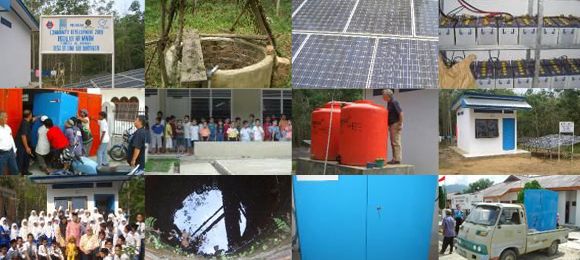
Manganese treatment can be adapted for homes, villages, public buildings, farms, factories, and emergency water supplies. A rural well may need a compact air-and-filter unit, while a municipality may use multiple vessels with automatic backwash and flow balancing. Livestock facilities may also benefit from protecting drinker lines and reducing manganese deposits in storage tanks.
Industrial users must consider process compatibility. Manganese can foul membranes, clog nozzles, stain products, and interfere with downstream treatment. Removing it early may extend the service life of more sensitive equipment and reduce maintenance interruptions.
In regions with unreliable electricity, low-energy systems can combine gravity flow, air contact, efficient hydraulics, and limited automation. Where power is available but chemical logistics are difficult, chemical-free oxidation and filtration may provide a more resilient operating model. The Swiss Cleanwater Group develops water-treatment solutions for varied applications, including municipal, agricultural, industrial, and mobile installations.
Cleaner manganese removal is a practical engineering goal: oxidize the dissolved contaminant, capture the resulting solids, and manage the residual water transparently. Begin with a complete water analysis and a site-specific design that accounts for contaminant mixtures, flow demand, energy availability, and local disposal rules. A treatment specialist can then help select a system that protects water quality while keeping chemical use, waste, and operating demands under control.
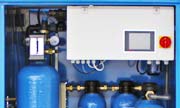
SCM 24
|
|
Cleans 24.000 liters per day
|
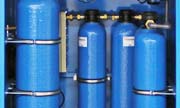
SCM 60
|
|
Cleans 60.000 liters per day
|
Video: How it works
The SCG Advantage
Our market-leading, water cleaning solutions have many advantages. To read more click the items below:
No Chemicals
Our machines and technology does not use any chemicals, at all.
Read more...
No Waste Water
Our machines do not waste any water. Yield = 100%.
Read more...
Low energy use
Uses 50 times less energy than a Reverse Osmosis Machine.
Read more...
Low ownership cost
Lower maintenance and operation costs due to our technology.
Read more...
Easy to install
Simple "plug and play" installation makes for easy deployment.
Read more...
Extremely compact
A compact system, contained in an easy to transport cabinet.
Read more...
Outperforms R.O.
SCG technologies outperform Reverse Osmosis systems.
Read more...
Faster ROI
Get a faster Return on Investment with our systems.
Read more...
Latest News
Latest Blog Posts
| Chemicals in water treatment? |
| Water storage - Whats best for keeping water clean and drinkable? |
| Case: Disaster Management Water Treatment |
Contact SCG
891 Showroom Place
Suite 101
Chula Vista, CA, 91914
Phone: +1 619-878-2730
Contact us by email