

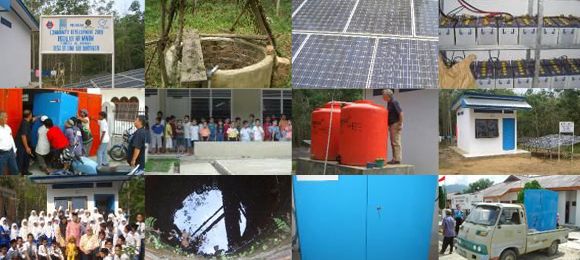







Mobile water purification for humanitarian missions in Africa
In humanitarian missions, safe water is often needed before permanent infrastructure can be repaired or built. A mobile purification unit can support displaced families, rural clinics, emergency shelters, schools, and field teams by treating available water close to where it is collected and consumed.
Africa presents a wide range of water-quality conditions. A source may appear clear while carrying bacteria, pesticides, manganese, arsenic, uranium, or other dissolved contaminants. Seasonal flooding can add sediment and pathogens, while drought may concentrate minerals in shallow wells. Treatment therefore needs to be selected from evidence, not appearance alone.
The most useful systems combine portability with dependable performance. They should be practical to transport, quick to install, economical to operate, and simple enough for local operators to manage after an aid organization moves on. A well-designed unit can become part of a longer-term water service rather than a temporary asset that is abandoned after an emergency.
Why mobile treatment matters in the field
Humanitarian access can change rapidly. Roads may become impassable, populations may relocate, and a water source that was suitable in one season may become unsafe in the next. Containerized, skid-mounted, or trailer-based purification equipment allows response teams to follow demand instead of waiting for a fixed plant to be constructed.
A mobile drinking-water station can be deployed beside a borehole, river intake, community tank, health center, or temporary settlement. Its value is greatest when the equipment is sized for the actual population and designed around the available raw water. A small clinic may need a compact point-of-use system, while a camp or municipal emergency service may require continuous treatment at a higher flow rate.
Portability does not mean compromising treatment quality. The unit still needs controlled intake, suitable pretreatment, effective contaminant removal, and hygienic storage after purification. Pumps, hoses, fittings, power supplies, and replacement components should be selected for African field conditions, including dust, heat, voltage variation, and limited access to technical workshops.
Matching purification to local contaminants
Water testing should guide the treatment train before equipment is shipped. Basic analysis can identify turbidity, conductivity, pH, hardness, iron, and manganese. Additional laboratory testing may be required for arsenic, fluoride, uranium, pesticides, or microbiological contamination. These results determine whether the mission needs filtration, adsorption, membrane treatment, disinfection, or a combination of technologies.
Microbial safety is a central concern after floods, infrastructure failure, or damage to sanitation systems. Bacteria and other pathogens can enter through surface water, leaking pipes, unprotected wells, and storage containers. A purification system must address the raw-water risk and protect the treated water from recontamination during filling, transport, and household use.
Dissolved contaminants require a different approach from visible particles. Arsenic, for example, cannot be reliably removed by ordinary sediment filters. Teams assessing a borehole or small community system can consult this arsenic treatment guidance when considering testing, process selection, and monitoring requirements.
Choosing equipment for emergency deployment
The best mobile water purification equipment balances treatment capacity with transportability. A system that produces a high volume but requires specialist technicians, complex chemicals, or an unreliable power supply may perform poorly in an isolated location. Conversely, an undersized unit can create queues, unsafe shortcuts, and pressure to distribute untreated water.
| Mission setting | Typical water challenge | Useful design priorities |
|---|---|---|
| Flood-affected settlement | High turbidity and microbial contamination | Robust intake, pretreatment, disinfection, protected storage |
| Rural clinic or school | Variable borehole quality and limited operators | Compact controls, simple maintenance, reliable power options |
| Displacement camp | High demand and changing population | Modular capacity, rapid installation, continuous monitoring |
| Agricultural or livestock emergency | Sediment, bacteria, and elevated minerals | Durable pumps, washable filtration, separate potable-water line |
| Remote or mobile field team | Uncertain sources and difficult logistics | Low energy demand, portable format, spare parts, rapid setup |
Energy independence is another important factor. Solar-assisted operation, efficient pumps, battery integration, or low-power treatment processes can reduce dependence on fuel deliveries. Where electricity is available, the equipment should tolerate unstable supply and include safe shutdown features. Lower energy use also helps humanitarian organizations control operating costs over long deployments.
Chemical-free treatment can simplify logistics by reducing the need to transport, store, and dose consumables. It may also limit the creation of chemical residuals or treatment waste. However, every system still needs a clear maintenance plan, because screens, membranes, filters, pumps, and sensors require inspection and servicing even when chemicals are not used.
Operating safely with local teams
Technology transfer is part of water treatment. Local operators need practical instruction on startup, shutdown, cleaning, sampling, fault identification, and safe handling of treated water. Training should use clear language and visual procedures where literacy levels vary. A short operating manual is valuable, but supervised practice is more effective than handing over documentation alone.
A field system should make critical conditions visible. Flow, pressure, conductivity, turbidity, and disinfection indicators may help operators determine whether the unit is working within specification. Records of source quality, production volume, cleaning, repairs, and test results create accountability and help identify changes in the water source.
Storage and distribution deserve the same attention as purification. Tanks should be closed, cleanable, and protected from animals, dust, sunlight, and unauthorized access. Filling points should be arranged to reduce contact between containers and outlets. If treated water is transported by truck or jerrycan, those containers must be cleaned and reserved for potable water.
Procurement teams should also examine what a system does not require. Practical guidance on water treatment choices can help organizations avoid solutions that create excessive waste, high energy demand, difficult chemical logistics, or unnecessary operational complexity.
Building resilience beyond the emergency
An emergency deployment often becomes a bridge to recovery. Once a settlement stabilizes, a mobile unit can continue supplying water while a permanent plant, borehole network, or distribution system is planned. Modular equipment allows capacity to be expanded or relocated as population patterns change.
This approach supports municipalities, public agencies, farming communities, livestock operations, and health facilities as well as international aid organizations. A single platform may be adapted for different applications if the raw-water assessment and treatment objectives are clearly defined. The result is greater asset utilization and less dependence on one-off emergency purchases.
Long-term value also depends on local ownership. Spare parts should be available through regional supply routes whenever possible. Operators should know which tasks can be completed locally and which require qualified service support. Partnerships with authorities, water committees, clinics, and community leaders help establish responsibility for operation, payment, monitoring, and repairs.
Water treatment technology has developed through successive responses to changing public-health and environmental needs. Reviewing the history of water treatment provides useful context for understanding why source protection, filtration, disinfection, and reliable distribution must work together.
Planning a reliable mission deployment
A successful deployment begins several weeks or months before the equipment reaches the field, when conditions allow. The planning team should gather source data, estimate daily demand, evaluate transport routes, identify the power supply, and define water-quality targets. It should also map who will operate the system after installation.
The following priorities can help structure procurement and field preparation:
- Test each intended water source for microbial and chemical contaminants before finalizing the treatment process.
- Select modular equipment that can be transported, installed, and relocated with locally available vehicles and lifting capacity.
- Confirm power requirements, fuel or solar arrangements, spare parts, consumables, and maintenance support before deployment.
- Include hygienic storage, distribution points, sampling equipment, and operator training in the project budget.
- Establish measurable procedures for quality control, incident reporting, repairs, and eventual handover.
Performance should be judged by more than liters produced per hour. A useful humanitarian system delivers water that meets the required quality standard, remains operational under local conditions, and can be maintained without disproportionate expense. It should also reduce avoidable waste and protect operators from unsafe exposure to contaminated water or treatment materials.
Before choosing a unit, mission planners can request a technical review based on source analysis, required flow, expected deployment period, climate, transport limitations, and local skills. Swiss Cleanwater Group develops purification solutions for municipalities, government projects, buildings, agriculture, industry, livestock, pools, and mobile applications, making a site-specific assessment an appropriate starting point for emergency water supply planning.
Contact Swiss Cleanwater Group to discuss the raw-water challenge, mission scale, and operating environment. A properly matched mobile purification system can provide safe drinking water quickly while supporting the stronger, more sustainable water infrastructure that communities need after the emergency has passed.
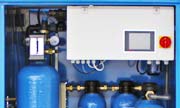
SCM 24
|
|
Cleans 24.000 liters per day
|
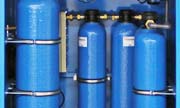
SCM 60
|
|
Cleans 60.000 liters per day
|
Video: How it works
The SCG Advantage
Our market-leading, water cleaning solutions have many advantages. To read more click the items below:
No Chemicals
Our machines and technology does not use any chemicals, at all.
Read more...
No Waste Water
Our machines do not waste any water. Yield = 100%.
Read more...
Low energy use
Uses 50 times less energy than a Reverse Osmosis Machine.
Read more...
Low ownership cost
Lower maintenance and operation costs due to our technology.
Read more...
Easy to install
Simple "plug and play" installation makes for easy deployment.
Read more...
Extremely compact
A compact system, contained in an easy to transport cabinet.
Read more...
Outperforms R.O.
SCG technologies outperform Reverse Osmosis systems.
Read more...
Faster ROI
Get a faster Return on Investment with our systems.
Read more...
Latest News
Latest Blog Posts
| Chemicals in water treatment? |
| Water storage - Whats best for keeping water clean and drinkable? |
| Case: Disaster Management Water Treatment |
Contact SCG
891 Showroom Place
Suite 101
Chula Vista, CA, 91914
Phone: +1 619-878-2730
Contact us by email