









Removing arsenic from water in high-pH conditions without chemicals
Arsenic in drinking water is a serious public health concern, especially where groundwater passes through mineral-rich formations. The challenge becomes more demanding when the water has a high pH, elevated alkalinity, or a strong concentration of competing minerals. Under these conditions, arsenic can remain mobile and treatment media may lose efficiency.
A chemical-free treatment strategy must therefore begin with water analysis rather than a generic filter recommendation. Arsenic concentration, oxidation state, pH, alkalinity, silica, phosphate, iron, manganese, uranium, and organic matter all influence the outcome. The right process may involve oxidation, adsorption, membrane separation, or a carefully designed combination.
Swiss Cleanwater Group develops water purification solutions for municipal, industrial, agricultural, and mobile applications. Its approach focuses on reducing chemical consumption, waste streams, and unnecessary energy use while targeting contaminants such as arsenic, bacteria, pesticides, manganese, and uranium.
Why alkaline water changes arsenic removal
Arsenic generally occurs in two inorganic forms: arsenite, or As(III), and arsenate, or As(V). Arsenite is usually more difficult to capture with many adsorption materials, while arsenate often binds more readily to iron-based surfaces. Oxidizing As(III) to As(V) can therefore improve downstream removal, but the oxidation step must be selected with care when the goal is a chemical-free process.
High pH creates additional difficulty because many mineral surfaces become less positively charged as alkalinity rises. This weakens the attraction between the surface and negatively charged arsenate species. Hydroxide ions, bicarbonate, silica, phosphate, and natural organic matter may compete for the same active sites, reducing the effective capacity of iron, alumina, or hybrid adsorption media.
The result is a treatment process that may perform well in a laboratory test at neutral pH but underperform in the field. Flow rate, contact time, temperature, pressure, and the age of the media also matter. High-pH water should be assessed under realistic operating conditions instead of relying on a contaminant concentration alone.
Characterize the water before selecting treatment
A complete laboratory profile is the foundation of reliable arsenic removal. Testing should distinguish total arsenic from As(III) and As(V), since the species determine whether oxidation or direct adsorption is required. The analysis should also include pH, alkalinity, conductivity, turbidity, total dissolved solids, iron, manganese, silica, phosphate, sulfate, nitrate, organic carbon, and microbiological indicators.
Seasonal testing can reveal changes that a single sample misses. Groundwater chemistry may shift after heavy rainfall, drought, pumping changes, or well maintenance. Industrial and agricultural sources can also introduce variable loads of pesticides, metals, salts, and organic compounds. A pilot system should be evaluated against the highest expected contaminant burden, not only the average result.
Hydraulic design is equally important. A media bed that receives water too quickly may allow arsenic breakthrough even when the material has adequate theoretical capacity. Pretreatment for suspended solids, iron fouling, or biological growth may be needed to protect the main removal stage. In some applications, a closed-loop or mobile unit can provide better control than a large centralized installation.
Chemical-free treatment pathways
Adsorption is often a practical route for arsenic reduction without dosing coagulants or oxidants. Iron hydroxide, iron oxide, activated alumina, and engineered hybrid media can capture arsenate from water. Their performance in alkaline conditions varies significantly, so pilot testing should measure both initial removal and capacity over time. A media designed for high-pH groundwater may be more suitable than a general-purpose cartridge.
Oxidation can improve the capture of arsenite. Depending on the site, this may be achieved through aeration, catalytic surfaces, electrochemical treatment, or other physical processes that avoid the storage and handling of chemical oxidants. Aeration can also help remove dissolved iron and manganese, although the resulting particles must be separated before the treated water reaches the arsenic adsorption stage.
Reverse osmosis can remove dissolved arsenic effectively, particularly when the water chemistry is difficult for adsorption. However, it requires pressurization and produces a concentrated reject stream. For facilities seeking low waste and modest energy demand, reverse osmosis may be reserved for specific cases or combined with upstream treatment to reduce load and concentrate volume.
A combined process often delivers the most stable result: oxidation or aeration for arsenite, particulate separation for oxidized metals, and high-selectivity adsorption for residual arsenic. The treatment train should be designed around the full water profile, including any co-contaminants that could affect membrane fouling or media exhaustion.
Comparing approaches for alkaline water
No single technology is ideal for every high-pH source. The selection depends on the arsenic species, treatment volume, target standard, available power, space, maintenance skills, and the acceptable level of residuals. A chemical-free system may still need routine backwashing, media replacement, electrical power, or controlled disposal of concentrated contaminants.
| Treatment approach | Strengths in high-pH water | Main limitations | Typical design focus |
|---|---|---|---|
| Iron-based adsorption | Can selectively capture arsenate and operate with limited energy | Capacity may decline with silica, phosphate, and high alkalinity | Long contact time and breakthrough monitoring |
| Activated alumina | Useful for some dissolved arsenic streams and compact systems | Performance is pH-sensitive and media regeneration creates waste | Careful pH assessment and replacement planning |
| Aeration with filtration | Can oxidize arsenite while reducing iron and manganese | May be slow or incomplete without suitable contact conditions | Gas transfer, oxidation time, and solids removal |
| Electrochemical or catalytic oxidation | Can reduce reliance on added oxidants | Requires site-specific equipment and electrical control | Pilot testing, electrode or catalyst life, and power use |
| Reverse osmosis | Broad dissolved contaminant removal | Uses pressure and produces concentrate | Pretreatment, recovery rate, and reject management |
| Hybrid treatment train | Addresses arsenic species and interfering contaminants together | More equipment and control points | Sequencing, monitoring, and service access |
The comparison should be validated with a pilot test using the actual source water. A useful pilot records arsenic removal, pressure loss, pH drift, turbidity, flow, energy demand, and the point at which performance begins to decline. This information supports accurate sizing and prevents premature media replacement.
For industrial facilities, arsenic control may form part of a larger water management program. The company’s information on biocide-free cooling tower treatment illustrates how reducing chemical inputs can be considered alongside water reuse, scaling control, and operational stability.
Monitoring protects treated-water quality
Arsenic treatment does not end when a filter is installed. Regular sampling should be performed at the raw-water inlet, after oxidation or pretreatment, and at the final outlet. Testing both total arsenic and arsenic species can reveal whether oxidation is working and whether the removal stage is approaching exhaustion.
A breakthrough curve is especially valuable for adsorption systems. As the media fills, arsenic may begin appearing in the outlet before the material seems physically exhausted. Monitoring can establish a safe replacement interval with an appropriate margin. Online measurements of pH, conductivity, flow, pressure differential, and turbidity can provide early warnings, although laboratory arsenic analysis remains essential.
High-pH systems also require attention to scaling and fouling. Calcium carbonate, silica, iron deposits, and biological films can reduce contact with active treatment surfaces. Suitable pretreatment, controlled hydraulic loading, periodic cleaning, and accessible equipment layout help maintain performance without resorting to unnecessary chemical cleaning.
Local compliance requirements should guide the final target concentration and sampling schedule. Drinking-water treatment, livestock supply, irrigation, industrial reuse, and emergency response systems may have different quality objectives. A design that works for process water may require additional polishing before water is suitable for human consumption.
Practical priorities for system design
A successful project balances contaminant removal with operating simplicity. The lowest-cost equipment is not always the most economical choice if it produces frequent media changes, difficult waste handling, or unstable results during seasonal changes. A chemical-free process should be evaluated across its entire life cycle, including electricity, replacement materials, maintenance, monitoring, and disposal.
Swiss Cleanwater Group supports projects across multiple regions, and its Swiss Cleanwater offices provide a starting point for discussing local water chemistry, application requirements, and service arrangements. Site-specific engineering is particularly important when high pH occurs together with silica, phosphate, salinity, or mixed arsenic species.
- Analyze arsenic species and the full competing-ion profile before choosing equipment.
- Use pilot testing at the intended pH, flow rate, temperature, and contact time.
- Include oxidation or aeration when arsenite is present and direct adsorption is insufficient.
- Install monitoring points before and after each major treatment stage.
- Plan media replacement, backwashing, concentrate handling, and laboratory verification from the beginning.
Build a dependable treatment pathway
Removing arsenic from alkaline water without added chemicals is feasible when the system is based on measured chemistry and realistic operating conditions. Adsorption, aeration, electrochemical treatment, membranes, and hybrid designs each have a place, but their value depends on how they respond to pH, competing minerals, arsenic species, and the required water quality.
A carefully tested process can protect drinking-water supplies while reducing chemical storage, residual waste, and avoidable energy use. Review the available water treatment solutions and contact Swiss Cleanwater Group to develop a treatment concept based on the source-water analysis, intended application, and long-term operating requirements.
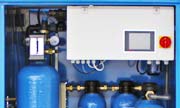
SCM 24
|
|
Cleans 24.000 liters per day
|
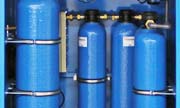
SCM 60
|
|
Cleans 60.000 liters per day
|
Video: How it works

The SCG Advantage
Our market-leading, water cleaning solutions have many advantages. To read more click the items below:
No Chemicals
Our machines and technology does not use any chemicals, at all.
Read more...
No Waste Water
Our machines do not waste any water. Yield = 100%.
Read more...
Low energy use
Uses 50 times less energy than a Reverse Osmosis Machine.
Read more...
Low ownership cost
Lower maintenance and operation costs due to our technology.
Read more...
Easy to install
Simple "plug and play" installation makes for easy deployment.
Read more...
Extremely compact
A compact system, contained in an easy to transport cabinet.
Read more...
Outperforms R.O.
SCG technologies outperform Reverse Osmosis systems.
Read more...
Faster ROI
Get a faster Return on Investment with our systems.
Read more...
Latest News
Latest Blog Posts
| Chemicals in water treatment? |
| Water storage - Whats best for keeping water clean and drinkable? |
| Case: Disaster Management Water Treatment |
Contact SCG
891 Showroom Place
Suite 101
Chula Vista, CA, 91914
Phone: +1 619-878-2730
Contact us by email