


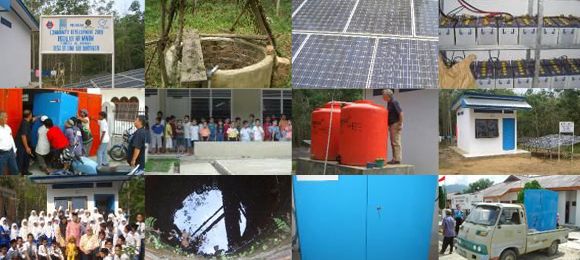







Sustainable Water Supply for a Hospital: Meeting Strict Quality Standards
A hospital depends on water for far more than drinking. It is used in surgery, sterilisation, laboratories, dialysis, kitchens, laundry, cleaning, cooling systems, and patient care. Any interruption or contamination can affect clinical safety, regulatory compliance, and the continuity of essential services.
A sustainable hospital water supply must therefore combine dependable production with rigorous quality control. The right system should address local contaminants, operate efficiently, limit chemical handling, and provide clear evidence that water remains safe from source to point of use.
Swiss Cleanwater Group develops water-treatment technologies for applications where purity, resilience, and responsible resource use are essential. Its solutions are designed to remove pollutants such as manganese, arsenic, bacteria, pesticides, and uranium without creating unnecessary waste or consuming excessive energy.
Quality begins with a complete water assessment
Hospital water safety starts with understanding the source. Municipal water may already meet drinking-water requirements, yet additional treatment can be necessary when water enters sensitive departments or passes through an ageing internal network. Private wells and emergency sources require an even more detailed assessment because their quality can change with seasons, rainfall, agricultural activity, or nearby industrial operations.
Testing should cover microbiological indicators, turbidity, pH, hardness, conductivity, nitrate, manganese, iron, arsenic, pesticides, uranium, and other locally relevant substances. The assessment should also examine temperature, storage tanks, pipe materials, dead legs, pressure fluctuations, and possible backflow routes.
A risk-based water safety plan helps connect laboratory results with hospital operations. It identifies which areas require drinking-water quality, which need higher-grade purification, and where a separate technical-water circuit may be appropriate. This prevents over-treating every litre while protecting critical uses.
Designing a treatment train for clinical reliability
No single device is suitable for every hospital water challenge. A treatment train may begin with screening and sediment filtration, followed by targeted processes for dissolved contaminants. Activated carbon can reduce certain organic compounds and improve taste, while specialised media can address manganese, arsenic, or uranium according to the raw-water analysis.
Membrane technologies, ultraviolet disinfection, and other physical treatment methods can provide additional barriers. Their selection depends on the required flow, pressure, water chemistry, microbial risk, and intended use. For example, water supplied to a dialysis unit, laboratory, or sterile processing department may need tighter controls than water used for general cleaning.
Disinfection must be designed carefully. Hospitals require protection against microbial growth, but excessive reliance on chemicals can create storage, dosing, by-product, and maintenance concerns. Chemical-free or low-chemical approaches may reduce these risks when they are supported by suitable pretreatment, validated performance, and continuous operational control.
The design should also include redundancy. Parallel treatment lines, bypass arrangements, standby pumps, emergency storage, and automatic alarms help maintain supply during maintenance or component failure. A system that produces excellent water but cannot support essential departments during servicing is incomplete.
Lowering environmental impact without compromising safety
Sustainability in healthcare water management is measured through the entire operating cycle. Energy consumption, reject water, filter replacement, chemical transport, maintenance frequency, and equipment lifespan all affect the environmental footprint. A treatment system should be evaluated by the quality it delivers and the resources required to deliver it.
Physical purification methods can be valuable where they reduce chemical consumption and avoid the handling of hazardous reagents. Efficient pumps, variable-speed drives, low-pressure membranes, and intelligent control systems can further reduce electricity demand. Recovering suitable process water for cooling, irrigation, or toilet flushing may lower demand on potable supplies, provided local rules and infection-control procedures permit it.
Waste management deserves close attention. Some technologies produce concentrated reject streams, while others require exhausted media or disposable cartridges. The best option depends on the contaminant profile and disposal infrastructure. A lifecycle comparison should account for waste volume, regeneration requirements, replacement parts, transport, and service visits rather than focusing only on the purchase price.
Agricultural surroundings can create special concerns for rural hospitals. Nitrate and pesticide contamination may enter groundwater after fertiliser application or heavy rainfall. This nitrate pollution guidance can help project teams understand how farming communities may need targeted monitoring and treatment strategies.
Comparing treatment priorities
The most suitable configuration is determined by measured water quality, clinical use, flow requirements, and the hospital’s risk-management plan. The following comparison shows how common treatment objectives relate to practical design choices.
| Treatment objective | Typical concern | Suitable technology options | Sustainability considerations |
|---|---|---|---|
| Remove sediment and turbidity | Soil, rust, suspended particles | Screening, multimedia filtration, cartridge filtration | Protects downstream equipment and extends component life |
| Control bacteria and viruses | Microbial contamination or regrowth | UV treatment, membrane filtration, validated disinfection | UV can reduce chemical handling but needs reliable power and lamp maintenance |
| Reduce manganese and iron | Staining, deposits, taste, operational problems | Oxidation and filtration, specialised media | Limits pipe fouling and may reduce cleaning frequency |
| Reduce arsenic or uranium | Naturally occurring groundwater contaminants | Selective media, adsorption, membrane processes | Requires careful monitoring of spent media or reject streams |
| Reduce nitrate and some dissolved pollutants | Agricultural or industrial influence | Ion exchange, reverse osmosis, source protection | Select based on brine, reject-water, and regeneration requirements |
| Protect sensitive departments | High-purity water requirements | Multi-stage purification, point-of-use polishing, dedicated loops | Treats critical volumes precisely instead of over-processing the entire supply |
This comparison is a starting point rather than a substitute for water analysis. For example, reverse osmosis may solve several dissolved-contaminant problems at once, but its water recovery, energy use, and maintenance requirements must be assessed. Selective treatment can be more efficient when a single pollutant is the dominant concern.
Monitoring, validation, and daily operation
Strict quality standards depend on evidence. A hospital should define sampling locations at the incoming supply, after treatment, in storage, and at representative points of use. High-risk departments may require more frequent sampling and additional parameters. Microbiological testing, conductivity, turbidity, pressure, flow, and disinfectant residuals can all support early detection of failure.
Online sensors can trigger alarms when values move outside approved ranges. However, automated monitoring does not replace laboratory verification. Instruments require calibration, samples need documented handling, and trend data must be reviewed by people who understand both water treatment and clinical risk.
Operational procedures should cover filter changes, membrane cleaning, ultraviolet lamp replacement, media inspection, tank hygiene, shutdowns, emergency supply, and restart after maintenance. Staff need clear responsibilities and escalation routes. Contractors should provide commissioning records, performance data, spare-parts information, and training suited to the hospital’s technical team.
Validation is especially important for systems serving dialysis, sterile services, laboratories, and other sensitive applications. The hospital should document design specifications, acceptance testing, disinfection procedures, sampling results, deviations, and corrective actions. This creates an auditable chain between the treatment equipment and the quality of water used in patient care.
Building resilience into the hospital water supply
A robust design considers events that may disrupt normal service: drought, flooding, power failure, contamination alerts, infrastructure repairs, cyber incidents, or a sudden increase in patient numbers. Emergency storage can provide short-term continuity, while mobile or modular treatment units may support temporary facilities, remote clinics, or disaster response.
Water security also depends on the building itself. Storage tanks should be sized appropriately and protected from contamination. Pipework should avoid stagnant sections, and backflow prevention should separate potable water from technical systems. Temperature management and regular flushing can help control microbial risks within the distribution network.
Hospitals should coordinate water planning with infection prevention, facilities management, procurement, clinical engineering, and local authorities. A treatment system selected in isolation may conflict with maintenance capacity or departmental needs. Early collaboration makes it easier to define quality targets, approval requirements, monitoring responsibilities, and contingency procedures.
Suppliers should be able to explain how their equipment performs under actual site conditions. When planning a project, hospitals can send a project brief with source-water data, flow rates, intended applications, available space, and resilience requirements so the proposed solution reflects operational reality.
Practical priorities for a safer, greener installation
A hospital project team can use the following principles to guide specification, procurement, and commissioning:
- Test the source and internal distribution system before choosing treatment equipment.
- Separate general potable demand from high-purity clinical and technical applications.
- Select contaminant-specific processes instead of relying on unnecessary treatment stages.
- Compare energy use, reject water, chemical consumption, waste handling, and service needs across the full lifecycle.
- Require validated monitoring, staff training, documented maintenance, and backup arrangements.
Sustainable water management is strongest when quality assurance and environmental performance are planned together. Reducing chemicals or energy must never weaken microbial control, and improving purity should not create avoidable waste. A balanced design protects patients while making the hospital less vulnerable to resource shortages and supply interruptions.
Swiss Cleanwater Group can support feasibility work, technology selection, and system planning for hospitals and other demanding facilities. Share the site requirements and water analysis with its specialists to develop a treatment approach that supports dependable clinical operations, measurable compliance, and responsible long-term water use.
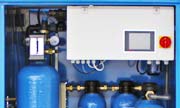
SCM 24
|
|
Cleans 24.000 liters per day
|
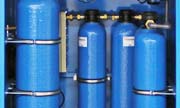
SCM 60
|
|
Cleans 60.000 liters per day
|
Video: How it works
The SCG Advantage
Our market-leading, water cleaning solutions have many advantages. To read more click the items below:
No Chemicals
Our machines and technology does not use any chemicals, at all.
Read more...
No Waste Water
Our machines do not waste any water. Yield = 100%.
Read more...
Low energy use
Uses 50 times less energy than a Reverse Osmosis Machine.
Read more...
Low ownership cost
Lower maintenance and operation costs due to our technology.
Read more...
Easy to install
Simple "plug and play" installation makes for easy deployment.
Read more...
Extremely compact
A compact system, contained in an easy to transport cabinet.
Read more...
Outperforms R.O.
SCG technologies outperform Reverse Osmosis systems.
Read more...
Faster ROI
Get a faster Return on Investment with our systems.
Read more...
Latest News
Latest Blog Posts
| Chemicals in water treatment? |
| Water storage - Whats best for keeping water clean and drinkable? |
| Case: Disaster Management Water Treatment |
Contact SCG
891 Showroom Place
Suite 101
Chula Vista, CA, 91914
Phone: +1 619-878-2730
Contact us by email