







The Advantages of Gravity-Fed Filtration for Off-Grid Applications
Reliable drinking water is one of the most important requirements in remote communities, farms, construction sites, field hospitals, and emergency operations. Where grid electricity is unavailable or unreliable, a treatment system must do more than remove contaminants. It must operate predictably, use limited resources carefully, and remain practical to maintain.
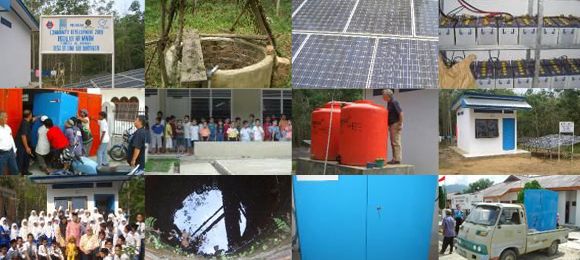
Gravity-fed filtration uses elevation and water pressure created by a raised storage tank, spring, reservoir, or other source above the treatment point. Instead of depending on high-pressure pumps, water moves through filtration media by natural force. This straightforward principle can provide a resilient foundation for decentralized water purification when the system is correctly designed for the source and demand.
For organizations planning sustainable treatment infrastructure, Swiss Cleanwater Group provides technologies and information for producing clean water in municipal, agricultural, industrial, mobile, and remote settings. Gravity-based designs can be adapted to many of these applications, especially where energy access and operating simplicity are major concerns.
How Gravity Creates Useful Filtration Pressure
A gravity-fed installation normally places raw-water storage above the filter, allowing the difference in height to produce pressure. The greater the vertical distance between the water level and the outlet, the more available head the system has. Pipes, valves, filter housings, and media beds then use this pressure to move water toward a collection tank or point of use.
This arrangement can work with elevated tanks, hillside reservoirs, rooftop storage, or natural springs. It does not mean that every gravity filter operates with no equipment at all. Pumps may still be useful for lifting water into the storage tank, while float valves, flow controls, gauges, and monitoring devices help protect treatment performance.
The key design task is balancing flow rate with contact time and filter resistance. Fine media and dense contaminant loads can slow water movement, while clogged beds require additional head or cleaning. A properly sized system preserves adequate contact time without forcing users to wait excessively for treated water.
Lower Energy Demand And Greater Resilience
The clearest benefit of gravity filtration is its reduced dependence on electricity. Once water reaches an elevated tank, gravity can provide the driving force for much of the treatment process. This reduces pump runtime, generator fuel consumption, battery requirements, and exposure to power interruptions.
That advantage is especially valuable in off-grid villages, agricultural properties, livestock facilities, and temporary installations. Solar panels and batteries may be sized for monitoring, dosing control where needed, or occasional pumping rather than continuous high-pressure operation. A system with fewer energy-intensive components can remain functional during cloudy weather, fuel shortages, or equipment failures.
Gravity-fed treatment also supports operational resilience. If a pump stops, water already stored above the filter may continue to pass through the treatment train. This reserve can provide time for repairs and reduce the risk of an immediate interruption. The result is a more stable water supply for drinking, washing, irrigation support, or animal care.
Simpler Operation In Remote Locations
Remote installations often have limited access to specialist technicians, replacement parts, and reliable supply chains. A gravity-fed filter can reduce mechanical complexity by minimizing high-pressure pumps and associated controls. With accessible valves, clear maintenance intervals, and suitable media, local operators may be able to perform routine inspections and cleaning.
Simplicity does not remove the need for technical planning. Operators must understand the source-water quality, expected daily volume, filter loading, and sanitation requirements. Sediment, organic matter, iron, manganese, bacteria, pesticides, arsenic, and uranium each require appropriate treatment methods. A basic particle filter should never be presented as a universal solution for dissolved contaminants or pathogens.
Maintenance can include backwashing, media replacement, sediment removal, pipe flushing, and periodic water testing. Designing the system with isolation valves, drain points, sample taps, and safe access makes these tasks easier. Clear operating instructions are equally important, particularly when several people share responsibility for a community or facility.
| Consideration | Gravity-Fed Filtration | Pump-Driven Pressurized Treatment |
|---|---|---|
| Main energy source | Elevation and stored water | Electricity, fuel, or solar-powered pumps |
| Energy consumption | Usually low during filtration | Can be substantial at high pressure |
| Mechanical complexity | Fewer high-pressure components | More pumps, controls, and moving parts |
| Flow flexibility | Limited by head and media resistance | Easier to adjust across changing demand |
| Remote maintenance | Often simpler if well designed | Requires more technical support and spares |
| Best application | Steady demand with available elevation | High flow, limited elevation, or complex treatment |
| Key limitation | Needs sufficient head and careful sizing | Depends on dependable energy and equipment |
Suitable Treatment Stages For Off-Grid Water
Gravity-fed filtration is most effective as part of a treatment train rather than as a single universal device. Coarse screening can remove leaves, stones, and larger particles before water reaches a sediment filter. Additional media may target turbidity, iron, manganese, or specific dissolved substances, depending on the raw-water analysis.
Biological treatment and disinfection require particular care. Some gravity systems use slow sand filtration or other low-energy processes that reduce microbial contamination under suitable conditions. However, treated water may still require a final barrier, such as ultraviolet treatment or another validated disinfection method, especially when the source is exposed to human or animal waste.
Chemical-free treatment can be attractive in locations where chemical supply, storage, or dosing expertise is limited. Even so, “chemical-free” does not mean maintenance-free or risk-free. A responsible design verifies removal performance through laboratory testing and establishes a monitoring plan for turbidity, microbial indicators, and site-specific contaminants.
Managing Contaminants And Filter Media
Choosing the correct filter media is central to reliable off-grid performance. Activated carbon may help reduce certain pesticides, organic compounds, tastes, and odors. Specialized adsorption or ion-exchange media may be required for arsenic or uranium, while catalytic or oxidation-based media can address iron and manganese under defined water conditions.
Mining regions illustrate why source-specific design matters. Uranium levels, pH, competing ions, and other dissolved minerals can influence treatment results, so planners should review guidance on uranium removal media before selecting a filter bed. Media capacity must also be calculated against the expected contaminant concentration and cumulative water volume.
Pre-filtration protects specialized media from premature fouling. If raw water contains heavy sediment or seasonal organic loads, a staged arrangement can extend service life and reduce pressure loss. Testing before installation, followed by regular verification after commissioning, helps confirm that the system is delivering water within the required standards.
Designing For Variable Demand And Climate
Off-grid water demand rarely remains constant. A rural household may use little water overnight and much more in the morning, while a livestock operation can experience significant seasonal changes. Storage tanks help separate treatment flow from peak consumption, allowing the filter to operate at a steadier rate.
Climate and terrain also affect performance. Freezing temperatures can damage tanks and pipework, while extreme heat can increase biological growth in poorly protected storage. Dust, algae, storms, and drought may change the quality of incoming water. Covered tanks, screened vents, overflow protection, insulation, and safe drainage should be included where conditions require them.
The available elevation must be assessed at the lowest expected water level, not only when a tank is full. This prevents flow from dropping below the treatment design point. Designers should also account for pipe length, bends, valves, media depth, and outlet height, since each contributes to pressure loss.
Recommendations For A Dependable Installation
- Test the raw water for physical, chemical, and microbiological contaminants before selecting filtration media.
- Place enough covered storage above the treatment unit to provide stable head and supply during peak use.
- Use staged filtration so sediment and organic matter do not overload specialized media.
- Include sample taps, pressure or flow indicators, drains, isolation valves, and accessible maintenance areas.
- Establish a written schedule for cleaning, media replacement, inspections, and laboratory verification.
Building A Long-Term Water Solution
Gravity-fed systems are particularly valuable when dependable water access matters more than maximum instantaneous flow. Their low energy demand, modest mechanical complexity, and compatibility with elevated storage make them a strong option for remote and mobile applications. They can also complement solar pumping, rainwater harvesting, spring capture, and decentralized community infrastructure.
Performance depends on disciplined design. Elevation, source quality, treatment objectives, storage capacity, sanitation, and maintenance must be considered together. When these factors are matched correctly, gravity can provide a quiet and efficient force behind a durable clean-water system.
Review the available treatment technologies and application information from Swiss Cleanwater Group, then move forward with source testing and a design suited to your operating conditions. A carefully engineered gravity-fed installation can turn limited energy access into a manageable water-treatment advantage.
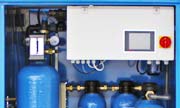
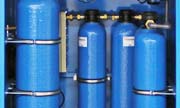
SCM 24
|
|
Cleans 24.000 liters per day
|
SCM 60
|
|
Cleans 60.000 liters per day
|
Video: How it works
The SCG Advantage
Our market-leading, water cleaning solutions have many advantages. To read more click the items below:
No Chemicals
Our machines and technology does not use any chemicals, at all.
Read more...
No Waste Water
Our machines do not waste any water. Yield = 100%.
Read more...
Low energy use
Uses 50 times less energy than a Reverse Osmosis Machine.
Read more...
Low ownership cost
Lower maintenance and operation costs due to our technology.
Read more...
Easy to install
Simple "plug and play" installation makes for easy deployment.
Read more...
Extremely compact
A compact system, contained in an easy to transport cabinet.
Read more...
Outperforms R.O.
SCG technologies outperform Reverse Osmosis systems.
Read more...
Faster ROI
Get a faster Return on Investment with our systems.
Read more...
Latest News
Latest Blog Posts
| Chemicals in water treatment? |
| Water storage - Whats best for keeping water clean and drinkable? |
| Case: Disaster Management Water Treatment |
Contact SCG
891 Showroom Place
Suite 101
Chula Vista, CA, 91914
Phone: +1 619-878-2730
Contact us by email