







Choosing filtration media for uranium removal in mining regions
Mining regions often face uranium in groundwater, surface water, or mine drainage at concentrations that vary with geology, rainfall, pumping rates, and operational activity. A treatment system that works at one borehole may perform poorly at another, even when both are located within the same district.
The right filtration media must therefore be selected from water analysis rather than from uranium concentration alone. pH, alkalinity, carbonate, hardness, iron, manganese, sulfate, dissolved organic matter, turbidity, and competing metals all influence removal efficiency and operating cost.
A practical design also considers what happens after the uranium is captured. Media regeneration, backwashing, spent-media handling, concentrate disposal, energy use, and long-term monitoring are central to a sustainable drinking-water solution. These factors are especially important for remote mines, rural communities, livestock operations, and temporary treatment sites.
Start with uranium chemistry and site conditions
Uranium is commonly present in groundwater as dissolved hexavalent uranium, often described as U(VI) or uranyl. Its chemical form changes with pH and carbonate concentration. In alkaline, carbonate-rich water, uranium can remain highly soluble and may be harder for some adsorbents to capture. Acidic mine drainage may create a different treatment profile, with iron, sulfate, and other dissolved minerals affecting media performance.
A laboratory report should include total uranium and, where possible, uranium speciation. The analysis should also measure pH, oxidation-reduction potential, electrical conductivity, alkalinity, hardness, calcium, magnesium, iron, manganese, sulfate, chloride, phosphate, silica, arsenic, and suspended solids. These parameters reveal whether a medium will face competition for active sites or rapid fouling.
Flow rate and water temperature matter as well. A media bed requires sufficient empty bed contact time for adsorption or ion exchange, while excessive velocity can reduce removal and increase pressure loss. Seasonal sampling is valuable in mining regions because storms, dewatering, and changes in groundwater levels can alter the contaminant load.
Understand the main media options
Adsorptive media are often the first option considered for uranium removal. Granular ferric hydroxide, iron-based media, titanium-based adsorbents, and other engineered materials can bind dissolved uranium without continuous chemical dosing. Their performance depends on surface chemistry, pH, carbonate, and the presence of competing anions. They are often suitable for small and medium flows when uranium levels are moderate and the water is well characterized.
Ion exchange resin uses charged functional groups to capture dissolved uranium species. Strong-base anion resins can be effective when uranium forms negatively charged carbonate complexes. Resin selection must account for sulfate, nitrate, chloride, and organic matter, since these substances may compete for exchange capacity. Regeneration can extend resin life, but it produces a concentrated waste stream that requires controlled management.
Activated alumina may perform well in selected pH ranges and can remove several dissolved contaminants in addition to uranium. It may be useful where arsenic or fluoride treatment is also required, although performance can decline when the water contains high concentrations of competing ions. Manganese dioxide-coated media are valuable for oxidation and removal of manganese and iron, but they should not automatically be treated as a primary uranium medium without site-specific testing.
Reverse osmosis and nanofiltration are membrane processes rather than granular media, yet they can provide a strong uranium barrier when dissolved salts and multiple contaminants must be reduced together. Their disadvantages include energy demand, membrane fouling, pretreatment requirements, and reject water. A membrane system may be appropriate for a high-quality drinking-water stream, while an adsorptive or ion-exchange process may offer a simpler solution for lower-pressure or remote applications.
Match the medium to the water profile
The most suitable choice depends on the contaminant mixture, operating conditions, and waste strategy. A medium with a high laboratory capacity may still be unsuitable if it loses performance in the presence of carbonate or requires regeneration chemicals unavailable at a remote site.
| Treatment option | Best-fit conditions | Main limitations | Waste and operating considerations |
|---|---|---|---|
| Iron-based adsorptive media | Moderate uranium, stable pH, low to moderate turbidity | Competing anions and exhausted active sites can reduce capacity | Periodic replacement or controlled backwashing |
| Ion exchange resin | Uranium in soluble anionic complexes, consistent water chemistry | Sulfate, nitrate, and organic matter consume capacity | Regeneration creates concentrated brine |
| Activated alumina | Uranium combined with arsenic or fluoride treatment needs | Sensitive to pH and competing dissolved substances | Requires backwash and eventual media replacement |
| Engineered titanium or hybrid adsorbent | High selectivity and compact treatment footprints | Higher material cost and need for pilot validation | Spent media must be characterized and managed |
| Reverse osmosis or nanofiltration | Uranium plus high dissolved solids or broad contaminant reduction | Energy, fouling, and reject-water management | Produces a concentrated reject stream |
Pilot testing should measure breakthrough, pressure loss, uranium leakage, and media capacity over time. Short jar tests can screen candidates, but column testing is more representative because it reproduces flow direction, contact time, bed depth, and exhaustion behavior. Testing should use actual mine-region water rather than a prepared laboratory solution whenever possible.
A treatment train may combine methods instead of relying on one barrier. For example, sediment removal can protect an adsorptive bed, oxidation can convert iron or manganese into filterable particles, and a final membrane or polishing stage can protect the distribution system. This approach can lower fouling risk and make each treatment step more predictable.
Build pretreatment around the media
Turbidity and suspended solids can block the surface of adsorbents and increase head loss. Multimedia filtration, cartridge filtration, or ultrafiltration may be installed before uranium-specific treatment when the source contains clay, precipitated iron, bacteria, or organic particles. In applications where microbial safety is also a concern, ultrafiltration treatment can provide a physical barrier for bacteria and suspended contaminants, although it does not replace a uranium-specific process.
Iron and manganese require particular attention. They may occur naturally in the aquifer or be mobilized by mining activity, and they can coat downstream media, reduce available adsorption sites, and complicate backwashing. An oxidation and filtration stage may be needed before uranium removal, but oxidation chemistry should be verified carefully because changes in pH and redox conditions can also change uranium mobility.
pH adjustment can improve the performance of certain media, but chemical dosing conflicts with projects seeking a low-chemical or chemical-free operating model. Where possible, the design should first evaluate media that work within the existing water chemistry. If adjustment is unavoidable, dosing equipment, storage, operator training, and residual management must be included from the beginning.
Plan for backwash, exhaustion, and spent media
Uranium-bearing media should never be treated as ordinary filter waste without testing. As media approaches exhaustion, uranium can break through into treated water. A lead-lag arrangement, with one vessel protecting the other, allows operators to identify the exhausted bed before the final barrier fails. Online or scheduled uranium monitoring should support this arrangement, with sampling frequency based on flow, influent variability, and media capacity.
Backwash water may contain uranium, iron, manganese, and suspended solids. It should be collected and assessed rather than discharged automatically to soil, drainage channels, or surface water. In some installations, backwash can be settled and returned to an appropriate treatment stage. The design must account for tank volume, sludge handling, and safe maintenance access.
Spent adsorbent and exhausted resin require a documented chain of custody. Their classification depends on uranium loading, local regulations, and disposal thresholds. Regeneration can reduce replacement frequency but may create a liquid concentrate that is harder to manage than solid media. For remote mine sites, a longer-lasting medium with simple change-out procedures may be preferable to a regenerable resin system that depends on frequent chemical deliveries.
Sustainability should be measured across the full life cycle. A process that removes uranium effectively but produces large reject volumes, consumes substantial power, or requires frequent hazardous-material transport may be less suitable than a slightly larger low-waste system. Zero-waste treatment goals should be evaluated through water recovery, residual handling, and realistic site logistics, as described in zero-waste plant design.
Select equipment for the operating environment
A mine, village, processing plant, and mobile treatment unit will have different priorities. Municipal systems may favor automated valves, remote monitoring, redundant vessels, and predictable media replacement. A remote camp may need gravity-fed operation, low power consumption, simple controls, and long service intervals. Mobile or military systems may prioritize compact skids, rapid deployment, and media that can be transported and changed without specialized infrastructure.
The pressure vessel, distributor, underdrain, flow controller, sampling ports, and safety instrumentation deserve as much attention as the media itself. Poor flow distribution can create channeling, causing uranium to pass through untreated zones. Oversized or undersized vessels can cause either unnecessary capital expense or insufficient contact time.
Performance verification should continue after commissioning. Operators should track influent and effluent uranium, pH, flow, pressure differential, backwash frequency, media age, and other target contaminants. A gradual increase in effluent uranium or pressure loss can indicate exhaustion, fouling, channeling, or a change in source-water chemistry.
Use these priorities when choosing a system
A reliable selection process should connect laboratory results with practical site requirements:
- Confirm uranium concentration, speciation, pH, carbonate, sulfate, iron, manganese, turbidity, and seasonal variation.
- Compare adsorbents, ion exchange, and membrane processes through actual-water column or pilot testing.
- Design pretreatment to control suspended solids, biological growth, iron, manganese, and organic fouling.
- Specify lead-lag vessels, sampling points, breakthrough monitoring, and a documented spent-media route.
- Balance removal efficiency with energy use, chemical dependence, backwash volume, transport needs, and total lifecycle cost.
A qualified water-treatment provider can translate the test data into bed depth, contact time, vessel sizing, monitoring requirements, and a media replacement schedule. For mining regions, the best solution is rarely the medium with the highest advertised capacity; it is the complete treatment train that remains stable as water chemistry and operating conditions change.
Swiss Cleanwater Group can support site-specific evaluation of uranium removal alongside related contaminants such as manganese, arsenic, bacteria, pesticides, and dissolved solids. Request a water analysis review and discuss a pilot-tested treatment configuration before committing to full-scale equipment.
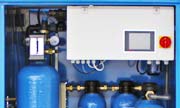
SCM 24
|
|
Cleans 24.000 liters per day
|
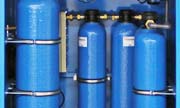
SCM 60
|
|
Cleans 60.000 liters per day
|
Video: How it works
The SCG Advantage
Our market-leading, water cleaning solutions have many advantages. To read more click the items below:
No Chemicals
Our machines and technology does not use any chemicals, at all.
Read more...
No Waste Water
Our machines do not waste any water. Yield = 100%.
Read more...
Low energy use
Uses 50 times less energy than a Reverse Osmosis Machine.
Read more...
Low ownership cost
Lower maintenance and operation costs due to our technology.
Read more...
Easy to install
Simple "plug and play" installation makes for easy deployment.
Read more...
Extremely compact
A compact system, contained in an easy to transport cabinet.
Read more...
Outperforms R.O.
SCG technologies outperform Reverse Osmosis systems.
Read more...
Faster ROI
Get a faster Return on Investment with our systems.
Read more...
Latest News
Latest Blog Posts
| Chemicals in water treatment? |
| Water storage - Whats best for keeping water clean and drinkable? |
| Case: Disaster Management Water Treatment |
Contact SCG
891 Showroom Place
Suite 101
Chula Vista, CA, 91914
Phone: +1 619-878-2730
Contact us by email