







How catalytic media reduces manganese staining in water systems
Manganese is a naturally occurring mineral that can make otherwise clear water difficult to manage. When dissolved manganese reaches air, chlorine, or another oxidising environment, it can form dark brown or black particles. These particles settle on plumbing, fixtures, laundry, tanks, and process equipment, creating stains that are difficult to remove.
Catalytic filter media offers a practical way to reduce this problem at the treatment stage. Its specially prepared surface encourages dissolved manganese to change into an insoluble form that can be captured inside a filtration vessel. With suitable pretreatment, flow control, and backwashing, the process can provide reliable manganese removal without continuous chemical dosing.
For drinking water, agriculture, buildings, industrial facilities, and public infrastructure, the value extends beyond appearance. Lower manganese levels can protect equipment, reduce maintenance, improve water quality, and help operators avoid interruptions caused by deposits and discoloured water.
Why manganese causes persistent stains
Manganese often enters groundwater as a soluble compound that is invisible at the tap. The water may look clean when it is drawn from a borehole or well, yet exposure to oxygen causes manganese to oxidise. The resulting manganese dioxide and related particles can appear as grey, brown, or black deposits.
Staining is especially noticeable in sinks, toilets, showers, laundry, and white surfaces. In commercial settings, deposits may accumulate inside pipes, valves, spray nozzles, heat exchangers, washing systems, and production lines. Once established, these deposits can restrict flow and require abrasive cleaning or replacement of affected components.
Manganese can also interact with iron, organic matter, pH, and microbial activity. A treatment approach that works well for one water source may perform poorly at another if these conditions are ignored. Testing the raw water is therefore essential before selecting a catalytic filtration system.
How catalytic media supports manganese removal
Catalytic media is manufactured or treated to provide a reactive surface. As water passes through the filter bed, the surface promotes oxidation of dissolved manganese and helps the newly formed particles attach to the grains. The media effectively supports a filtration cycle in which manganese is converted and retained rather than simply passing through the vessel.
The process can work with oxygen already present in the water, although some sources require aeration or another oxidising step. pH is a major factor. Manganese oxidation generally becomes more effective at a suitably elevated pH, so the system design may include aeration, alkalinity adjustment, or a complementary treatment stage.
Over time, captured manganese fills the spaces between the media grains. Backwashing then lifts and expands the bed, releasing accumulated solids to drain. Correct backwash velocity, duration, and frequency help preserve the media’s catalytic performance and prevent channeling or excessive pressure loss.
Benefits beyond cleaner-looking water
The clearest benefit is a reduction in black or brown staining. Cleaner water protects bathroom fixtures, laundry, floors, tanks, and process surfaces, reducing the need for frequent scrubbing and harsh descaling products. This is valuable in homes, hotels, public buildings, farms, and facilities where appearance and hygiene are closely connected.
Catalytic filtration can also reduce the operational effects of manganese deposits. Lower particulate loading helps protect downstream membranes, ultraviolet equipment, pumps, valves, and fine filters. In industrial water treatment, controlling manganese before it reaches production equipment can support more stable operation and reduce unplanned maintenance. Further information on application-specific systems is available through industrial water treatment solutions.
Another advantage is the possibility of low-chemical or chemical-free operation. Depending on the water chemistry and selected media, oxidation may be supported by aeration rather than constant chemical injection. This can simplify storage and handling requirements, reduce chemical residuals, and limit waste associated with treatment.
Conditions that determine performance
A catalytic media filter should be selected from measured water data rather than manganese concentration alone. Important parameters include pH, dissolved oxygen, iron, turbidity, hardness, alkalinity, organic matter, ammonium, flow rate, temperature, and the presence of bacteria. These factors influence oxidation speed, filter loading, and the length of each service cycle.
Pretreatment may be needed where the source contains high turbidity, oil, suspended solids, or excessive iron. A sediment filter or aeration stage can help protect the catalytic bed. In some cases, manganese removal works best as part of a treatment train that includes oxidation, contact time, filtration, and final polishing.
Sizing also matters. If the filter is too small, water may pass through too quickly for adequate contact and retention. If backwashing is insufficient, the bed can compact or become fouled. Operators should monitor inlet and outlet manganese, pressure difference, flow, and the appearance of treated water so that maintenance occurs before staining returns.
Comparing manganese treatment approaches
Different technologies can reduce manganese, but their suitability depends on raw-water chemistry, available space, operating skills, and the required water quality. Catalytic media is often attractive where the priority is dependable filtration with limited chemical use and manageable operating requirements.
| Treatment approach | Main strength | Typical consideration |
|---|---|---|
| Catalytic media filtration | Promotes manganese oxidation and captures particles in one filter bed | Needs suitable pH, contact time, and regular backwashing |
| Aeration followed by filtration | Adds oxygen without continuous chemical dosing | Requires space, contact time, and control of air-related odours |
| Chemical oxidation and filtration | Can respond to difficult or variable water chemistry | Requires chemical storage, dosing control, and residual management |
| Membrane filtration | Produces highly treated water when correctly designed | Can involve higher pressure, energy use, and concentrate disposal |
| Ion exchange | May address selected dissolved contaminants | Media sensitivity and regeneration requirements must be assessed |
The right choice may combine more than one process. For example, aeration can improve oxidation while catalytic media provides the capture stage. Where water must meet demanding quality targets, a prefilter and final disinfection barrier may be added after manganese removal.
A pilot test or detailed process assessment can reveal whether the media will achieve the required manganese concentration at the intended flow. It can also identify how frequently backwashing will be needed and whether seasonal changes in groundwater chemistry could affect results.
Applications across water-intensive facilities
Municipal and community systems can use catalytic filtration to improve the appearance and acceptability of drinking water while protecting distribution infrastructure. In rural areas, the same principle can help treat private wells serving homes, livestock buildings, farms, and small businesses.
Food and beverage facilities have a strong reason to control manganese before water enters washing, processing, or boiler systems. A relevant food processing case study illustrates why source-water treatment should be connected to production reliability, hygiene, and equipment protection rather than treated as an isolated filter installation.
Swimming pools can also benefit from controlling metals in make-up water. Manganese may contribute to discolouration and deposits when it reacts with disinfectants or changes oxidation state. Properly treated fill water supports clearer pool operation and helps protect surfaces; dedicated pool water treatment can address the wider chemistry of these systems.
Practical steps for selecting and operating a filter
A well-designed system begins with representative laboratory analysis and a clear statement of the required treated-water quality. Operators should consider peak demand, storage volume, regeneration or backwash water availability, drain capacity, automation, and the consequences of temporary treatment downtime.
Key recommendations include:
- Test manganese alongside pH, iron, turbidity, hardness, alkalinity, and organic matter.
- Confirm the required flow rate and contact time before choosing vessel size and media volume.
- Include pretreatment where suspended solids, oil, or high iron could foul the catalytic bed.
- Set backwash intervals using pressure loss and water-quality readings, not a fixed calendar alone.
- Verify treated water after commissioning and continue periodic sampling during seasonal changes.
Media life depends on water chemistry, loading, backwash quality, and operating conditions. A filter that receives proper maintenance can provide consistent service for a long period, while neglected media may lose capacity or become hydraulically restricted. Automatic controls, alarms, and scheduled inspections make performance easier to manage in unattended or remote installations.
Catalytic media is a strong option for reducing manganese staining when it is matched to the source water and integrated into a complete treatment design. It can improve the appearance of water, protect equipment, reduce cleaning demands, and support lower-chemical operation across many applications. Contact Swiss Cleanwater Group to assess the water analysis, treatment goals, and system conditions required for a reliable manganese-removal solution.
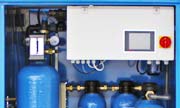
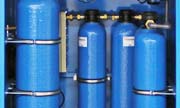
SCM 24
|
|
Cleans 24.000 liters per day
|
SCM 60
|
|
Cleans 60.000 liters per day
|
Video: How it works
The SCG Advantage
Our market-leading, water cleaning solutions have many advantages. To read more click the items below:
No Chemicals
Our machines and technology does not use any chemicals, at all.
Read more...
No Waste Water
Our machines do not waste any water. Yield = 100%.
Read more...
Low energy use
Uses 50 times less energy than a Reverse Osmosis Machine.
Read more...
Low ownership cost
Lower maintenance and operation costs due to our technology.
Read more...
Easy to install
Simple "plug and play" installation makes for easy deployment.
Read more...
Extremely compact
A compact system, contained in an easy to transport cabinet.
Read more...
Outperforms R.O.
SCG technologies outperform Reverse Osmosis systems.
Read more...
Faster ROI
Get a faster Return on Investment with our systems.
Read more...
Latest News
Latest Blog Posts
| Chemicals in water treatment? |
| Water storage - Whats best for keeping water clean and drinkable? |
| Case: Disaster Management Water Treatment |
Contact SCG
891 Showroom Place
Suite 101
Chula Vista, CA, 91914
Phone: +1 619-878-2730
Contact us by email