









The economics of chemical-free cooling tower treatment
Industrial cooling towers are essential for removing heat from manufacturing lines, data centers, power facilities, food plants, and commercial buildings. They also consume significant volumes of water and create recurring operating costs through chemical dosing, blowdown, wastewater handling, maintenance, and equipment downtime.
Chemical-free water treatment offers a different economic model. Instead of relying primarily on corrosion inhibitors, biocides, scale-control chemicals, and frequent discharge, a facility can use physical purification and targeted filtration to control contaminants entering the recirculating system. The financial value comes from lowering total operating costs while maintaining heat-transfer performance and asset protection.
The strongest business cases account for the complete water cycle. Purchase price is only one factor. Water consumption, sewer charges, chemical storage, worker safety, regulatory obligations, cleaning frequency, and production risk can determine whether a treatment upgrade pays back quickly or gradually over several years.
Why cooling towers create hidden costs
A cooling tower continually concentrates dissolved minerals as water evaporates. Calcium, silica, manganese, iron, chloride, and other substances become more concentrated in the circulating water. If their levels exceed the system’s control limits, scale can build on heat-transfer surfaces, corrosion can damage piping, and suspended solids can encourage deposits and microbiological growth.
Facilities typically respond by adding treatment chemicals and increasing blowdown. That approach can control specific risks, but it creates a chain of expenses. Chemicals must be purchased, transported, stored, dosed, monitored, and disposed of safely. Blowdown carries concentrated contaminants into the wastewater stream, while replacement water must be heated, pumped, and treated again.
The cost of poor control is often greater than the monthly water bill. Fouled heat exchangers reduce thermal efficiency, pumps work harder, nozzles can clog, and unplanned cleaning can interrupt production. A financial assessment should therefore include energy penalties, labor, maintenance materials, lost output, and the expected service life of cooling equipment.
How chemical-free treatment changes the cost structure
A chemical-free system aims to reduce the contaminant load before water reaches the cooling loop or to condition the recirculating stream through physical processes. Depending on the source water and project goals, this can include filtration, membrane separation, ultraviolet disinfection, catalytic media, or other non-chemical technologies. The correct combination depends on the contaminants, flow rate, temperature, and required water quality.
The principal economic benefit is a lower dependence on consumables. Reduced chemical dosing can decrease procurement and handling costs, while lower blowdown may reduce freshwater demand and wastewater volume. A system designed for low energy use can also limit the electrical cost associated with continuous treatment.
Chemical-free does not mean maintenance-free. Filters may require backwashing or replacement, membranes need cleaning and monitoring, and pumps consume electricity. These costs are usually more predictable than chemical consumption, but they still belong in the operating model. A credible evaluation compares annualized equipment costs with the existing cost of water, chemicals, discharge, labor, cleaning, and failures.
Where the savings are created
Water savings can be substantial when improved conditioning allows a cooling tower to operate at higher cycles of concentration without excessive scaling or corrosion. Higher cycles mean that each unit of make-up water remains in the system longer before blowdown. The exact result depends on local water chemistry and tower design, so cycle targets should be set using laboratory analysis and operating data rather than a generic promise.
Wastewater reduction has a second financial effect. Lower blowdown can reduce sewer fees and the cost of treating concentrated contaminants. In regions with discharge restrictions, it may also reduce the need for monitoring, permits, storage, or specialized disposal. Facilities that reuse treated water from another process can gain additional value by reducing the demand for potable or high-quality industrial water.
Heat-transfer efficiency is another source of savings. Clean surfaces transfer heat more effectively, allowing a chiller, compressor, or process cooling system to deliver the required performance with less energy. The improvement may be modest in a well-maintained tower, but it can become significant where mineral deposits and suspended solids have accumulated over time.
Comparing the total cost of ownership
The following comparison illustrates how the main cost categories differ. It is a framework rather than a universal calculation; actual results require site-specific flow rates, water prices, chemical programs, discharge requirements, and equipment specifications.
| Cost category | Conventional chemical program | Chemical-free or reduced-chemical approach |
|---|---|---|
| Initial investment | Usually lower for basic dosing equipment | Often higher because filtration or treatment equipment is installed |
| Chemical purchases | Recurring and sensitive to market prices | Low or potentially eliminated for targeted processes |
| Freshwater demand | Can be high when blowdown is used to control concentration | Potentially lower when contaminant removal supports higher cycles |
| Wastewater discharge | Concentrated blowdown requires management | Reduced discharge may lower treatment and sewer costs |
| Labor and safety | Dosing checks, storage, handling, and compliance | Monitoring, filter service, and equipment maintenance |
| Energy use | Pumps and dosing systems plus heat-transfer penalties from fouling | Treatment electricity, with potential savings from cleaner surfaces |
| Equipment risk | Corrosion, scale, and biological control depend on program quality | Performance depends on correct pretreatment and monitoring |
| Long-term economics | Lower entry cost but continuous operating exposure | Higher entry cost with potential lifecycle savings |
The payback period should be calculated using a baseline from at least six to twelve months. Useful data includes make-up water volume, blowdown volume, chemical invoices, laboratory testing, conductivity readings, cleaning events, pump energy, and cooling-system efficiency. Seasonal changes matter because evaporation, ambient temperature, and production load can alter the economics considerably.
Designing a financially sound project
The first step is a water analysis that identifies the contaminants driving cost and risk. Hardness, alkalinity, silica, iron, manganese, suspended solids, microbiological indicators, and corrosive ions may require different control measures. A system optimized for one problem may perform poorly if another contaminant is ignored.
Manganese and iron deserve particular attention because they can form deposits, discolor water, and interfere with downstream equipment. A facility evaluating removal options can review this resource on manganese removal to understand how treatment can address the contaminant without creating hazardous residual waste. The treatment method should still be matched to the site’s concentration, flow, and disposal conditions.
Sizing is equally important. Undersized treatment equipment may fail during peak demand, while oversized equipment increases capital cost and unnecessary energy use. Engineers should evaluate make-up flow, tower volume, recirculation rate, peak load, redundancy, available footprint, and integration with existing controls. Bypass arrangements and online monitoring can help preserve production continuity during service.
A sound financial model should include three scenarios: current operation, chemical reduction, and full chemical-free treatment where technically appropriate. Each scenario should show capital expenditure, annual operating expenditure, avoided costs, maintenance requirements, expected service life, and sensitivity to water and chemical price changes. This makes the investment decision more transparent for engineering, finance, and environmental teams.
Practical recommendations for plant managers
A careful implementation can protect savings while reducing operational risk. The most useful actions are:
- Establish a measured baseline for water, chemicals, blowdown, energy, cleaning, and downtime before selecting equipment.
- Test source water and cooling-loop water across different seasons to identify changing contaminant loads.
- Compare treatment options using lifecycle cost rather than purchase price alone.
- Specify monitoring points for conductivity, flow, pressure, temperature, and relevant water-quality parameters.
- Begin with a pilot, sidestream installation, or one cooling loop when the facility has several systems.
The pilot should use agreed performance indicators. These may include cycles of concentration, make-up water per unit of heat rejected, chemical consumption, heat-exchanger approach temperature, suspended solids, and maintenance hours. Tracking these measures creates evidence for expansion and reveals whether the treatment process is solving the original cost problem.
Operators also need clear service procedures. Filter replacement intervals, alarm thresholds, sampling schedules, and escalation responsibilities should be documented before commissioning. Training is a relatively small expense compared with the cost of an avoidable shutdown or a poorly maintained treatment unit.
Turning efficiency into a long-term advantage
The economics become stronger when water treatment is connected to broader industrial goals. Lower chemical use can simplify occupational safety procedures, reduce storage requirements, and support environmental reporting. Lower water withdrawal can improve resilience in areas facing drought restrictions or rising utility tariffs. Reduced wastewater discharge can help a site meet internal sustainability targets without compromising production.
Chemical-free treatment also supports more stable planning. Chemical prices fluctuate, suppliers may face interruptions, and regulatory requirements can change. A physical treatment asset still requires maintenance and electricity, but its costs can be easier to forecast over the equipment’s service life. This predictability has value when a facility is planning capacity expansion or calculating the cost of a long-term production contract.
The best results come from treating the cooling tower as part of a complete water-management system. Source-water quality, pre-treatment, tower operation, heat exchange, blowdown control, and final discharge should be evaluated together. A solution that reduces one cost while creating a new disposal or maintenance problem is not a genuine economic improvement.
For project updates and relevant water-treatment information, facilities can manage communication through the company’s email preferences. When the data supports a change, contact Swiss Cleanwater Group to assess the water chemistry, treatment requirements, and lifecycle economics of a chemical-free cooling tower system. Start with a measured site evaluation and turn potential savings into a documented operating strategy.
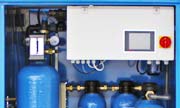
SCM 24
|
|
Cleans 24.000 liters per day
|
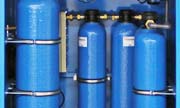
SCM 60
|
|
Cleans 60.000 liters per day
|
Video: How it works
The SCG Advantage
Our market-leading, water cleaning solutions have many advantages. To read more click the items below:
No Chemicals
Our machines and technology does not use any chemicals, at all.
Read more...
No Waste Water
Our machines do not waste any water. Yield = 100%.
Read more...
Low energy use
Uses 50 times less energy than a Reverse Osmosis Machine.
Read more...
Low ownership cost
Lower maintenance and operation costs due to our technology.
Read more...
Easy to install
Simple "plug and play" installation makes for easy deployment.
Read more...
Extremely compact
A compact system, contained in an easy to transport cabinet.
Read more...
Outperforms R.O.
SCG technologies outperform Reverse Osmosis systems.
Read more...
Faster ROI
Get a faster Return on Investment with our systems.
Read more...
Latest News
Latest Blog Posts
| Chemicals in water treatment? |
| Water storage - Whats best for keeping water clean and drinkable? |
| Case: Disaster Management Water Treatment |
Contact SCG
891 Showroom Place
Suite 101
Chula Vista, CA, 91914
Phone: +1 619-878-2730
Contact us by email