








The Future of Point-of-Use Water Purification for Apartments
Apartment residents increasingly want control over the water they drink, cook with, and use for sensitive household tasks. Municipal treatment protects public supplies, yet water quality can change as it travels through aging pipes, building plumbing, storage tanks, and internal distribution networks. Point-of-use purification provides a final barrier directly where water is consumed.
The next generation of apartment water filters will need to combine strong contaminant removal with low maintenance, modest energy demand, quiet operation, and compact installation. Systems must fit beneath a sink, inside a utility cabinet, or at a shared building connection without creating excessive wastewater or complicated servicing requirements.
This shift is relevant to landlords, facility managers, housing cooperatives, and residents. A well-designed system can support healthier drinking water while reducing bottled-water dependence and giving building operators clearer visibility into filtration performance.
Why Apartment Water Treatment Is Changing
Urban housing is becoming denser, and many apartment buildings have plumbing systems that were installed decades ago. Even when source water meets regulatory standards, contaminants may enter or accumulate within distribution infrastructure. Sediment, metals, microbial contamination, pesticides, and persistent particles can all influence how residents perceive the quality of tap water.
Consumer expectations are also evolving. People are paying closer attention to arsenic, manganese, uranium, bacteria, pharmaceutical residues, and microplastics. Concerns about microplastics at home are encouraging households to examine filtration beyond taste and odor improvement.
Point-of-use treatment answers this demand by placing purification at a kitchen faucet, drinking-water station, refrigerator line, or other selected outlet. It avoids treating every litre used for toilet flushing or laundry, which can make decentralized purification more efficient for apartment buildings.
Technologies Moving Beyond Conventional Filters
Activated carbon remains useful for reducing chlorine, odors, and many organic compounds, but it is not a universal solution. Cartridge filters can also become a maintenance risk if replacement schedules are ignored. Future systems will combine multiple treatment stages or use more advanced physical separation methods selected for the contaminants found in a particular building.
Membrane technologies can remove very small particles and dissolved substances, although reverse osmosis may require significant pressure, electricity, replacement components, and reject water. Apartment operators should assess the full operating profile rather than choosing a system based only on its removal percentage. A chemical-free alternative may offer a more practical balance between purification performance, resource use, and ongoing maintenance.
Chemical-free treatment is especially attractive where residents want a simple drinking-water solution without dosing chemicals into the building supply. Depending on the source and target contaminants, technologies such as advanced filtration, adsorption, ultraviolet treatment, or specialized separation media may be combined. The correct configuration should follow laboratory testing and a clear understanding of local water conditions.
Design Priorities for Shared Buildings
An apartment purification system must work within physical and social constraints. Space under a sink is limited, access may be difficult, and residents may not tolerate noise, leaks, frequent service visits, or slow dispensing. Equipment should therefore be modular, easy to inspect, and sized according to the number of users and expected peak demand.
Shared systems can serve a whole building, a communal kitchen, or a drinking-water point in a lobby or laundry area. Smaller point-of-entry installations may protect multiple outlets, while individual point-of-use units give residents more control. The best choice depends on plumbing layout, ownership responsibilities, water pressure, and whether occupants pay for maintenance through rent or a service agreement.
Water conservation is another central design issue. A purifier that sends large quantities of water to drain may increase operating costs and undermine sustainability goals. Low-waste systems, efficient regeneration, durable components, and long service intervals will become increasingly important as property owners measure environmental performance.
| Apartment Need | Preferred System Characteristic | Practical Benefit |
|---|---|---|
| Limited cabinet space | Compact, modular equipment | Easier installation in kitchens and utility rooms |
| Variable water quality | Configurable treatment stages | Better response to local contaminants |
| High resident turnover | Simple controls and clear indicators | Less training and fewer operating errors |
| Sustainability targets | Low waste and low energy demand | Reduced water and utility consumption |
| Shared maintenance | Remote monitoring and service alerts | Faster intervention and predictable upkeep |
| Sensitive occupants | Reliable microbial and chemical control | Greater confidence in drinking water |
Digital Monitoring and Predictive Maintenance
Connected purification equipment will make apartment water treatment more transparent. Sensors can track flow, pressure, conductivity, temperature, filter condition, and ultraviolet performance. A building manager could receive an alert when a cartridge approaches its capacity or when an unusual pressure drop suggests a blocked stage.
Remote monitoring also supports preventive maintenance. Instead of replacing components only according to a fixed calendar, service intervals can reflect actual consumption and water quality. This may reduce unnecessary replacements in lightly occupied buildings while preventing overdue maintenance in busy properties.
Data should be presented in a useful and privacy-conscious way. Residents need simple information about system status, while facility teams require technical records and alarm histories. Clear displays and mobile notifications can encourage responsible use without overwhelming occupants with complex measurements.
Health Protection Without Excess Resource Use
Apartment purification should be designed around verified risks rather than broad marketing claims. A building near agricultural land may need attention to pesticides or nitrates, while another location may be more concerned with manganese, arsenic, uranium, or microbial contamination. Testing before installation helps prevent under-treatment and avoids paying for unnecessary processes.
Swiss Cleanwater Group focuses on treatment solutions intended to remove contaminants such as manganese, arsenic, bacteria, pesticides, and uranium without chemicals, waste, or excessive energy use. This approach aligns with the needs of buildings seeking dependable water quality while limiting the environmental burden associated with intensive treatment.
The same principle applies to specialized residential developments, student housing, care facilities, and emergency accommodation. A compact purifier can provide an additional safeguard where residents are vulnerable or where bottled water would be expensive, difficult to store, or logistically wasteful.
Installation, Certification, and Building Management
Future adoption will depend as much on installation standards as on filtration technology. Equipment should be fitted by qualified professionals, protected against backflow, and connected in a way that allows maintenance without disrupting the entire apartment block. Materials in contact with drinking water must be suitable for the application, and performance claims should be supported by credible test data.
Property owners should also define responsibility before commissioning a system. A written plan can specify who changes filters, who responds to alarms, how residents report taste or pressure changes, and how performance is documented. These details are essential when a building has multiple owners, a facilities contractor, or a rotating tenant population.
Procurement teams may benefit from pilot installations. A trial in one kitchen, floor, or communal outlet can reveal actual demand, user behavior, noise levels, service needs, and acceptance. Results from the pilot can guide a larger rollout with fewer surprises and a clearer return on investment.
Recommendations for Apartment Water Projects
A successful installation begins with the building’s actual water profile rather than a generic product comparison. Managers should consider source quality, internal plumbing, occupancy, available space, and the outlets that require protection.
- Test incoming and point-of-use water for locally relevant chemical, physical, and microbial contaminants.
- Choose treatment stages based on verified risks, expected flow, and available installation space.
- Compare wastewater, energy consumption, replacement frequency, and total ownership cost.
- Include leak protection, maintenance access, monitoring, and clear responsibility in the project specification.
- Explain system operation to residents through concise labels, notices, and service updates.
Apartment buildings can also benefit from targeted water solutions beyond residential kitchens. Farms, food businesses, and property portfolios may need different flow rates and treatment goals, while animal-care facilities require dependable supplies adapted to their operating conditions. Guidance on water for livestock illustrates why purification design should be matched to its end use rather than treated as a one-size-fits-all purchase.
Point-of-use purification is moving toward a more measured and integrated role in residential water management. Compact equipment, resource-efficient treatment, real-time monitoring, and evidence-based installation can help apartments deliver cleaner drinking water without treating every use in the building. The most effective systems will be those that combine technical performance with straightforward ownership and maintenance.
Swiss Cleanwater Group can help property owners, developers, and facility teams assess suitable water-treatment options for apartment applications. Review the available technologies, discuss the building’s water conditions with a specialist, and plan a practical purification system that protects residents while supporting long-term sustainability.
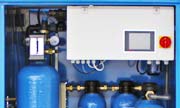
SCM 24
|
|
Cleans 24.000 liters per day
|
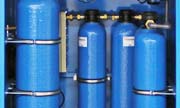
SCM 60
|
|
Cleans 60.000 liters per day
|
Video: How it works
The SCG Advantage
Our market-leading, water cleaning solutions have many advantages. To read more click the items below:
No Chemicals
Our machines and technology does not use any chemicals, at all.
Read more...
No Waste Water
Our machines do not waste any water. Yield = 100%.
Read more...
Low energy use
Uses 50 times less energy than a Reverse Osmosis Machine.
Read more...
Low ownership cost
Lower maintenance and operation costs due to our technology.
Read more...
Easy to install
Simple "plug and play" installation makes for easy deployment.
Read more...
Extremely compact
A compact system, contained in an easy to transport cabinet.
Read more...
Outperforms R.O.
SCG technologies outperform Reverse Osmosis systems.
Read more...
Faster ROI
Get a faster Return on Investment with our systems.
Read more...
Latest News
Latest Blog Posts
| Chemicals in water treatment? |
| Water storage - Whats best for keeping water clean and drinkable? |
| Case: Disaster Management Water Treatment |
Contact SCG
891 Showroom Place
Suite 101
Chula Vista, CA, 91914
Phone: +1 619-878-2730
Contact us by email