









How to Remove Microplastics from Drinking Water at the Point of Use
Microplastics are small synthetic particles that can enter drinking water through degraded packaging, household plumbing, industrial discharge, urban runoff, and atmospheric deposition. They vary greatly in shape, density, and size, which makes their removal more complex than filtering a single, well-defined contaminant.
Point-of-use treatment places a purification device close to the tap where water is consumed. A properly selected system can reduce suspended plastic particles immediately before drinking or cooking, even when the incoming supply is exposed to changing conditions.
The most effective approach combines particle removal, membrane separation, hygienic design, and regular maintenance. Treatment should also address other contaminants that may be present in the same water, including bacteria, pesticides, metals, and naturally occurring minerals.
What Microplastics Mean For Drinking Water
Microplastics are commonly defined as plastic particles smaller than five millimetres. They may be fragments, fibres, films, or beads made from materials such as polyethylene, polypropylene, polyester, or polystyrene. Some are visible, while others require laboratory analysis. Nanoplastics are smaller still and can behave differently during filtration.
A household water supply may contain particles released from plastic storage tanks, flexible hoses, synthetic textiles, packaging, or damaged infrastructure. Tap water can also acquire particles inside a building if fittings and pipework deteriorate. The risk is therefore influenced by the source water, treatment plant, distribution network, and internal plumbing.
A clear glass of water is not proof that microplastics are absent. Conventional sediment filters may capture larger particles, but their performance depends on pore rating, flow rate, filter condition, and the shape of the plastic. Fibres can pass through some filters or become trapped unevenly, creating inconsistent results.
Why Point-Of-Use Treatment Matters
Central water treatment can provide strong protection across a municipal network, yet conditions may change between the treatment plant and the tap. A point-of-use filter provides a final barrier at the kitchen faucet, water dispenser, office station, or food preparation area. It can be especially useful where water is stored in tanks or travels through older building systems.
Point-of-use equipment also allows treatment to be matched to actual consumption. Instead of filtering every litre used for toilets, washing, or irrigation, a compact unit treats the smaller volume intended for drinking and cooking. This can reduce operating costs and, with suitable technology, limit energy use and reject water.
Microplastic control should not be viewed in isolation. Bacteria, pesticides, arsenic, manganese, uranium, and other contaminants may require different treatment mechanisms. A useful assessment begins with a water analysis and identifies which pollutants need to be reduced, at what flow rate, and to what quality target.
How Filtration Technologies Compare
Membrane filtration is generally the most dependable method for removing suspended plastic particles at the point of use. Ultrafiltration uses a fine membrane barrier to retain particles, colloids, bacteria, and many other suspended impurities while allowing water and dissolved minerals to pass. The actual result depends on membrane integrity and the size distribution of the particles.
Reverse osmosis uses a tighter membrane and can reduce a broad range of dissolved substances as well as particulate matter. It may be appropriate when microplastics occur alongside salts, heavy metals, pesticides, or other dissolved contaminants. However, reverse osmosis normally produces a concentrate stream and requires pressure, so system design should account for water efficiency and energy consumption.
| Technology | Microplastic control | Other strengths | Main considerations |
|---|---|---|---|
| Sediment cartridge | Good for larger particles | Low cost and simple prefiltration | Limited protection against fine particles and fibres |
| Activated carbon | Variable particle capture | Reduces chlorine, tastes, odours, and some organic compounds | Not a standalone microplastic barrier |
| Ultrafiltration | Strong retention of suspended particles | Can reduce bacteria and turbidity without adding chemicals | Requires integrity checks and membrane cleaning |
| Reverse osmosis | Very strong broad-spectrum separation | Reduces many dissolved contaminants | Produces reject water and needs pressure |
| Ultraviolet treatment | Does not physically remove plastic | Inactivates many microorganisms | Needs clear water and does not replace filtration |
Ultrafiltration is especially relevant where the primary concern is particulate contamination and microbial safety without removing beneficial minerals. The company’s explanation of ultrafiltration overview also illustrates why membrane selection and hygienic operation matter when bacteria are part of the treatment objective.
Designing A Reliable Treatment Train
A practical system often starts with a coarse prefilter to protect the finer membrane from sediment, rust, and larger debris. This first stage can extend membrane life and prevent rapid pressure loss. If the water contains chlorine or organic compounds, an activated carbon stage may be added before the membrane, provided it is changed on schedule.
The main microplastic barrier may be ultrafiltration, nanofiltration, or reverse osmosis, depending on the complete contaminant profile. Ultrafiltration is suitable when suspended particles, turbidity, and microorganisms are the primary concerns. Reverse osmosis is more appropriate when dissolved pollutants require removal as well. A final hygienic barrier or ultraviolet stage can be considered where treated water will be stored.
The sequence must be engineered rather than assembled from unrelated cartridges. Flow restrictions, pressure, temperature, membrane area, recovery rate, and peak demand all affect performance. A filter that is technically capable of retaining small particles may fail to deliver consistent water quality if it is undersized or operated beyond its rated capacity.
Installation And Maintenance Details
Installation location affects both performance and safety. A point-of-use unit should be positioned after the last likely contamination source and close enough to the drinking outlet to avoid long untreated runs. Tubing, taps, storage tanks, and fittings should be made from suitable materials and protected from heat, sunlight, and backflow.
Every filter has a service interval. Sediment cartridges gradually clog, carbon loses adsorption capacity, and membranes accumulate deposits or biological growth. A pressure gauge, flow indicator, or simple change schedule can help identify declining performance. If the system includes a storage tank, the tank should be cleaned and disinfected according to the manufacturer’s instructions.
Membrane systems do not automatically remain sanitary because the membrane is fine. Stagnation, poor seals, damaged housings, or incorrect cleaning can create new problems. Maintenance records should include installation dates, cartridge changes, cleaning events, measured pressure, and any laboratory results. Where safety is critical, periodic testing should verify that the treatment objective is still being met.
Choosing Equipment For Real-World Use
The right system depends on the water source and the application. A private home may need a compact under-sink unit, while a school, healthcare facility, livestock operation, or industrial site may require a higher-capacity installation. Municipal and government projects may need modular equipment that can be expanded as demand changes.
Mobile and military applications place additional demands on weight, ruggedness, rapid deployment, and operation without a stable electrical supply. Commercial buildings may prioritise low maintenance and continuous availability. Farms may need pre-treatment for variable source water, while swimming pools and industrial processes often require a different treatment objective from drinking water.
Performance claims should be supported by clear specifications, including nominal or absolute filtration rating, tested flow, operating pressure, membrane material, expected recovery, and contaminant reduction data. It is also useful to review comparable project references to see how treatment systems perform in municipal, commercial, mobile, or agricultural settings.
Microplastics may occur with pesticides and other pollutants in runoff-affected supplies. A broader treatment strategy can therefore be necessary; information on agricultural runoff treatment helps illustrate why source-water conditions should guide equipment selection rather than relying on a single universal filter.
Practical Recommendations For Better Protection
A point-of-use system should be selected as part of a documented water-quality plan. These steps provide a useful starting point:
- Test the incoming water and identify whether the priority concerns are particles, bacteria, dissolved chemicals, or a combination.
- Use a coarse prefilter before ultrafiltration or reverse osmosis to reduce sediment loading and protect the main membrane.
- Choose equipment with verified specifications for pore size, flow, pressure, and contaminant reduction rather than relying on general marketing claims.
- Replace cartridges and clean membranes at the prescribed intervals, especially where water is warm, turbid, or intermittently used.
- Retest treated water after installation, maintenance, or changes to the building’s plumbing and storage arrangements.
A responsible design also considers what happens to rejected or flushed water. Ultrafiltration can often operate with limited waste when correctly configured, while reverse osmosis requires a recovery strategy. Chemical-free membrane treatment may reduce the need for dosing and simplify operation, but it still depends on sound hydraulics, appropriate pre-treatment, and disciplined maintenance.
For a household, the best solution may be a compact ultrafiltration unit with sediment protection. Where arsenic, uranium, pesticide residues, or high mineral content are also present, a more comprehensive treatment train may be justified. Professional assessment is particularly important for shared buildings, public facilities, and applications where water quality must remain consistent throughout the day.
Protecting drinking water from microplastics requires more than attaching the finest-looking cartridge to a tap. Assess the source, identify the full contaminant profile, select a membrane or combined process suited to the water, and maintain it as a critical piece of drinking-water equipment. Swiss Cleanwater Group can help evaluate requirements and develop a sustainable point-of-use treatment system for homes, facilities, mobile units, and larger water projects.
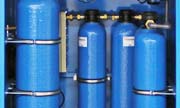
SCM 24

|
|
Cleans 24.000 liters per day
|
SCM 60
|
|
Cleans 60.000 liters per day
|
Video: How it works
The SCG Advantage
Our market-leading, water cleaning solutions have many advantages. To read more click the items below:
No Chemicals
Our machines and technology does not use any chemicals, at all.
Read more...
No Waste Water
Our machines do not waste any water. Yield = 100%.
Read more...
Low energy use
Uses 50 times less energy than a Reverse Osmosis Machine.
Read more...
Low ownership cost
Lower maintenance and operation costs due to our technology.
Read more...
Easy to install
Simple "plug and play" installation makes for easy deployment.
Read more...
Extremely compact
A compact system, contained in an easy to transport cabinet.
Read more...
Outperforms R.O.
SCG technologies outperform Reverse Osmosis systems.
Read more...
Faster ROI
Get a faster Return on Investment with our systems.
Read more...
Latest News
Latest Blog Posts
| Chemicals in water treatment? |
| Water storage - Whats best for keeping water clean and drinkable? |
| Case: Disaster Management Water Treatment |
Contact SCG
891 Showroom Place
Suite 101
Chula Vista, CA, 91914
Phone: +1 619-878-2730
Contact us by email