









How Temperature Shapes Chemical-Free Water Filtration
Water temperature is a key operating variable in any treatment system, including technologies that avoid added chemicals. It influences viscosity, reaction rates, microbial activity, dissolved gases, membrane behavior, and the time required for contaminants to move through or attach to a filter medium. A system that performs reliably in summer may therefore need different monitoring and control in winter.
Chemical-free treatment does not mean temperature is irrelevant. Processes such as aeration, biological filtration, adsorption, oxidation, membrane separation, and ultraviolet disinfection each respond differently to changing conditions. Understanding these responses helps operators protect water quality while limiting energy use, waste, and unnecessary chemical inputs.
For municipalities, farms, buildings, hospitals, industrial facilities, and mobile units, temperature should be considered during design, commissioning, and daily operation. Seasonal data can reveal whether a change in flow, contact time, pretreatment, or maintenance is needed before performance begins to decline.
Temperature Changes Water Chemistry
Cold water is more viscous than warm water. This increases resistance as water passes through pipes, filter beds, and membrane channels. At the same flow setting, colder water may produce a higher pressure drop or a slower passage through the treatment zone. The result can be reduced throughput, altered contact time, and greater stress on pumps.
Temperature also affects the solubility of gases. Cold water generally holds more dissolved oxygen, while warm water releases oxygen more readily. This matters for systems that rely on aeration or oxygen-assisted oxidation to transform dissolved iron and manganese into particles that can be retained by filtration. The available oxygen, mixing conditions, and contaminant concentration must be considered together.
The chemical form of some contaminants can shift with temperature, pH, and oxidation-reduction conditions. Arsenic, uranium, pesticides, and manganese do not respond identically to filtration. A process that targets one contaminant may be largely unaffected by a moderate seasonal change, while another may experience a significant change in removal efficiency. Site-specific water testing remains essential.
Biological Safety And Microbial Control
Temperature has a direct relationship with microbial growth. Warm conditions can support faster multiplication of bacteria in source water, storage tanks, pipework, and filter media. Stagnation, nutrient availability, and biofilm formation can amplify this effect. Cold water slows many biological processes, but it does not guarantee microbiological safety.
Operators should assess the entire water pathway rather than focusing only on the treatment unit. A well-performing filter can still be followed by contamination in an unclean tank, poorly protected distribution line, or unused outlet. Guidance on bacteria in drinking water is useful when evaluating source protection, sampling points, and hygienic operation.
Biological filtration requires particularly careful temperature management. Beneficial microorganisms need suitable conditions to break down selected substances or support processes such as nitrification. A sudden cold-water event may reduce their activity, while a rapid warm-up can increase oxygen demand and biological loading. Start-up procedures should allow the filter community to adapt gradually.
Ultraviolet systems also require temperature-aware operation, although their primary performance depends on delivered dose, lamp condition, water clarity, and flow. Temperature can affect lamp output and equipment operation, so manufacturers’ limits should be followed. UV treatment should be viewed as one barrier within a wider system, not as a substitute for source control and hygienic design.
Flow, Contact Time, And Filter Media
Many chemical-free systems depend on physical retention or surface reactions within a filter bed. Water must remain in contact with the active medium long enough for particles to be captured or dissolved contaminants to react. When temperature changes increase viscosity or alter flow distribution, the effective empty-bed contact time may change even if the pump setting remains constant.
Filter media can also respond differently at different temperatures. Adsorption capacity is governed by the properties of the medium and the target contaminant, but temperature can affect diffusion into pores and the balance between adsorption and desorption. Biological media may become more active as water warms, while some physical separation processes are less sensitive.
A pressure trend is often an early warning. If pressure rises during cold weather, the cause may be increased water viscosity, accumulated solids, media compaction, or reduced backwashing effectiveness. If pressure falls unexpectedly, the issue could involve channeling, a damaged seal, a bypass, or an incorrect flow condition. Temperature readings should be reviewed beside pressure, flow, turbidity, and laboratory results.
| Treatment process | Typical temperature influence | Operational response |
|---|---|---|
| Aeration and oxidation | Gas transfer and reaction behavior change with temperature | Check oxygen transfer, mixing, pH, and retention time |
| Biological filtration | Microbial activity usually slows in colder water | Allow adaptation and verify ammonia or target-contaminant removal |
| Media filtration | Viscosity affects head loss and flow distribution | Track pressure, flow, and backwash performance |
| Adsorption | Diffusion and contaminant attachment may vary | Confirm breakthrough trends with periodic testing |
| Membrane filtration | Permeate flow often decreases as water becomes colder | Adjust expectations, pressure limits, and cleaning intervals |
| UV disinfection | Lamp and dose performance depend on equipment conditions | Verify dose, lamp status, clarity, and rated temperature range |
Seasonal Operation Requires Planning
Seasonal change should be treated as a predictable operating condition rather than an unexpected fault. Source water temperature can vary sharply in shallow wells, rivers, reservoirs, and exposed storage tanks. A design based only on average annual temperature may overlook the coldest or warmest weeks, when treatment margins are narrowest.
Performance testing should cover the expected range of inlet temperatures. Testing at a single favorable temperature may produce misleading results, especially for biological filtration or membrane systems. Pilot trials and commissioning tests can show whether flow must be reduced, contact time increased, or pretreatment improved during temperature extremes.
Insulation can protect exposed pipework and treatment vessels from sudden changes, but it does not replace proper process control. In cold climates, freeze protection is essential for valves, sensors, pumps, and outdoor modules. In hot climates, shaded equipment rooms, ventilation, and protected storage can reduce thermal stress and limit microbial growth.
Water storage deserves special attention. Long residence times allow water to warm, lose disinfectant residual where one is used, or develop localized quality differences. Tank turnover, cleaning, circulation, and sampling should be aligned with the intended use. Drinking water systems require tighter control than certain process-water applications.
Different Users Face Different Risks
A municipal installation may have a broad seasonal source-water range and large variations in demand. A farm or livestock operation may experience warmer tanks, intermittent use, and elevated organic loading. Industrial facilities may have relatively stable indoor temperatures but highly variable feedwater chemistry. Mobile and military systems must cope with rapid deployment and uncertain source conditions.
Buildings and healthcare facilities require a high level of control because water quality must remain consistent across multiple outlets and storage points. Temperature management supports this goal, but it must be integrated with validated treatment barriers, maintenance routines, and distribution hygiene. A hospital case study on strict quality standards illustrates why dependable treatment involves the full water-supply architecture.
Swimming pools, cooling systems, and industrial reuse applications have their own temperature profiles and risk factors. Warmer water can increase biological activity and scaling potential, while colder water can reduce hydraulic capacity. The right response depends on the required quality, permitted operating range, contaminant load, and consequences of an interruption.
Monitoring Turns Temperature Into Useful Data
A temperature sensor should be installed where it represents the actual feedwater entering treatment, not merely the surrounding air. Additional sensors may be useful after aeration, across a membrane stage, or near storage. Data logging makes it easier to compare temperature with flow, pressure, turbidity, conductivity, pH, dissolved oxygen, and contaminant results.
Operators should establish normal ranges and alarm limits for each season. A gradual decline in flow during cold weather may be expected, while a sudden drop could indicate fouling or a pump issue. A warmer source may require closer microbial monitoring even when hydraulic performance improves. Trends are more informative than isolated readings.
Maintenance schedules may also need seasonal adjustment. Backwashing, membrane cleaning, media inspection, sensor calibration, and tank sanitation should reflect actual loading and temperature. Preventive work is especially valuable before predictable extremes, such as winter freezes or summer demand peaks.
Practical Operating Priorities
Temperature management is most effective when it is built into the treatment strategy from the beginning. The following priorities help keep chemical-free filtration stable across changing conditions:
- Measure inlet and outlet temperature alongside flow, pressure, turbidity, and other critical quality indicators.
- Test treatment performance across realistic seasonal temperature ranges before final equipment selection.
- Review contact time, pump settings, membrane capacity, and backwash cycles when water becomes significantly colder or warmer.
- Protect tanks, sensors, valves, and outdoor pipework from freezing, overheating, and prolonged stagnation.
- Use laboratory verification to confirm removal of site-specific contaminants such as manganese, arsenic, bacteria, pesticides, or uranium.
A temperature-aware design can preserve removal performance without relying on excessive energy or chemical correction. It also gives operators earlier warning when water quality, hydraulics, or biological conditions begin to change.
For a new installation or an existing system facing seasonal variability, Swiss Cleanwater Group can help connect source-water analysis with suitable purification technology, monitoring, and operating requirements. Review the available treatment solutions and contact the company to develop a water-treatment approach matched to the site, application, and temperature range.
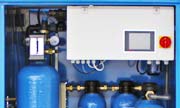
SCM 24
|
|
Cleans 24.000 liters per day
|
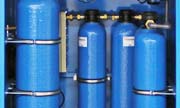
SCM 60
|
|
Cleans 60.000 liters per day
|
Video: How it works
The SCG Advantage
Our market-leading, water cleaning solutions have many advantages. To read more click the items below:
No Chemicals
Our machines and technology does not use any chemicals, at all.
Read more...
No Waste Water
Our machines do not waste any water. Yield = 100%.
Read more...
Low energy use
Uses 50 times less energy than a Reverse Osmosis Machine.
Read more...
Low ownership cost
Lower maintenance and operation costs due to our technology.
Read more...
Easy to install
Simple "plug and play" installation makes for easy deployment.
Read more...
Extremely compact
A compact system, contained in an easy to transport cabinet.
Read more...
Outperforms R.O.
SCG technologies outperform Reverse Osmosis systems.
Read more...
Faster ROI
Get a faster Return on Investment with our systems.
Read more...
Latest News
Latest Blog Posts
| Chemicals in water treatment? |
| Water storage - Whats best for keeping water clean and drinkable? |
| Case: Disaster Management Water Treatment |
Contact SCG
891 Showroom Place
Suite 101
Chula Vista, CA, 91914
Phone: +1 619-878-2730
Contact us by email