









How filtration flow rates shape contaminant removal
Water filtration performance depends on more than the type of media or membrane installed. The speed at which water passes through a treatment stage can determine whether contaminants are captured, transformed, or carried through into the treated supply. This relationship is especially important when removing manganese, arsenic, bacteria, pesticides, uranium, and suspended particles.
The role of filtration flow rates in contaminant removal efficiency is best understood through contact time, hydraulic loading, pressure, and the characteristics of the raw water. A system operating above its intended capacity may still produce clear water while failing to meet safety targets. Conversely, an unnecessarily low rate can increase equipment size, energy use, and operating costs without delivering a meaningful improvement.
Effective design therefore begins with the required treated-water quality and the actual demand pattern. Municipal networks, schools, farms, livestock facilities, industrial sites, and mobile treatment units all have different flow profiles. A well-matched system maintains reliable performance during normal use, peak demand, and changes in source-water chemistry.
Why hydraulic loading matters
Hydraulic loading describes the amount of water applied to a filter area over a given period. It is commonly expressed as a flow rate per unit of filter surface area. When loading increases, water has less opportunity to interact with the treatment medium. The result may be reduced adsorption, weaker oxidation, incomplete biological treatment, or a shorter path for particle capture.
The effect is not always immediately visible. A filter can continue producing water that looks clean while dissolved contaminants pass through. Turbidity, color, and odor are useful indicators, but they do not reliably reveal arsenic, uranium, pesticides, or microbiological risks. Flow must therefore be considered alongside laboratory testing and process-specific monitoring.
Manufacturers establish a recommended operating range for each filtration technology. Exceeding that range can increase pressure loss and cause channeling, where water follows preferential pathways through the media. Channeling reduces the portion of the bed that participates in treatment and creates inconsistent water quality across the outlet.
Contact time and contaminant behavior
Empty bed contact time, or EBCT, estimates how long water remains in contact with a filter medium. It is calculated from the usable media volume and the flow rate. Increasing the volume or reducing the flow generally increases contact time, although the relationship does not guarantee better performance if the media is exhausted or poorly distributed.
Different contaminants require different treatment mechanisms. Manganese removal may involve oxidation and filtration, while arsenic treatment can depend on adsorption or precipitation chemistry. Pesticides may require specialized adsorptive media, and bacteria may be removed through physical filtration, disinfection, or a combination of barriers. Each process has a distinct sensitivity to flow velocity and contact duration.
For biological or catalytic filters, insufficient contact time may prevent the required reactions from completing. For adsorption systems, high flow can reduce the opportunity for contaminants to attach to the media. Membrane systems have their own constraints, including flux, transmembrane pressure, concentration polarization, and recovery rate. Flow design must reflect the actual mechanism rather than applying one universal rule.
Matching flow to treatment objectives
A reliable design separates peak flow from average flow. Average consumption helps estimate daily capacity, but peak demand determines whether the treatment train can maintain quality during simultaneous use. A school may have sharp morning and midday peaks, while an industrial facility may operate continuously. A rural drinking-water point may have lower average demand but require storage and rapid filling during scheduled collection periods.
Pre-treatment also affects the flow rate that a downstream stage can safely handle. Removing sediment and oxidized metals before an adsorption unit can protect the media and preserve its effective capacity. Likewise, reducing organic matter before disinfection can improve treatment reliability. The complete sequence matters because a high upstream load can cause a later filter to foul even when its nominal flow rating appears adequate.
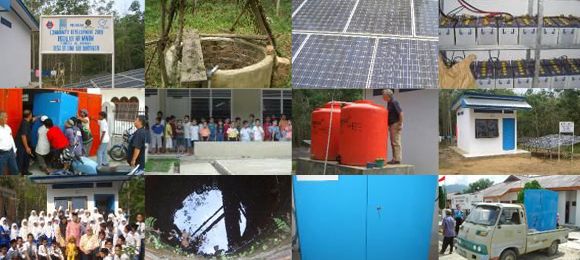
For projects with complex demand patterns, modular equipment, parallel filter vessels, or treated-water storage can provide greater control. A design for a school or community facility should account for daily use, source-water variability, maintenance access, and periods when trained operators may not be available. Practical guidance on designing a school water system illustrates why hydraulic planning must be connected to the users and setting.
Comparing flow conditions across treatment stages
The same flow rate does not produce the same result in every process. A coarse sediment filter may tolerate a higher hydraulic loading than an adsorption column, while a membrane may be limited by flux and fouling rather than contact time alone. The figures below are general design considerations, not substitutes for equipment specifications, pilot testing, or site-specific water analysis.
| Treatment stage | Main flow concern | Effect of excessive flow | Useful control measure |
|---|---|---|---|
| Sediment filtration | Hydraulic loading and particle burden | Shorter run time, particle breakthrough, higher pressure loss | Pre-screening, staged filtration, differential-pressure checks |
| Oxidation and catalytic media | Contact time and oxygen availability | Incomplete conversion of dissolved metals | Controlled dosing or aeration, adequate bed depth, flow regulation |
| Adsorption | Empty bed contact time | Reduced contaminant capture and earlier breakthrough | Flow restrictor, media-depth adjustment, outlet testing |
| Membrane filtration | Flux, pressure, and recovery | Fouling, lower rejection, higher energy demand | Crossflow control, pre-treatment, pressure monitoring |
| Disinfection | Exposure time and dose | Survival of microorganisms | Flow-paced dosing, validated contact volume, residual checks |
| Biological filtration | Retention time and loading rate | Unstable microbial activity and poor conversion | Gradual start-up, stable flow, routine water-quality testing |
These relationships show why a pump selected solely for maximum delivery can undermine treatment performance. The pump, valves, storage tank, filter area, and control system should be designed as a coordinated hydraulic package. A bypass that allows untreated water to mix with treated water must also be prevented or clearly controlled.
Flow control may use fixed orifices, adjustable valves, variable-speed pumps, level controls, or automated actuators. The best option depends on the scale and operating environment. Simpler systems can be more dependable in remote locations, provided that operators have clear indicators for pressure, flow, and maintenance status.
Managing changing demand and source water
Flow requirements change over the life of a treatment system. Population growth, seasonal irrigation, tourism, livestock cycles, and industrial production can all alter the daily demand profile. Source-water conditions may also change after heavy rainfall, drought, construction, or shifts in groundwater levels. A filter sized for one set of conditions can become overloaded without any mechanical failure.
Storage is one way to separate treatment flow from consumption flow. The treatment unit can operate at a steady, validated rate while a clean-water tank handles short periods of high demand. This arrangement often improves contaminant removal and reduces rapid starts and stops. It also provides a reserve during backwashing, maintenance, or temporary source-water interruptions.
Parallel vessels offer another solution. During low demand, one vessel may operate; during peak demand, additional vessels can be placed online. Alternating duty between units can equalize media use and allow one vessel to be serviced while the others continue operating. Any parallel arrangement should include balanced pipework and isolation valves so that one unit does not receive a disproportionate share of the flow.
Monitoring performance over time
Flow rate should be measured at the treatment stage where it matters, not only at the pump outlet. Pressure gauges before and after a filter can reveal clogging, while a flow meter confirms whether the intended hydraulic loading is being maintained. Sudden changes in pressure loss, treated-water quality, or flow can indicate fouling, channeling, valve failure, media exhaustion, or a damaged component.
Water testing remains essential. Parameters may include turbidity, pH, conductivity, oxidation-reduction potential, residual disinfectant, manganese, arsenic, uranium, pesticides, and microbiological indicators, depending on the source and treatment objectives. Testing at the inlet and outlet helps distinguish a raw-water change from a filtration problem.
Backwashing and media replacement must also be linked to operating conditions. Excessive backwashing wastes water and may disturb the media bed, while insufficient cleaning can cause rising pressure and uneven flow. An operations schedule based on pressure loss, treated volume, and analytical results is usually more reliable than a calendar-only approach.
Technology providers with experience across municipal, agricultural, industrial, and mobile applications can help align equipment selection with these variables. The Swiss Cleanwater Group presents treatment solutions focused on reducing contaminants while limiting chemical use, waste, and unnecessary energy consumption.
Practical design recommendations
A flow-rate strategy should be documented before equipment is ordered. The design record should state the source-water analysis, target contaminants, average and peak demand, treatment sequence, expected contact time, allowable pressure loss, and sampling plan. This creates a clear basis for commissioning and future upgrades.
Use the following principles when evaluating a filtration system:
- Size each treatment stage for its own hydraulic limits rather than using the pump capacity as the primary reference.
- Calculate peak demand and consider storage or parallel vessels when consumption varies sharply.
- Verify contact time, media depth, membrane flux, and disinfection exposure against the selected technology.
- Install flow, pressure, and water-quality monitoring points that operators can understand and maintain.
- Reassess loading rates after changes in population, production, source-water quality, or treatment objectives.
Flow control is a core part of water safety, not merely a mechanical adjustment. A properly regulated system gives treatment media enough time and surface contact to perform its intended function, while avoiding excessive energy use and premature maintenance. Apply these principles during site assessment, equipment selection, and commissioning to build a cleaner, more resilient water supply. Contact Swiss Cleanwater Group to develop a treatment approach based on the source, contaminants, demand pattern, and operating conditions of the project.
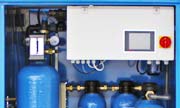
SCM 24
|
|
Cleans 24.000 liters per day
|
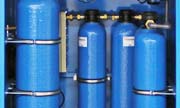
SCM 60
|
|
Cleans 60.000 liters per day
|
Video: How it works
The SCG Advantage
Our market-leading, water cleaning solutions have many advantages. To read more click the items below:
No Chemicals
Our machines and technology does not use any chemicals, at all.
Read more...
No Waste Water
Our machines do not waste any water. Yield = 100%.
Read more...
Low energy use
Uses 50 times less energy than a Reverse Osmosis Machine.
Read more...
Low ownership cost
Lower maintenance and operation costs due to our technology.
Read more...
Easy to install
Simple "plug and play" installation makes for easy deployment.
Read more...
Extremely compact
A compact system, contained in an easy to transport cabinet.
Read more...
Outperforms R.O.
SCG technologies outperform Reverse Osmosis systems.
Read more...
Faster ROI
Get a faster Return on Investment with our systems.
Read more...
Latest News
Latest Blog Posts
| Chemicals in water treatment? |
| Water storage - Whats best for keeping water clean and drinkable? |
| Case: Disaster Management Water Treatment |
Contact SCG
891 Showroom Place
Suite 101
Chula Vista, CA, 91914
Phone: +1 619-878-2730
Contact us by email