


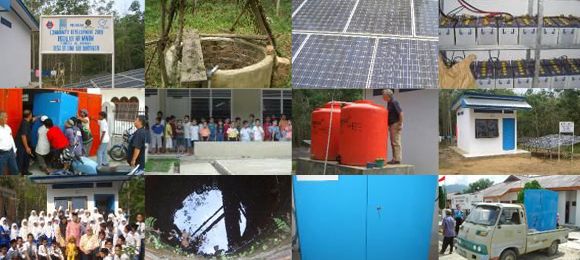







Designing a Reliable School Water System in a Developing Region
A safe water supply is essential to learning, attendance, health, and dignity. For a school in a developing region, the system must do more than produce clean water at the treatment point. It must remain dependable during dry seasons, power interruptions, maintenance delays, population growth, and changes in raw water quality.
The design process should begin with local evidence rather than a standard equipment package. Groundwater, rivers, rainwater, and trucked supplies each present different risks. A successful school water project combines source protection, contaminant testing, appropriate purification, storage, distribution, hygiene facilities, and a realistic operating plan.
Affordability also needs to be measured over the system’s full life. Low purchase cost can become expensive when equipment requires imported chemicals, specialist technicians, frequent cartridge replacement, or high electricity consumption. A simpler water treatment solution that local staff can operate and maintain may deliver greater value over many years.
Define the School’s Water Requirements
Begin by estimating the number of students, teachers, kitchen workers, cleaners, and visitors who will use the system. Daily demand includes drinking water, handwashing, cooking, sanitation, cleaning, and sometimes showers or irrigation. A boarding school, rural clinic attached to a school, or vocational campus will require a larger and more resilient design than a day school with limited facilities.
Use separate demand categories instead of relying on a single average figure. Drinking and cooking water require the highest treatment standard, while toilet flushing and landscape watering may use a different supply if local regulations permit. Include seasonal attendance, planned expansion, weekends, and emergency reserves in the calculation.
The design should also establish service targets. These may include a minimum volume of potable water per person, hours of daily availability, acceptable pressure at taps, and a reserve lasting through a defined period without pumping. Clear targets make it easier to select equipment and verify whether the completed installation performs as intended.
Investigate the Source and Contaminants
A water source assessment should cover quantity, access, ownership, seasonal reliability, and vulnerability to pollution. A borehole may provide a stable supply but contain arsenic, uranium, iron, manganese, or bacteria. Surface water can be affected by sewage, agricultural runoff, pesticides, turbidity, and animal activity. Rainwater may be relatively clean at collection but become contaminated by roofs, tanks, birds, or poor handling.
Laboratory testing should cover physical, chemical, and microbiological parameters. At minimum, the project team should consider pH, turbidity, conductivity, hardness, iron, manganese, nitrate, fluoride where relevant, arsenic, uranium where geologically indicated, and bacterial indicators such as Escherichia coli. A broader review of water pollution risks helps planners connect laboratory results with land use, sanitation, farming, and industrial activities around the school.
Testing should take place more than once when conditions change during the year. A single sample can miss contamination after heavy rain or reveal an unusual result that is not typical. Source water should be tested before final equipment selection, and treated water should be tested during commissioning and routine operation.
Select Treatment That Fits the Risk
Treatment should be arranged as a logical train. Screening and sediment removal protect pumps and downstream components. Aeration or oxidation can help address dissolved iron and manganese. Media filtration can then remove oxidized particles, while specialized adsorption or membrane processes may be needed for arsenic, uranium, fluoride, or other dissolved contaminants.
Microbiological protection deserves its own design decision. Bacteria and viruses may enter through the source, storage tank, damaged pipes, or unclean collection points. A treatment approach that addresses bacteria and viruses without depending on chlorine or ultraviolet light may be useful where chemical supply, electricity, or lamp maintenance is difficult. The selected process still needs validation against local drinking-water requirements.
Avoid specifying a system solely by its headline capacity. Flow rate, contaminant concentration, contact time, pressure, media life, backwashing needs, wastewater production, and operating temperature all affect real performance. A supplier should explain what happens when the source quality changes and how staff will know when cleaning, regeneration, or component replacement is required.
Size Storage and Distribution Correctly
Storage provides a buffer between treatment production and changing demand. A school may consume most of its water during breaks, lunchtime, and the start of the school day, while the treatment unit operates more evenly. The tank should therefore be sized around the demand profile, source reliability, pump capacity, fire or emergency requirements where applicable, and the time needed to repair equipment.
Tanks must be protected from sunlight, dust, insects, animals, and unauthorized access. They should have a secure cover, screened ventilation, a drain or cleaning outlet, an overflow routed away from foundations, and an arrangement that prevents stagnant zones. Separate tanks may be appropriate for raw water, treated water, and non-potable uses.
Distribution pipes should be short and accessible where possible. Design tap locations around classrooms, kitchens, sanitation blocks, staff areas, and outdoor activity spaces. Include handwashing stations with drainage, durable valves, and clear separation between potable and non-potable lines. A system that produces safe water but makes taps difficult to reach will have limited public-health value.
The following comparison can help match the source and operating environment with a practical treatment emphasis:
| Water source or condition | Typical concerns | Design emphasis | Operational priority |
|---|---|---|---|
| Protected borehole | Iron, manganese, arsenic, uranium, hardness, bacteria | Test dissolved contaminants and select targeted filtration or adsorption | Monitor source chemistry and media performance |
| Shallow or poorly protected well | Bacteria, nitrate, pesticides, seasonal turbidity | Improve source protection, add reliable disinfection or purification, and use prefiltration | Prevent contamination around the wellhead |
| River, lake, or open reservoir | Turbidity, pathogens, algae, pesticides, changing flow | Use staged pretreatment, microbial control, and source monitoring | Increase attention after storms and flooding |
| Rainwater collection | Roof debris, bacteria, low mineral content, storage contamination | Use clean catchment surfaces, first-flush diversion, filtration, and protected tanks | Clean roofs, gutters, screens, and tanks |
| Trucked or purchased water | Variable quality, high cost, uncertain chain of custody | Test deliveries, secure storage, and retain an alternative source | Keep records and verify every supplier |
| Mixed or intermittent sources | Rapid changes in chemistry and microbiology | Use flexible pretreatment, isolation valves, and separate source testing | Label sources and adjust operation when switching |
Build for Simple, Reliable Operation
A school water system should be operable by a trained caretaker or local technician. Controls need clear labels, simple indicators, and instructions in the appropriate language. Critical valves, sample points, pressure gauges, drains, and electrical isolators should be easy to reach without dismantling the plant.
Where iron and manganese are present, the treatment design must account for the chemical and physical steps that make these contaminants removable. An explanation of chemical-free iron removal can help project teams understand why oxidation conditions, filter media, flow rates, and backwashing must work together. A process that is theoretically suitable may fail if the water does not receive enough contact or the filter is not maintained.
Energy planning is equally important. Pumps should be selected for actual head, distance, elevation, and peak flow rather than oversized as a precaution. Solar power with battery storage may suit remote sites, while a grid-connected system may need a backup supply. Gravity-fed sections can reduce energy use and continue serving taps during short power interruptions.
Maintenance costs should be included in the project budget from the beginning. Allow for spare seals, valves, test kits, filters, media, pump servicing, tank cleaning, and technician visits. If a consumable is unavailable locally, identify a reliable procurement route or choose a process with fewer specialized inputs.
Verify Safety and Protect the Investment
Commissioning should include flushing, leak checks, flow measurements, electrical and safety inspections, and laboratory confirmation of treated water quality. Test samples from the treatment outlet and from representative taps, since contamination can occur in storage or distribution. Record baseline results so future changes can be detected.
Routine monitoring can be divided into simple daily checks and periodic laboratory testing. Staff may inspect pressure, flow, tank levels, turbidity indicators, unusual odors, leaks, and pump operation each day. A qualified laboratory should periodically verify microbiological and chemical parameters according to local regulations and the contaminants identified in the source assessment.
The school should also maintain a short operating record. It can include treatment hours, water production, cleaning dates, backwash events, test results, faults, repairs, and parts used. This record supports accountability for donors and authorities while giving technicians the information needed to diagnose problems before service fails.
Design Priorities for Long-Term Service
A practical project brief should give equal attention to public health, usability, and ownership. Before procurement, the school authority, community representatives, water professionals, and local maintenance providers should agree on responsibilities. Someone must be accountable for checking the system, reporting faults, arranging testing, and protecting the source.
Use these priorities when reviewing a proposed design:
- Base treatment selection on current and seasonal laboratory results, not on the source name alone.
- Separate potable, raw, and non-potable water lines wherever different uses are planned.
- Include protected storage, accessible sample points, drainage, overflow control, and safe maintenance access.
- Specify low-energy equipment with locally available parts and clear operating instructions.
- Budget for training, routine testing, preventive maintenance, and replacement components.
- Plan for enrollment growth, drought, flooding, power loss, and temporary source changes.
A strong proposal should state expected water quality, daily production, peak flow, storage volume, energy demand, maintenance intervals, and acceptance tests. It should also explain what the school can do during a fault and how quickly technical support can be reached. These details turn a water treatment purchase into a dependable school utility.
Contact Swiss Cleanwater Group to assess the source, define the treatment objectives, and develop a water system suited to the school’s location, contaminants, energy resources, and operating capacity. A site-specific design can help deliver safe drinking water consistently while keeping maintenance and long-term resource use under control.
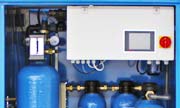
SCM 24
|
|
Cleans 24.000 liters per day
|
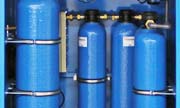
SCM 60
|
|
Cleans 60.000 liters per day
|
Video: How it works
The SCG Advantage
Our market-leading, water cleaning solutions have many advantages. To read more click the items below:
No Chemicals
Our machines and technology does not use any chemicals, at all.
Read more...
No Waste Water
Our machines do not waste any water. Yield = 100%.
Read more...
Low energy use
Uses 50 times less energy than a Reverse Osmosis Machine.
Read more...
Low ownership cost
Lower maintenance and operation costs due to our technology.
Read more...
Easy to install
Simple "plug and play" installation makes for easy deployment.
Read more...
Extremely compact
A compact system, contained in an easy to transport cabinet.
Read more...
Outperforms R.O.
SCG technologies outperform Reverse Osmosis systems.
Read more...
Faster ROI
Get a faster Return on Investment with our systems.
Read more...
Latest News
Latest Blog Posts
| Chemicals in water treatment? |
| Water storage - Whats best for keeping water clean and drinkable? |
| Case: Disaster Management Water Treatment |
Contact SCG
891 Showroom Place
Suite 101
Chula Vista, CA, 91914
Phone: +1 619-878-2730
Contact us by email