







Removing bacteria and viruses without ultraviolet or chlorine
Safe drinking water does not always require ultraviolet lamps or chlorine dosing. For many sites, a carefully designed physical treatment process can reduce or remove microorganisms while also addressing sediment, metals, pesticides, and other contaminants. The right approach depends on the source water, the required flow, and the level of microbiological protection demanded by local regulations.
Swiss Cleanwater Group develops sustainable water treatment systems for municipalities, farms, industry, buildings, livestock facilities, and mobile applications. Its approach focuses on efficient purification with limited chemical use, low waste, and manageable energy consumption. These principles are especially valuable where chemical storage, ultraviolet maintenance, or concentrate disposal creates operational difficulties.
Removing bacteria and viruses without ultraviolet or chlorine requires more than installing a single filter. A reliable system combines a suitable separation barrier with source-water protection, monitoring, hygienic equipment design, and a response plan for changes in water quality.
Why conventional disinfection is not always the best fit
Chlorine is widely used because it is affordable and leaves a residual that can protect water during distribution. However, dosing systems require chemical storage, accurate control, and regular testing. Chlorine can also react with natural organic matter to form disinfection by-products. Taste and odour concerns may be important in drinking water, food production, and residential buildings.
Ultraviolet treatment inactivates many bacteria, viruses, and parasites when the dose is sufficient. It does not normally remove particles, dissolved metals, pesticides, or organic matter, and it provides no lasting protection after water leaves the reactor. Turbidity, lamp fouling, power interruptions, and inadequate flow control can reduce performance.
A non-chemical treatment train can address these limitations by physically separating microorganisms from the water. It may also reduce the contaminant load that would otherwise interfere with downstream disinfection. The objective is not to reject every conventional method, but to select a process that matches the site’s risks and resources.
How membrane barriers control microorganisms
Microfiltration and ultrafiltration use membranes with very small pores to retain suspended solids, bacteria, and many larger biological particles. Ultrafiltration generally offers a stronger microbiological barrier than conventional media filtration, although actual virus removal depends on membrane characteristics, operating conditions, and verified performance. A damaged membrane or poor sealing can compromise the entire barrier.
Nanofiltration and reverse osmosis provide tighter separation. In addition to microorganisms, they can reduce dissolved salts, arsenic, uranium, pesticides, and other contaminants that ordinary filters cannot capture. Reverse osmosis often requires higher pressure and produces a concentrated reject stream, while nanofiltration may use less energy but offer a different removal profile.
Membrane treatment is therefore best understood as a controlled barrier rather than a universal guarantee. Systems need appropriate pretreatment to limit fouling, pressure monitoring to detect abnormal operation, and integrity testing or other verification methods. Product water should be protected from recontamination in tanks, pipes, valves, and outlets.
Building a complete treatment train
Source-water testing should come before equipment selection. A laboratory profile can identify bacterial indicators, viral risks, turbidity, hardness, iron, manganese, arsenic, uranium, pesticides, salinity, and seasonal changes. It also helps determine whether a process needs sediment removal, oxidation, adsorption, softening, membrane filtration, or several stages in sequence.
Pretreatment protects the main microbial barrier. Screens and sediment filters can remove larger particles, while iron and manganese treatment can prevent deposits from blocking membrane surfaces. Activated carbon or another suitable adsorption medium may help reduce organic compounds and pesticides. The final design should avoid creating a habitat for microbial growth in stagnant sections or poorly maintained vessels.
For agricultural and livestock applications, hydraulic demand can vary sharply. Water may be needed for drinking, cleaning, cooling, and processing at different times of day. A system designed around average flow alone may struggle during peak demand. Guidance on a livestock water system shows why storage, pressure management, redundancy, and hygienic distribution deserve attention alongside the treatment unit.
| Treatment approach | Main microbiological action | Additional strengths | Important design considerations |
|---|---|---|---|
| Chlorination | Inactivates many organisms and provides residual protection | Low equipment cost and established practice | Chemical handling, by-products, taste, and dosing control |
| Ultraviolet | Inactivates organisms through light exposure | Fast treatment with no chemical residual | Needs clear water, reliable power, lamp maintenance, and dose verification |
| Microfiltration | Physically retains larger particles and some bacteria | Reduces turbidity and suspended solids | Limited virus control; membrane integrity is essential |
| Ultrafiltration | Provides a stronger physical barrier for bacteria and many viruses | Produces low-turbidity water and can reduce pathogen load | Requires fouling control, backwashing, and validated operating conditions |
| Nanofiltration | Separates microorganisms and many dissolved contaminants | Can reduce hardness, pesticides, and selected metals | Pressure, pretreatment, and concentrate management are important |
| Reverse osmosis | Rejects microorganisms and a broad range of dissolved substances | High-quality product water for demanding uses | Higher energy demand, membrane scaling, and reject-water handling |
Making physical removal safe in practice
The word “removal” should be used precisely. A membrane can retain microorganisms without necessarily destroying them. Retained bacteria and viruses accumulate in a waste, backwash, or concentrate stream, so that stream must be managed safely. Routine cleaning and maintenance should prevent organisms from multiplying on the equipment or entering the treated-water side.
The system should also be designed around multiple protective measures. A protected intake, sealed storage tank, hygienic pipework, non-return valves, and secure sampling points reduce the chance of contamination after treatment. In critical applications, two treatment barriers or parallel trains can maintain supply during maintenance and provide additional resilience.
Monitoring may include feed and product turbidity, pressure differential, flow, conductivity, membrane integrity, microbial indicators, and alarm status. Automated shutdown or diversion can prevent untreated water from reaching users when pressure, quality, or equipment conditions move outside acceptable limits. The exact monitoring plan should follow the application’s regulatory and public-health requirements.
Sustainability beyond chemical-free operation
Eliminating chlorine or ultraviolet equipment does not automatically make a plant sustainable. Energy consumption, membrane replacement, cleaning frequency, source-water losses, and waste streams all influence environmental performance. A low-pressure process may be preferable for one source, while a tighter membrane system may be justified where dissolved contaminants pose a serious health risk.
Water recovery is another important consideration. Reverse osmosis and some membrane systems produce a concentrate that cannot simply be discharged everywhere. Treatment designers should evaluate whether it can be reused for an appropriate non-potable purpose, safely discharged, or reduced through recovery measures. A system that uses little chemical but wastes a large volume of water may not meet the site’s sustainability goals.
Municipal planners are increasingly assessing the full life cycle of treatment infrastructure. The discussion around zero-waste treatment plants illustrates how recovery, lower waste production, efficient operation, and adaptable plant design can be considered together rather than as separate objectives.
Choosing the right solution for each application
A small building may need a compact point-of-entry unit with simple controls and limited maintenance. A municipality may require several parallel trains, remote monitoring, flow balancing, and a formal validation programme. A military or emergency installation may prioritise mobility, rapid commissioning, rugged construction, and operation with uncertain source-water quality.
Industrial and food-processing facilities often need water that meets both microbiological and process-specific requirements. Livestock operations need dependable supply at high flow, with equipment that can tolerate dust, temperature variation, and irregular maintenance intervals. Swimming pools and cooling systems have different risks again, so a drinking-water design cannot simply be transferred to those settings.
Swiss Cleanwater Group’s long experience in purification technology is part of a wider development in water treatment, from basic filtration toward integrated systems that target several contaminants with fewer inputs. Its water treatment history provides useful context for understanding how changing public-health expectations and environmental priorities have shaped modern purification.
Practical design priorities
A robust project should be developed from measured water quality and realistic operating conditions rather than from a preferred technology alone. The following priorities help turn a physical barrier into a dependable water-safety system:
- Test raw water during different seasons and identify both microbiological and chemical contaminants.
- Select membrane pore size, pressure, and recovery according to verified removal requirements.
- Include pretreatment, automatic monitoring, hygienic storage, and a safe plan for backwash or concentrate.
- Build in redundancy or bypass protection for maintenance, membrane damage, and power interruptions.
- Establish a written schedule for sampling, cleaning, integrity checks, component replacement, and operator training.
Independent validation is particularly important when the treated water is intended for drinking, food production, healthcare, or animal consumption. Performance claims should be linked to the actual membrane, flow rate, pressure range, water temperature, and maintenance procedure used at the site.
A physical treatment system can reduce dependence on chlorine and ultraviolet light while supporting broader contaminant control. Its success depends on engineering discipline: a suitable barrier, reliable controls, sanitary distribution, and continuous verification.
Swiss Cleanwater Group can help translate source-water data and operating requirements into a sustainable purification concept. Review the relevant application information, define the required water quality, and contact the company to discuss a treatment system designed for safe, efficient microbial control without unnecessary chemicals or energy use.
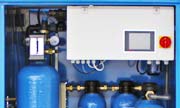
SCM 24
|
|
Cleans 24.000 liters per day
|
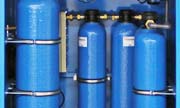
SCM 60
|
|
Cleans 60.000 liters per day
|
Video: How it works
The SCG Advantage
Our market-leading, water cleaning solutions have many advantages. To read more click the items below:
No Chemicals
Our machines and technology does not use any chemicals, at all.
Read more...
No Waste Water
Our machines do not waste any water. Yield = 100%.
Read more...
Low energy use
Uses 50 times less energy than a Reverse Osmosis Machine.
Read more...
Low ownership cost
Lower maintenance and operation costs due to our technology.
Read more...
Easy to install
Simple "plug and play" installation makes for easy deployment.
Read more...
Extremely compact
A compact system, contained in an easy to transport cabinet.
Read more...
Outperforms R.O.
SCG technologies outperform Reverse Osmosis systems.
Read more...
Faster ROI
Get a faster Return on Investment with our systems.
Read more...
Latest News
Latest Blog Posts
| Chemicals in water treatment? |
| Water storage - Whats best for keeping water clean and drinkable? |
| Case: Disaster Management Water Treatment |
Contact SCG
891 Showroom Place
Suite 101
Chula Vista, CA, 91914
Phone: +1 619-878-2730
Contact us by email