








Understanding Chemical-Free Oxidation for Iron Removal
Iron is among the most common naturally occurring contaminants in groundwater. It can enter a supply as dissolved ferrous iron, which is usually invisible, or as ferric iron particles that create reddish-brown colour, metallic taste, staining, and sediment. Although iron is an essential nutrient in small amounts, elevated concentrations can reduce water quality and interfere with pipes, pumps, membranes, and other treatment equipment.
Chemical-free iron removal uses oxygen and carefully selected filtration media instead of chlorine, potassium permanganate, or other oxidising reagents. The essential principle is straightforward: convert dissolved iron into a solid form, then capture it before the treated water reaches the distribution system.
Understanding the reactions behind this process helps operators choose suitable equipment, set realistic performance expectations, and prevent premature filter blockage. Water chemistry, pH, contact time, temperature, and the design of the filter all influence the final result.
How Iron Exists In Raw Water
Iron in groundwater is commonly present as ferrous iron, written as Fe²⁺. This form is soluble under oxygen-poor conditions, so water may appear clear immediately after it is drawn from a borehole. Once the water is exposed to air, however, ferrous iron begins to lose an electron and becomes ferric iron, Fe³⁺.
Ferric iron is much less soluble, particularly when the water has a suitable pH. It combines with hydroxide ions and forms hydrated iron oxides or hydroxides. These compounds appear as fine suspended particles, often described as rust. The oxidation step therefore does not make iron disappear; it changes iron from a dissolved contaminant into a filterable solid.
Iron may also be associated with organic matter, colloids, or iron bacteria. These conditions can make the contaminant harder to remove because the iron is protected from oxygen or exists as very small particles. A laboratory analysis should therefore distinguish dissolved iron from total iron and identify related contaminants such as manganese, arsenic, turbidity, and hydrogen sulphide.
Oxygen Starts The Conversion
In a chemical-free system, atmospheric oxygen is the primary oxidising agent. Aeration can be created by spraying water into a tank, cascading it through a contact chamber, injecting air, or introducing controlled air bubbles. These methods increase the water-to-air interface and allow oxygen to dissolve before filtration.
The simplified reaction is:
4Fe²⁺ + O₂ + 10H₂O → 4Fe(OH)₃(s) + 8H⁺
The exact chemistry varies with alkalinity, dissolved oxygen, pH, and other substances in the water, but the outcome is consistent: ferrous iron becomes ferric hydroxide or a related oxide precipitate. The reaction also produces acidity, so low-alkalinity water may experience a pH decrease as oxidation progresses.
pH is especially important. Iron oxidation is generally faster at neutral to mildly alkaline conditions and slower in acidic water. When pH is too low, dissolved iron may pass through the filter before enough precipitate forms. A chemical-free design must therefore use aeration, contact time, and filtration capacity appropriate to the source water rather than relying on oxidation alone.
Filtration Captures The Precipitate
After oxidation, the newly formed iron particles must be separated from the water. A pressure vessel filled with filtration media can retain the precipitate, while a settling tank or clarifier may remove larger particles before final filtration. Some media provide simple depth filtration; others have catalytic surfaces that encourage additional iron oxidation and capture.
Backwashing is essential because retained iron gradually occupies the spaces between media grains. During a backwash cycle, clean water flows upward through the bed and expands it, releasing accumulated solids to the drain. The frequency depends on iron concentration, flow rate, particle size, and the filter’s loading capacity.
A well-designed installation may use several treatment stages: aeration, contact, sediment removal, catalytic filtration, and disinfection if microbiological risks exist. The process can be integrated into broader resource-management strategies, including approaches discussed in zero-liquid-discharge planning, especially where disposal water is limited or closely regulated.
| Treatment approach | Main operating principle | Chemical demand | Typical strengths | Important considerations |
|---|---|---|---|---|
| Aeration and media filtration | Oxidise dissolved iron with air, then retain particles | None | Low consumable use and simple chemistry | Needs adequate pH, oxygen, contact time, and backwashing |
| Chlorine oxidation | Use chlorine to oxidise iron before filtration | Regular chlorine supply | Can support disinfection as well as oxidation | Produces chemical residuals and may create by-products |
| Permanganate oxidation | Dose potassium permanganate and filter the reaction products | Continuous chemical control | Effective for difficult iron and manganese loads | Requires accurate dosing and careful monitoring |
| Ion exchange | Exchange dissolved ions on resin | Salt or regeneration chemicals | Compact for selected low-load applications | Sensitive to competing ions and requires brine management |
| Membrane treatment | Reject dissolved and particulate contaminants through a membrane | Cleaning chemicals may be needed | Broad contaminant reduction | Produces concentrate and consumes more energy |
Media Surfaces Improve Removal
Certain filter media do more than trap particles. Their surfaces can catalyse the oxidation of dissolved iron, meaning that the reaction occurs more readily as water passes through the bed. Over time, an iron oxide coating may develop on the media and increase its ability to remove additional iron.
Catalytic media are not universal substitutes for proper pretreatment. If the raw water contains excessive turbidity, oil, organic matter, or iron bacteria, the bed may foul quickly. The media must also be matched to the hydraulic loading rate and the required backwash flow. An undersized vessel can produce high pressure loss and iron breakthrough even when the chemistry is favourable.
Manganese often requires stronger oxidation conditions than iron and may need a higher pH or specialised media. Arsenic can also interact with iron oxides: freshly formed iron hydroxides may adsorb arsenic, but this should be verified through testing rather than assumed. A system designed for iron alone may not provide reliable control of every contaminant in the same source.
What Determines Oxidation Performance
Dissolved oxygen is the first operational variable to check. If the aeration stage cannot transfer enough oxygen, the filter receives water that still contains soluble ferrous iron. Contact time then becomes equally important. Water needs enough residence time for oxidation and particle growth before it reaches the filter bed.
Temperature affects reaction speed, with colder water generally reacting more slowly. Alkalinity helps resist pH changes, while carbon dioxide, organic matter, and sulphide can consume oxygen or complicate the reaction. Flow surges may shorten contact time and disturb the filter bed, causing fine iron particles to escape into treated water.
Source-water testing should include pH, temperature, dissolved oxygen, alkalinity, ferrous and total iron, manganese, turbidity, colour, conductivity, and microbiological indicators. Seasonal sampling is valuable because groundwater chemistry and well conditions can change. If the supply also has agricultural contamination, a separate process may be necessary; ion exchange for nitrate illustrates why treatment decisions must reflect the complete contaminant profile.
Practical Design And Maintenance Priorities
Chemical-free iron removal is most reliable when the system is designed around measured water quality and the required peak flow. A treatment unit that performs well at average demand may fail during simultaneous use if contact time and filtration velocity are not protected. Storage tanks can help smooth demand and provide additional reaction time.
Operators should monitor pressure before and after the filter, treated-water iron, pH, turbidity, and the frequency of backwash cycles. A gradual increase in differential pressure suggests solids accumulation or media fouling. Iron breakthrough may indicate inadequate aeration, an exhausted or damaged media bed, excessive flow, poor backwashing, or a sudden change in raw-water chemistry.
The following practices support stable performance:
- Test both dissolved and total iron before selecting the treatment stages.
- Measure pH, alkalinity, oxygen, manganese, turbidity, and hydrogen sulphide during water analysis.
- Provide enough aeration and contact time for the expected peak flow, not just the daily average.
- Automate backwashing when flow, pressure, or operating hours indicate that the bed requires cleaning.
- Verify treated water regularly and inspect the system after changes in borehole operation or seasonal demand.
For municipal, agricultural, industrial, and building applications, the discharge from backwashing should also be considered during design. Concentrated iron solids may require settling, controlled discharge, or another management method. Reducing chemical consumption does not remove the need for responsible handling of captured contaminants.
A properly engineered oxidation-and-filtration system can deliver clear, usable water with limited consumables and modest energy demand. Its success depends less on a single filter product than on matching the oxidation environment, media, hydraulics, and maintenance programme to the source water.
Swiss Cleanwater Group can assess these variables and develop water-treatment solutions for groundwater supplies, communities, farms, industry, buildings, and mobile applications. Share your raw-water analysis and treatment objectives with the company to identify a practical chemical-free iron removal configuration.
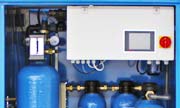
SCM 24
|
|
Cleans 24.000 liters per day
|
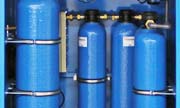
SCM 60
|
|
Cleans 60.000 liters per day
|
Video: How it works
The SCG Advantage
Our market-leading, water cleaning solutions have many advantages. To read more click the items below:
No Chemicals
Our machines and technology does not use any chemicals, at all.
Read more...
No Waste Water
Our machines do not waste any water. Yield = 100%.
Read more...
Low energy use
Uses 50 times less energy than a Reverse Osmosis Machine.
Read more...
Low ownership cost
Lower maintenance and operation costs due to our technology.
Read more...
Easy to install
Simple "plug and play" installation makes for easy deployment.
Read more...
Extremely compact
A compact system, contained in an easy to transport cabinet.
Read more...
Outperforms R.O.
SCG technologies outperform Reverse Osmosis systems.
Read more...
Faster ROI
Get a faster Return on Investment with our systems.
Read more...
Latest News
Latest Blog Posts
| Chemicals in water treatment? |
| Water storage - Whats best for keeping water clean and drinkable? |
| Case: Disaster Management Water Treatment |
Contact SCG
891 Showroom Place
Suite 101
Chula Vista, CA, 91914
Phone: +1 619-878-2730
Contact us by email