







Treating Water for a Campground Without Chlorine
Campgrounds need a dependable supply of safe drinking water for guests, staff, washrooms, kitchens, and service buildings. Yet many sites rely on wells, springs, surface water, or transported supplies that can change significantly after heavy rain, drought, flooding, or long periods of inactivity. A treatment system must therefore address both the source and the way water is distributed.
Safe drinking water without chlorine is possible when a campground combines suitable filtration, physical disinfection, regular testing, and sanitary storage. The right solution depends on the contaminants present, the number of visitors, peak demand, and whether the site operates year-round or only during the warmer months.
A chemical-free approach can reduce taste and odor complaints while limiting chemical handling and storage. It does not remove the need for careful management, however. Without a chlorine residual in the pipes, the system must prevent recontamination through hygienic tanks, protected pipework, effective treatment barriers, and prompt maintenance.
Assessing A Campground Water Source
The first step is a complete water analysis rather than choosing equipment based on appearance or a single laboratory result. Well water may contain iron, manganese, arsenic, uranium, hardness, or naturally occurring bacteria. Surface water and shallow wells can also carry pesticides, suspended solids, organic matter, and pathogens introduced by runoff, wildlife, or nearby agricultural activity.
Seasonal variation matters. A spring that appears clear in summer may become cloudy after storms, while a borehole may show different mineral levels during periods of heavy pumping. Samples should be collected at the source and at representative points in the distribution network. Testing should cover microbiological quality, turbidity, pH, conductivity, minerals, metals, and locally relevant agricultural or industrial contaminants.
The campground’s operating pattern is equally important. A small remote site may need a compact, low-maintenance unit with storage, while a large holiday park may require continuous treatment and automatic backwashing. Designers should calculate average and peak flow, simultaneous showers or taps, kitchen demand, fire protection requirements, and the effect of empty buildings during the off-season.
Building A Multi-Barrier Treatment System
A reliable chlorine-free installation usually uses several treatment stages, with each stage addressing a different risk. Pre-filtration can remove sand, silt, leaves, and other particles that would otherwise reduce the performance of finer membranes or ultraviolet equipment. Depending on the source, aeration and specialized media may then reduce iron and manganese.
Activated carbon can help reduce pesticides, organic compounds, and unpleasant tastes or odors. It must be selected and maintained carefully because exhausted carbon can lose effectiveness and may support bacterial growth if it is neglected. Where dissolved contaminants such as arsenic or uranium are present, the design may require adsorption media, ion exchange, reverse osmosis, or another targeted process.
For campground operators comparing technologies and long-term operating costs, the Swiss Cleanwater Group provides information on purification systems intended for municipal, agricultural, industrial, building, and mobile applications. A site-specific assessment remains essential because no single device removes every contaminant under every water condition.
Choosing Physical Disinfection Methods
Ultraviolet treatment is widely used for chlorine-free microbial control. UV light damages the DNA of bacteria, viruses, and other microorganisms as water passes through a reactor. It adds no taste, odor, or chemical by-products, but it requires clear water and a reliable electrical supply. A pre-filter is often necessary, and the UV lamp, quartz sleeve, and sensor require scheduled inspection and cleaning.
Ultrafiltration provides a physical barrier with very small membrane pores. It can remove suspended particles and many microorganisms, making it useful for surface water and vulnerable wells. Membrane fouling, pressure loss, and cleaning requirements must be included in the operating plan. Ultrafiltration does not automatically remove all dissolved minerals, pesticides, or metals.
Reverse osmosis is appropriate when the main concern is dissolved contamination, such as excessive salts, nitrate, arsenic, or uranium, depending on the membrane and pretreatment. It generally produces a purified stream and a reject stream, so water recovery and wastewater handling need consideration. For a campground, reverse osmosis may be most practical at drinking-water points, kitchens, or refill stations rather than for every non-potable use.
Comparing Treatment Options
The best choice depends on the source, the required flow rate, and the contaminants confirmed by laboratory testing. The following comparison shows how common technologies can fit into a broader treatment train.
| Technology | Main strengths | Important limitations | Typical campground role |
|---|---|---|---|
| Sediment filtration | Removes sand, silt, and particles | Does not remove dissolved contaminants or all pathogens | Protects downstream equipment |
| Activated carbon | Reduces taste, odor, and some organic compounds | Media replacement is essential; limited for minerals | Polishing and contaminant reduction |
| Iron and manganese media | Targets staining metals and metallic taste | Requires correct pH, contact time, and backwashing | Well-water pretreatment |
| Ultraviolet disinfection | Chemical-free microbial inactivation | Needs clear water, power, and lamp maintenance | Final barrier for treated water |
| Ultrafiltration | Strong barrier for particles and many microorganisms | Membrane fouling and cleaning | Primary treatment for vulnerable sources |
| Reverse osmosis | Reduces many dissolved contaminants | Reject water, energy use, and pretreatment needs | Targeted drinking-water purification |
A system should be designed around verified performance rather than marketing language. Operators need to know the expected flow, minimum pressure, treatment capacity, alarm conditions, replacement intervals, and what happens during a power failure. Automatic shutdown or a separate safe-water tank may be necessary if UV intensity, membrane pressure, or water quality falls outside the operating range.
Protecting Water During Seasonal Operation
Campgrounds face risks that ordinary buildings may not. During winterization, pipes can drain partially, tanks may remain stagnant, and seals can deteriorate. At reopening, stagnant water should not be sent directly to guests. The system should be inspected, flushed, disinfected using an approved commissioning procedure where appropriate, and tested before public use.
A chlorine-free network also needs strong protection against backflow and cross-connection. Drinking-water lines should be separated from irrigation, livestock, wastewater, and chemical systems. Hoses, taps, storage tanks, and refill points must be kept clean and protected from insects, dust, flooding, and unauthorized access.
Point-of-use treatment can add an extra barrier in cabins, kitchens, visitor centers, or remote sanitation blocks. Guidance on the future of point-of-use purification is relevant to campgrounds because decentralized units can reduce the distance between final treatment and the drinking tap, particularly where a large distribution network is difficult to control.
Monitoring Quality Without A Chlorine Residual
Chlorine-free treatment requires disciplined monitoring because operators cannot use residual chlorine as a simple indicator of protection throughout the network. Testing should include source-water changes, turbidity, microbiological parameters, and any contaminant identified in the original risk assessment. UV systems should record lamp status and intensity, while membrane systems should track pressure, flow, conductivity, and cleaning intervals.
Sampling points should include the treated outlet, storage tank, and distant or high-use taps. Results should be logged with maintenance records, alarm events, filter changes, and corrective actions. If a sample fails, the affected supply should be isolated while the cause is investigated. Possible causes include a damaged membrane, inadequate pretreatment, a dirty tank, low UV performance, or contamination after treatment.
Operational Practices That Protect Water Quality
A practical operating routine should include:
- Test the raw source and finished drinking water at a frequency based on local regulations and risk.
- Inspect sediment filters, carbon vessels, UV equipment, membranes, pumps, tanks, and pipe connections on a documented schedule.
- Keep treatment rooms secure, dry, ventilated, and protected from flooding or chemical storage.
- Flush low-use branches and guest facilities after shutdowns, repairs, or extended periods of stagnation.
- Train seasonal staff to recognize alarms, isolate unsafe water, collect samples, and record corrective actions.
Automation can reduce the burden on staff, but it should support rather than replace inspection. Remote alerts for pressure, flow, UV intensity, tank level, and conductivity are valuable at large or isolated properties. A bypass should never allow untreated water to reach drinking taps without clear controls and an approved operating procedure.
Matching Treatment To The Campground
A small mountain campground drawing from a protected borehole may need sediment control, iron removal, UV disinfection, and a hygienic storage tank. A lakeside site with changing turbidity may require coagulation or advanced filtration before ultrafiltration and UV. A well with uranium, arsenic, or high salinity may require a specialized treatment stage for drinking water, while toilets and irrigation can remain on a separately managed supply if regulations permit.
The installation should be sized for real use rather than average use alone. Morning showers, meal preparation, refill stations, and simultaneous cabin occupancy can create short periods of high demand. Storage can balance peaks, but stored water must be protected from heat, light, sediment, and microbial growth.
Working with a qualified water-treatment provider helps connect laboratory results to equipment selection, commissioning, staff training, and ongoing service. The final goal is a transparent and maintainable system: contaminants are measured, treatment barriers are understood, and guests receive consistent drinking water throughout the operating season.
Plan the campground’s water solution around a current source analysis, peak-demand calculation, and written monitoring program. Contact Swiss Cleanwater Group to discuss a chlorine-free purification approach suited to the site’s water quality, capacity, infrastructure, and seasonal operating conditions.
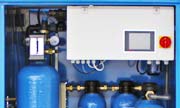
SCM 24
|
|
Cleans 24.000 liters per day
|
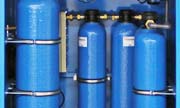
SCM 60
|
|
Cleans 60.000 liters per day
|
Video: How it works
The SCG Advantage
Our market-leading, water cleaning solutions have many advantages. To read more click the items below:
No Chemicals
Our machines and technology does not use any chemicals, at all.
Read more...
No Waste Water
Our machines do not waste any water. Yield = 100%.
Read more...
Low energy use
Uses 50 times less energy than a Reverse Osmosis Machine.
Read more...
Low ownership cost
Lower maintenance and operation costs due to our technology.
Read more...
Easy to install
Simple "plug and play" installation makes for easy deployment.
Read more...
Extremely compact
A compact system, contained in an easy to transport cabinet.
Read more...
Outperforms R.O.
SCG technologies outperform Reverse Osmosis systems.
Read more...
Faster ROI
Get a faster Return on Investment with our systems.
Read more...
Latest News
Latest Blog Posts
| Chemicals in water treatment? |
| Water storage - Whats best for keeping water clean and drinkable? |
| Case: Disaster Management Water Treatment |
Contact SCG
891 Showroom Place
Suite 101
Chula Vista, CA, 91914
Phone: +1 619-878-2730
Contact us by email