







Treating Orchard Water to Prevent Iron-Related Clogging
Reliable irrigation depends on more than having enough water. In orchards, the source must also be compatible with drip lines, filters, valves, pumps, fertigation equipment, and plant roots. Iron is one of the common groundwater constituents that can quietly reduce performance across the entire irrigation network.
Dissolved iron may pass through a pump and appear harmless at first. Once the water reaches air, pressure changes, or warmer distribution lines, the iron can oxidize into reddish-brown particles. These deposits accumulate in filters and narrow emitters, leading to uneven watering and higher maintenance costs.
A suitable treatment system removes iron before it becomes a distribution problem. The best approach depends on the iron concentration, pH, manganese content, water temperature, flow rate, and the irrigation method used on the farm. It should also account for seasonal demand and the quality of any water discharged during cleaning.
Why Iron Becomes an Orchard Problem
Groundwater often contains ferrous iron, which is dissolved and usually invisible. When ferrous iron encounters oxygen, it changes into ferric iron, forming insoluble particles that give water a rusty color. This transformation can occur in a storage tank, open channel, pressure vessel, or irrigation pipe.
Orchards are particularly sensitive because drip irrigation uses small passages and precise outlet openings. A deposit that seems minor inside a large pipeline can become severe inside a pressure-compensating emitter. Iron bacteria can make the situation worse by producing slimy growth that traps mineral particles and forms gelatinous masses.
The effect is gradual. Pressure at the pump may remain normal while flow from individual emitters declines. Trees at the end of a lateral may receive less water than those near the inlet, creating uneven growth, fruit size, and crop maturity. Iron-rich water can also stain equipment, trellis components, tanks, and paved areas.
How Iron Causes Clogging
Iron precipitation is frequently linked to aeration. A spray nozzle, waterfall, vented tank, or suction leak introduces oxygen and accelerates oxidation. In a pressurized system, turbulence and repeated cycling can produce similar results. The resulting iron hydroxide particles move downstream until they are captured by a filter or settle inside the pipe.
The type of clog matters when selecting treatment. Loose rust particles may be controlled with oxidation followed by media filtration. A biofilm caused by iron bacteria may require inspection, flushing, and a carefully managed sanitation program. When manganese is present with iron, the treatment design must address both metals because manganese deposits can be dark, stubborn, and difficult to remove.
Testing should measure total iron and dissolved iron separately where possible. A useful water analysis also includes pH, alkalinity, hardness, manganese, turbidity, hydrogen sulfide, and microbiological indicators. Flow demand should be recorded during peak irrigation, because a system sized for household use may fail to provide the required contact time or filtration capacity on a commercial orchard.
Choosing a Suitable Removal Process
Several treatment methods can reduce iron before water enters the irrigation network. Aeration exposes the water to oxygen, while an oxidizing medium or catalytic filter converts dissolved iron into particles that can be retained. In other installations, pressure oxidation, biological filtration, or specialized filter media may be more appropriate.
Chemical injection can be effective, but it adds storage, dosing control, worker-safety procedures, and residual management. For farms seeking a lower-input system, physical and catalytic processes may reduce chemical dependence. The choice should still be based on verified water chemistry rather than on a general promise that one technology works for every well.
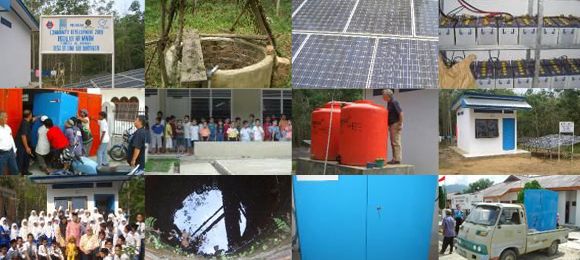
Swiss Cleanwater Group focuses on water treatment solutions designed to remove contaminants while limiting chemical use, waste, and unnecessary energy consumption. Its experience with remote water infrastructure, including this remote village case study, illustrates why treatment equipment must be matched to local conditions, access, and operational requirements.
| Treatment approach | Best suited to | Main orchard benefit | Points requiring attention |
|---|---|---|---|
| Aeration with filtration | Dissolved iron with adequate space and moderate flow | Converts iron into filterable particles | Requires air contact, backwashing, and proper venting |
| Catalytic or oxidation media | Iron and sometimes manganese in compact installations | Effective removal in a controlled footprint | Media selection depends on pH and water chemistry |
| Biological filtration | Stable groundwater with naturally occurring iron bacteria | Can use low chemical input after system maturation | Needs careful start-up and biological monitoring |
| Chemical oxidation plus filtration | High iron loads or difficult mixed contamination | Strong control over oxidation and contact time | Requires dosing equipment, storage, and residual control |
| Sediment filtration alone | Already oxidized iron particles | Protects emitters from existing rust solids | Usually cannot remove dissolved ferrous iron |
Protecting Drip Lines and Irrigation Equipment
Treatment should be installed before the point where iron can oxidize inside the orchard network. A common arrangement includes a raw-water pump, oxidation or contact stage, iron-removal filter, clean-water storage or pressure system, and final irrigation filtration. Exact placement depends on flow requirements and whether fertigation chemicals are introduced downstream.
Filter sizing is critical. A unit that is too small will create excessive pressure loss and require frequent cleaning. A unit that is too large may cost more than necessary and still perform poorly if the media, backwash rate, or contact time is wrong. Automatic backwashing can reduce labor, but the backwash water needs a suitable drainage or recovery plan.
Fine filtration at the irrigation inlet remains valuable even after iron removal. It provides a final barrier against residual particles, media fines, and material released from older pipes. Pressure gauges before and after the filter make it easier to identify rising resistance before water delivery becomes visibly uneven.
Regular flushing should be part of the operating schedule. Open the ends of mainlines, submains, and laterals according to a planned sequence, then inspect representative emitters. A sudden increase in flushing frequency, rusty deposits, or declining pressure can indicate a treatment problem upstream.
Matching Treatment to Orchard Conditions
Water demand changes during the growing season. A design based on winter flow may be unable to treat the full volume required during flowering, fruit enlargement, or hot weather. Engineers should calculate peak hourly demand, well recovery, storage capacity, and the number of irrigation zones that may operate simultaneously.
Source variability also matters. A well can produce different iron concentrations after heavy rainfall, prolonged pumping, or changes in groundwater levels. Surface water may introduce organic matter and suspended solids in addition to iron. Blending sources can dilute contamination, but it may also create fluctuating chemistry that complicates filtration.
Storage tanks need inspection because they can become unintended settling basins. Sediment at the bottom may be pulled into the irrigation pump during high demand. Covered tanks help limit contamination, while suitable mixing and draw-off arrangements prevent accumulated solids from entering the clean-water distribution line.
Water treatment for farming should support the whole operation, including livestock, worker facilities, and pesticide or fertilizer mixing where relevant. Separate treatment trains may be appropriate when irrigation water requires a different quality standard from drinking water. Clear labeling and backflow protection help prevent cross-connection risks.
Operating the System Through the Season
A treatment plant performs best when operators track a few simple indicators. Record raw-water iron, treated-water iron, filter pressure differential, backwash frequency, flow rate, and emitter performance. Comparing these values over time can reveal media exhaustion, valve faults, pump problems, or a change in source water.
Laboratory testing should be repeated when the well is modified, a new irrigation block is added, or the system begins showing unexplained deposits. Field test kits may help with routine checks, but laboratory analysis is useful for confirming dissolved metals, bacterial activity, and related chemistry.
Maintenance includes inspecting air injectors, oxidation chambers, media depth, valves, pressure gauges, and drainage. If iron bacteria are suspected, avoid simply increasing chemical dosage without identifying the source and understanding how the treatment train will respond. Sloughed biofilm can temporarily increase the solids load and overwhelm downstream filters.
Technical support is useful when an orchard has several wells, steep terrain, long laterals, or mobile irrigation equipment. A treatment provider can review the complete hydraulic design rather than selecting an iron filter in isolation. For farmers who receive industry communications, the company’s newsletter preference page provides a direct way to manage those messages while evaluating relevant water-treatment information.
Practical Steps for Better Iron Control
Begin with the water and the irrigation network as a single system. Removing iron at the source is important, but the filter, pump, pipes, emitters, and cleaning routine must work together. These actions provide a practical starting point:
- Test raw and treated water for iron, manganese, pH, turbidity, hardness, and microbiological activity.
- Measure peak irrigation flow and design contact, filtration, and backwash capacity around real demand.
- Install pressure gauges before and after treatment and final irrigation filters.
- Flush mains and laterals on a documented schedule, inspecting emitters for flow loss and deposits.
- Plan a safe destination for backwash water and collected iron solids.
An orchard water-treatment system should be judged by stable flow at the farthest emitters, manageable maintenance, and consistent water quality over the season. A lower chemical footprint can be valuable, but reliability, service access, and correct sizing remain essential.
If iron is affecting an existing irrigation system or appears in a new well analysis, contact Swiss Cleanwater Group to discuss the source water, required flow, and suitable iron-removal configuration. A site-specific assessment can turn a recurring clogging problem into a controlled part of orchard water management.
SCM 24
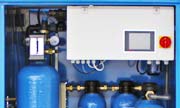
|
|
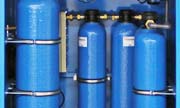
Cleans 24.000 liters per day
|
SCM 60
|
|
Cleans 60.000 liters per day
|
Video: How it works

The SCG Advantage
Our market-leading, water cleaning solutions have many advantages. To read more click the items below:
No Chemicals
Our machines and technology does not use any chemicals, at all.
Read more...
No Waste Water
Our machines do not waste any water. Yield = 100%.
Read more...
Low energy use
Uses 50 times less energy than a Reverse Osmosis Machine.
Read more...
Low ownership cost
Lower maintenance and operation costs due to our technology.
Read more...
Easy to install
Simple "plug and play" installation makes for easy deployment.
Read more...
Extremely compact
A compact system, contained in an easy to transport cabinet.
Read more...
Outperforms R.O.
SCG technologies outperform Reverse Osmosis systems.
Read more...
Faster ROI
Get a faster Return on Investment with our systems.
Read more...
Latest News
Latest Blog Posts
| Chemicals in water treatment? |
| Water storage - Whats best for keeping water clean and drinkable? |
| Case: Disaster Management Water Treatment |
Contact SCG
891 Showroom Place
Suite 101
Chula Vista, CA, 91914
Phone: +1 619-878-2730
Contact us by email