







Safe Water Treatment Strategies for Hydroponic Farms
Hydroponic crops depend on water as both a growing medium and a delivery system. Since plants receive dissolved nutrients directly through irrigation, the quality of the source water affects root health, nutrient availability, equipment performance, and harvest consistency. A contaminant that seems insignificant in ordinary irrigation can accumulate in a recirculating hydroponic system.
Municipal supplies, wells, rainwater collection systems, and surface sources can all contain unwanted substances. Common concerns include manganese, arsenic, bacteria, pesticides, uranium, excess salts, sediment, and organic matter. The right purification process removes harmful contaminants while preserving the controlled mineral profile needed for plant growth.
Effective treatment begins with testing rather than selecting equipment based on assumptions. A laboratory analysis establishes which pollutants are present, at what concentration, and whether seasonal changes influence the water. It also helps growers avoid over-treating water and spending money on technology that does not address the actual risk.
Why Source Water Quality Matters In Hydroponics
In soil-based agriculture, soil can bind or dilute some contaminants before they reach plant roots. Hydroponic systems provide much less buffering. Water moves directly through channels, slabs, troughs, or nutrient film systems, so dissolved pollutants can reach roots quickly and circulate repeatedly.
Recirculating systems create an additional concern: substances that plants do not absorb may remain in the solution and become more concentrated as water evaporates. High sodium and chloride levels, for example, can create osmotic stress and interfere with nutrient uptake. Trace metals may also accumulate in the root zone or growing media over time.
Microbial contamination requires special attention in farms producing leafy greens, herbs, and other crops consumed raw. Biofilms can develop inside tanks, pipes, emitters, and return lines. A water treatment program should therefore consider both incoming water and the condition of the distribution network.
Contaminants That Require Targeted Removal
No single filter removes every type of contaminant efficiently. Sediment filtration can capture suspended particles, but it does not reliably remove dissolved arsenic or uranium. Activated carbon can reduce many pesticides and organic compounds, while specialized media may be needed for metals and other inorganic pollutants.
Manganese can stain equipment and affect water appearance, while iron may clog emitters and alter nutrient chemistry. Arsenic and uranium are more serious because they can be toxic at low concentrations and may occur naturally in groundwater or mining regions. Their removal depends on chemical form, pH, oxidation conditions, and concentration.
Bacteria and other microorganisms require a separate control strategy. Ultraviolet treatment can inactivate microbes without adding disinfectant residuals, provided the water has low turbidity and the system receives adequate UV exposure. Membrane treatment, thermal methods, or carefully controlled sanitation may also be appropriate, depending on the farm’s scale and operating model.
Building A Treatment Train For Crop Safety
A treatment train combines several stages, with each component performing a specific task. A typical system may start with a coarse screen or sediment filter, followed by oxidation or specialized media for manganese and iron. Additional stages can target arsenic, uranium, pesticides, dissolved salts, and microbial contamination.
Treatment should be selected around the source-water report and the farm’s operating requirements. A small greenhouse using fresh water once may need a different arrangement from a commercial facility that recirculates thousands of liters daily. Flow rate, pressure, storage capacity, cleaning intervals, and peak demand all affect equipment selection.
The Swiss Cleanwater Group provides water treatment technologies for applications where contaminant removal, low resource use, and dependable operation are important. For hydroponic growers, a specialist assessment can help connect laboratory results with practical requirements such as greenhouse throughput, irrigation pressure, and maintenance access.
| Water concern | Suitable treatment approach | Hydroponic benefit | Important control point |
|---|---|---|---|
| Sand, silt, and suspended solids | Screen filters, cartridge filters, or multimedia filtration | Protects pumps, emitters, membranes, and UV equipment | Replace or backwash filters before pressure loss restricts flow |
| Manganese and iron | Oxidation with dedicated filtration media | Reduces staining, clogging, and deposits in irrigation lines | Confirm pH, oxidation conditions, and media capacity |
| Arsenic | Adsorptive media, oxidation-assisted filtration, or membrane treatment | Limits toxic exposure and accumulation in the nutrient circuit | Test arsenic species and monitor breakthrough |
| Uranium | Selective ion exchange, adsorption, or membrane systems | Reduces radioactive and chemical contamination risk | Account for competing minerals and disposal of concentrated waste |
| Pesticides and organic compounds | Activated carbon or advanced membrane treatment | Improves source-water suitability and reduces crop exposure | Track carbon exhaustion and changing pesticide loads |
| Bacteria and pathogens | UV disinfection, membrane filtration, or validated sanitation | Helps protect roots, workers, and produce | Maintain clarity, dose, lamp performance, and hygienic storage |
| Excess salts and unsuitable minerals | Reverse osmosis or other desalination methods | Provides a cleaner base for accurate nutrient dosing | Rebalance minerals and manage concentrate responsibly |
Protecting Nutrient Balance After Purification
Purified water is not automatically ready for plant production. Reverse osmosis and similar processes can remove beneficial calcium, magnesium, and other minerals along with unwanted salts. Growers must then rebuild the nutrient solution according to crop type, growth stage, conductivity targets, and water temperature.
Water treatment can also change pH and alkalinity. If bicarbonate levels fall, the nutrient solution may become less resistant to pH swings. If the treated water has very low mineral content, sensors and dosing systems may require recalibration. Treatment and fertigation should therefore be designed as one integrated process.
The goal is controlled water chemistry rather than maximum removal at any cost. Excessive treatment can increase energy demand, create a concentrated reject stream, or remove minerals that would otherwise be useful. A well-designed system matches purification intensity to the contaminants identified in the source.
Operating A Clean Recirculating System
Monitoring is essential because treatment performance changes with flow, temperature, source-water chemistry, and media age. Useful measurements may include pH, electrical conductivity, turbidity, oxidation-reduction potential, temperature, and microbial indicators. Periodic laboratory testing remains important even when inline instruments appear stable.
Storage tanks need hygienic design, tight covers, smooth internal surfaces, and cleaning procedures that do not leave harmful residues. Dead legs and poorly flushed pipe sections can harbor biofilms. Irrigation lines should be inspected for pressure changes, blocked emitters, unusual odors, and visible deposits.
Waste management must be included from the start. Some processes produce backwash water, spent media, or a concentrated reject stream containing the contaminants removed from the feed water. In areas affected by mining-related contamination, specialized guidance on uranium filtration media can help inform media selection and responsible handling requirements.
Practical Steps For Farm Managers
A reliable water safety program is easier to maintain when responsibilities, testing intervals, and replacement schedules are documented. The following practices provide a useful foundation:
- Test the raw water before purchasing treatment equipment, including seasonal samples when source conditions vary.
- Identify which contaminants are dissolved, suspended, or biological so each treatment stage has a defined purpose.
- Install monitoring points before and after critical filters, media beds, membranes, and disinfection units.
- Keep nutrient mixing separate from source-water purification so treatment performance can be evaluated accurately.
- Record pressure, flow, conductivity, pH, maintenance actions, and laboratory results in a regular operating log.
Staff training is equally important. Operators should know how to recognize filter breakthrough, declining UV performance, membrane fouling, and unexpected nutrient drift. Clear procedures reduce the chance that a maintenance issue will affect an entire crop cycle.
Choosing A Sustainable Treatment Design
Sustainability in hydroponic water management involves more than reducing freshwater consumption. It includes efficient pumps, durable filtration media, low chemical dependency, manageable waste streams, and treatment equipment sized to actual demand. A system that is oversized may consume unnecessary energy and require frequent underloaded operation.
Nonchemical purification methods can be valuable where growers want to limit chemical handling or avoid adding residual substances to the irrigation supply. However, every technology has operating limits. UV requires clear water, adsorption media eventually becomes exhausted, and membranes need pressure and cleaning. Performance claims should always be matched to verified water analysis and operating conditions.
A modular design can make future expansion easier. Pre-filtration, contaminant-specific media, disinfection, and nutrient preparation can be arranged so individual stages are serviced without shutting down the entire farm. Bypass lines, standby components, and correctly sized storage can also improve resilience during maintenance or source-water fluctuations.
A safe hydroponic operation treats water quality as part of crop management, food safety, and resource efficiency. Begin with a complete source-water analysis, define acceptable limits for the crop and irrigation system, and select treatment stages that address confirmed risks. Contact a qualified water-treatment provider to turn those results into a monitored, maintainable purification system that protects plants and supports consistent production.
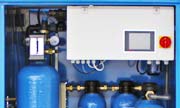
SCM 24
|
|
Cleans 24.000 liters per day
|
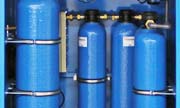
SCM 60
|
|
Cleans 60.000 liters per day
|
Video: How it works
The SCG Advantage
Our market-leading, water cleaning solutions have many advantages. To read more click the items below:
No Chemicals
Our machines and technology does not use any chemicals, at all.
Read more...
No Waste Water
Our machines do not waste any water. Yield = 100%.
Read more...
Low energy use
Uses 50 times less energy than a Reverse Osmosis Machine.
Read more...
Low ownership cost
Lower maintenance and operation costs due to our technology.
Read more...
Easy to install
Simple "plug and play" installation makes for easy deployment.
Read more...
Extremely compact
A compact system, contained in an easy to transport cabinet.
Read more...
Outperforms R.O.
SCG technologies outperform Reverse Osmosis systems.
Read more...
Faster ROI
Get a faster Return on Investment with our systems.
Read more...
Latest News
Latest Blog Posts
| Chemicals in water treatment? |
| Water storage - Whats best for keeping water clean and drinkable? |
| Case: Disaster Management Water Treatment |
Contact SCG
891 Showroom Place
Suite 101
Chula Vista, CA, 91914
Phone: +1 619-878-2730
Contact us by email