









Why pH Adjustment Is Often Unnecessary with Chemical-Free Filtration
Clean drinking water is often associated with chemical dosing, pH correction, and a sequence of tanks designed to balance water chemistry. That approach can be appropriate in some treatment processes, but it is not automatically required for every source. Many modern filtration systems can reduce specific contaminants through physical separation, adsorption, oxidation, or biological activity while leaving the water’s natural pH largely unchanged.
This distinction matters for municipalities, farms, industrial sites, buildings, and remote installations. When the treatment objective is to remove manganese, arsenic, bacteria, pesticides, or uranium, adding acid or alkali may introduce extra equipment, operating costs, and maintenance requirements without improving the actual contaminant-removal mechanism.
A sound design begins with water analysis rather than assumptions. Swiss Cleanwater Group develops chemical-free water systems that are matched to source-water conditions and the intended application, helping operators determine when pH correction has a useful function and when it would simply complicate the process.
What pH Adjustment Actually Does
pH describes how acidic or alkaline water is, but it is not itself a measure of cleanliness. Adjusting pH changes the chemical environment in the water. This can help certain contaminants precipitate, alter the charge of dissolved compounds, or improve the performance of a treatment medium. In chemical precipitation and coagulation, pH control may be central to achieving reliable results.
Many filtration technologies operate differently. A filter bed, membrane, adsorbent, or specialized medium can capture suspended particles and dissolved substances through surface interactions, pore structure, or selective binding. If the treatment medium performs effectively within the source water’s existing pH range, there may be no technical reason to alter that range.
This is why a chemical-free process should not be judged by whether it includes a pH dosing stage. The relevant question is whether the selected technology can consistently meet the required water-quality targets under actual operating conditions.
How Chemical-Free Filtration Removes Contaminants
Physical filtration removes particles, turbidity, and microorganisms when the pore structure or media configuration is suitable. Other systems use catalytic or adsorptive media to target dissolved iron, manganese, arsenic, pesticides, or uranium. These processes depend on contact time, media properties, flow rate, and regeneration or backwashing requirements rather than continuous acid or caustic dosing.
Some filters support natural oxidation and biological processes. Oxygen already present in the water, or introduced through aeration, can help convert dissolved contaminants into forms that are easier to retain. A properly selected filter then captures the resulting particles. This treatment route can avoid the chemical storage, dosing pumps, and residual management associated with conventional conditioning.
Bacteria control also does not always require a pH shift. Depending on the application, microbial safety may be addressed through ultrafiltration, ultraviolet treatment, membrane separation, or a combination of barriers. The design must account for flow, temperature, maintenance, and recontamination risks, but pH correction is not inherently part of each solution.
Conditions That Determine Whether pH Matters
The need for pH adjustment depends on the source and the treatment target. Groundwater with stable chemistry may pass through a specialized filter without significant pH intervention. Surface water with seasonal changes in organic matter, alkalinity, and turbidity may require a more detailed treatment train. A laboratory analysis should establish baseline pH alongside alkalinity, hardness, conductivity, temperature, and contaminant concentrations.
Some contaminants are strongly influenced by pH. Arsenic speciation, for example, can affect how readily a medium captures the compound. Manganese oxidation and precipitation can also depend on oxidation-reduction conditions and alkalinity. Uranium removal may be affected by carbonate chemistry. These relationships do not mean that pH must always be corrected; they mean that the filtration system must be selected and tested for the relevant water profile.
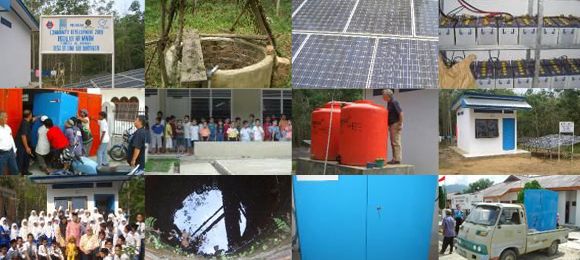
The target standard is equally important. Drinking water, livestock water, process water, irrigation, and pool water have different requirements. A system designed for a rural drinking-water plant may use different safeguards from one serving a manufacturing line. For a large agricultural site, this livestock water system illustrates why treatment design must reflect demand, source quality, and operational conditions rather than relying on a generic chemical recipe.
| Treatment situation | Is pH correction commonly required? | Main design considerations |
|---|---|---|
| Particle and turbidity removal | Often unnecessary | Filter rating, loading rate, backwash cycle |
| Manganese reduction | Sometimes | Oxidation conditions, media selection, contact time |
| Arsenic adsorption | Source-dependent | Arsenic form, competing ions, media capacity |
| Bacteria reduction | Usually process-dependent | Membrane or UV performance, hygiene, monitoring |
| Pesticide removal | Source-dependent | Adsorbent type, contact time, breakthrough control |
| Uranium reduction | Source-dependent | Water chemistry, selective media, disposal route |
| Chemical precipitation | Frequently important | Alkalinity, dosing control, sludge handling |
Why Avoiding Unnecessary Chemicals Helps
Eliminating an unnecessary pH correction stage can simplify the entire installation. Operators may avoid bulk chemical tanks, bunding, dosing pumps, injection points, calibration routines, and additional safety procedures. Fewer chemical inputs also reduce the likelihood of overcorrection, corrosion, accidental spills, and fluctuations in finished-water quality.
There can be an energy advantage as well. Chemical-free filtration does not automatically mean zero energy use, since pumps, controls, aeration, ultraviolet units, or backwash systems may still be required. However, a process that avoids chemical manufacture, transport, storage, and dosing can reduce its wider environmental footprint. It may also produce less chemical sludge or fewer treatment by-products.
Maintenance becomes more predictable when operators are monitoring a filter’s pressure loss, flow, contaminant breakthrough, and backwash performance instead of managing several chemical control loops. Automated backwash systems improve efficiency by restoring media performance at the appropriate interval and limiting unnecessary water use in rural plants.
When pH Correction Is Still Appropriate
Chemical-free filtration is not a universal replacement for every treatment method. pH adjustment can be justified when the selected medium has a narrow operating range, when precipitation is the intended mechanism, or when the finished water needs stabilization to protect plumbing and equipment. Very acidic or alkaline source water may also require conditioning for safety and infrastructure protection.
pH control can be part of a combined treatment system without undermining the broader goal of sustainable operation. The important distinction is between necessary conditioning and routine dosing added by habit. If a chemical improves contaminant removal, protects the distribution network, or ensures regulatory compliance, it has a clear role. If testing shows that filtration performs reliably without it, the dosing stage may be avoidable.
Operators should also consider changes over time. Groundwater chemistry can shift after a new well is commissioned, rainfall can alter surface-water quality, and industrial or agricultural activity can affect a catchment. Periodic sampling confirms whether the original pH assumptions remain valid and whether media replacement, pretreatment, or process changes are needed.
Designing Around Real Water Chemistry
A practical design process starts with representative sampling. Samples should reflect normal operation and, where relevant, seasonal extremes. Testing can include pH, alkalinity, hardness, iron, manganese, arsenic, uranium, pesticides, bacteria, turbidity, and other parameters connected to the source and intended use.
Pilot testing or validated performance data then helps establish the correct media, flow rate, contact time, pressure limits, and cleaning schedule. A system that works at a laboratory flow rate may behave differently when demand rises sharply or when the filter receives a higher contaminant load. Designing for peak flow and realistic maintenance intervals is essential for reliable water production.
Monitoring should focus on outcomes rather than chemical activity. Operators can track treated-water quality, differential pressure, flow, backwash frequency, and media life. Automated controls may trigger regeneration or backwashing based on measured conditions. This approach supports efficient operation while preserving the source water’s natural chemistry whenever there is no compelling reason to change it.
Practical Decisions For A Lower-Input System
- Test raw and treated water before selecting a pH correction stage.
- Match filtration media to the specific contaminant form and water chemistry.
- Verify performance at normal, peak, and seasonal flow conditions.
- Monitor pressure loss, contaminant breakthrough, and backwash water use.
- Add pH conditioning only when it supports removal, safety, or infrastructure protection.
The principle is straightforward: water treatment should change what needs to be changed and leave the rest alone. When a filtration medium can remove the target contaminants within the source water’s natural pH range, avoiding chemical adjustment can reduce complexity, waste, energy demand, and operational risk.
Swiss Cleanwater Group can help assess whether a chemical-free treatment configuration is suitable for a municipality, farm, industrial facility, building, or mobile installation. Review the available treatment technologies and arrange a source-water evaluation to move from assumptions to a system designed around measurable water-quality needs.
SCM 24

|
|
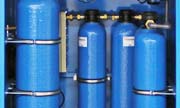
Cleans 24.000 liters per day
|
SCM 60
|
|
Cleans 60.000 liters per day
|
Video: How it works

The SCG Advantage
Our market-leading, water cleaning solutions have many advantages. To read more click the items below:
No Chemicals
Our machines and technology does not use any chemicals, at all.
Read more...
No Waste Water
Our machines do not waste any water. Yield = 100%.
Read more...
Low energy use
Uses 50 times less energy than a Reverse Osmosis Machine.
Read more...
Low ownership cost
Lower maintenance and operation costs due to our technology.
Read more...
Easy to install
Simple "plug and play" installation makes for easy deployment.
Read more...
Extremely compact
A compact system, contained in an easy to transport cabinet.
Read more...
Outperforms R.O.
SCG technologies outperform Reverse Osmosis systems.
Read more...
Faster ROI
Get a faster Return on Investment with our systems.
Read more...
Latest News
Latest Blog Posts
| Chemicals in water treatment? |
| Water storage - Whats best for keeping water clean and drinkable? |
| Case: Disaster Management Water Treatment |
Contact SCG
891 Showroom Place
Suite 101
Chula Vista, CA, 91914
Phone: +1 619-878-2730
Contact us by email