







A Hotel in the Maldives Treats Its Own Water Without Chemicals
On a remote Maldivian island, reliable drinking water is part of the guest experience and a basic operating requirement. Hotels need safe water for rooms, restaurants, kitchens, staff facilities, laundry, landscaping, and maintenance. Supplying these needs entirely through imported bottles or tanker deliveries creates cost, storage, and logistical pressures.
This case study examines how a hotel developed an on-site water treatment approach using chemical-free purification technology. The system was designed to produce clean water at the property, reduce dependence on external supplies, and manage contaminants through filtration rather than routine chemical dosing.
The project also illustrates why water treatment for island resorts must be designed around the local source, available space, energy limits, maintenance skills, and daily demand. A technically effective system must fit the hotel’s operating rhythm as well as its water chemistry.
Water Independence On A Remote Island
The Maldives consists of low-lying islands where freshwater resources are limited and vulnerable to saltwater intrusion. Many resorts therefore depend on a combination of desalinated water, collected rainwater, groundwater, imported drinking water, and packaged supplies. Each option can help, but dependence on deliveries leaves the property exposed to weather, transport disruption, and fluctuating costs.
For the hotel in this case, producing water on-site offered a more resilient operating model. The aim was to treat available water at the point of use and maintain a consistent supply for drinking and general hospitality requirements. This approach also reduced the handling associated with plastic containers and external deliveries.
Chemical-free treatment does not mean that water passes through a single universal filter. It means contaminants are separated through physical and media-based processes without relying on disinfectant chemicals, coagulants, or other routine additives. The treatment train must still be selected carefully and monitored as feed-water conditions change.
Designing Around The Feed Water
The first design step was understanding the incoming water. Salinity, suspended particles, organic matter, biological activity, hardness, metals, and trace contaminants all influence how a system should be configured. A resort may also have different water sources for different applications, making source mapping essential before equipment is specified.
The hotel’s solution was built around staged treatment. Larger particles and sediment are removed first, protecting later filtration stages from premature loading. Finer filtration then addresses smaller suspended material, while specialized media can target dissolved contaminants when testing shows they are present.
Particle size is important because a filter that performs well against larger sediment may have limited effectiveness against fine particles or colloidal material. Swiss Cleanwater Group explains this relationship in its guidance on particle-size filtration, including why pore structure, flow rate, and contact conditions affect treatment performance.
The Treatment Train And Its Operating Logic
A chemical-free system generally depends on several complementary barriers rather than one oversized unit. Pre-filtration reduces the load entering the main media. Fine filtration improves clarity and protects downstream components. Targeted treatment media can then bind, retain, or transform specific contaminants according to the water analysis.
This arrangement provides practical benefits for a hotel. Each stage has a defined purpose, making the installation easier to inspect and service. When a filter requires cleaning or replacement, operators can identify the affected stage instead of troubleshooting an undifferentiated system.
The installation can also be adapted to the property’s daily pattern. Hospitality demand rises during meal preparation, room turnover, laundry cycles, and peak occupancy. Storage capacity, pump sizing, and flow control help the treatment plant respond to these changes without requiring constant maximum operation.
| Treatment requirement | Chemical-free approach | Operational value for the hotel |
|---|---|---|
| Sediment and suspended solids | Coarse and fine pre-filtration | Protects downstream media and improves clarity |
| Dissolved metals or trace contaminants | Selective filtration media | Targets contaminants identified by water analysis |
| Microbiological control | Appropriate physical barriers and validated hygiene procedures | Supports safe handling without routine chemical dosing |
| Variable daily demand | Storage, flow control, and staged operation | Matches production with occupancy and usage |
| Maintenance | Backwashing, inspection, and media management | Makes servicing predictable for on-site staff |
| Environmental performance | Low-waste, low-chemical treatment design | Reduces consumables and transport requirements |
Cleaner Water With Fewer Consumables
Removing chemicals from routine treatment can simplify storage and procurement. A resort no longer needs to manage the same volume of dosing products, chemical containers, or associated handling procedures. This can be especially valuable on islands where deliveries are expensive and storage space is limited.
The environmental effect extends beyond chemical use. A self-sufficient water system can reduce the number of single-use bottles purchased, transported, stored, and discarded. It can also lower the fuel and labor connected with repeated water deliveries, although the overall footprint still depends on pumping, pretreatment, maintenance, and the source-water process.
Chemical-free filtration must be evaluated against the contaminants that matter in the specific supply. Research into microplastic filtration is increasingly relevant for hotels, since plastic particles may enter water through source pollution, storage materials, or distribution infrastructure. A treatment strategy should address these emerging concerns alongside conventional parameters.
The result is a more controlled water supply. Instead of treating water as a consumable that arrives from outside, the hotel manages it as an on-site utility with defined inputs, treatment stages, quality checks, and maintenance routines.
Operating A Treatment Plant In Hospitality
A resort water system must work quietly in the background. Guests should experience reliable water without seeing the complexity behind it. For that reason, equipment layout, automation, access for service, noise control, and clear operating instructions are as important as the filtration media itself.
Staff training is a central part of the installation. Operators need to know how to read pressure differences, recognize reduced flow, complete backwash cycles, check storage conditions, and record basic water-quality observations. Simple procedures help prevent small issues from becoming supply interruptions.
Routine testing verifies that the system continues to perform as expected. Testing frequency depends on the source, local regulations, treatment objectives, and risk profile. Results can indicate when media needs attention, when a filter is loading faster than expected, or when a change in source conditions requires technical review.
The project’s value therefore lies in the complete operating model rather than the equipment alone. Treatment capacity, maintenance planning, water testing, staff responsibility, and emergency provisions all contribute to dependable service.
Lessons For Island Properties
The Maldivian hotel demonstrates how a property can move toward greater water autonomy without adding routine chemicals to its treatment process. The principle can apply to resorts, guesthouses, clinics, staff housing, restaurants, and other facilities that need dependable water in locations where infrastructure is limited.
A successful project begins with measured water data rather than assumptions. It then matches treatment stages to contaminants, designs around real consumption, and gives operators a practical maintenance plan. This avoids the common mistake of selecting equipment based only on advertised flow rate or a general description of “clean water.”
For similar properties, several priorities deserve attention:
- Test every intended water source for salinity, turbidity, hardness, metals, microbiological indicators, and relevant trace contaminants.
- Separate drinking-water requirements from irrigation, laundry, cooling, and other uses when different quality levels are appropriate.
- Use staged filtration so sediment removal protects finer and more specialized treatment media.
- Provide storage and flow control that reflect occupancy, kitchen demand, laundry schedules, and peak consumption.
- Establish written maintenance, sampling, and emergency procedures before the system enters full operation.
This approach can strengthen resilience while reducing dependence on imported water products. It also gives hotel management clearer visibility into how much water is produced, where it is used, and when the treatment system needs attention.
Swiss Cleanwater Group develops water treatment solutions for hotels, municipalities, industry, agriculture, buildings, and mobile applications. Properties evaluating chemical-free purification can schedule a consultation to discuss source-water data, treatment objectives, available space, and expected demand. A properly assessed system can turn water production from a logistical burden into a reliable part of the hotel’s own infrastructure.
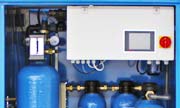
SCM 24
|
|
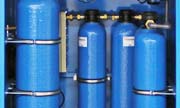
Cleans 24.000 liters per day
|
SCM 60
|
|
Cleans 60.000 liters per day
|
Video: How it works
The SCG Advantage
Our market-leading, water cleaning solutions have many advantages. To read more click the items below:
No Chemicals
Our machines and technology does not use any chemicals, at all.
Read more...
No Waste Water
Our machines do not waste any water. Yield = 100%.
Read more...
Low energy use
Uses 50 times less energy than a Reverse Osmosis Machine.
Read more...
Low ownership cost
Lower maintenance and operation costs due to our technology.
Read more...
Easy to install
Simple "plug and play" installation makes for easy deployment.
Read more...
Extremely compact
A compact system, contained in an easy to transport cabinet.
Read more...
Outperforms R.O.
SCG technologies outperform Reverse Osmosis systems.
Read more...
Faster ROI
Get a faster Return on Investment with our systems.
Read more...
Latest News
Latest Blog Posts
| Chemicals in water treatment? |
| Water storage - Whats best for keeping water clean and drinkable? |
| Case: Disaster Management Water Treatment |
Contact SCG
891 Showroom Place
Suite 101
Chula Vista, CA, 91914
Phone: +1 619-878-2730
Contact us by email