







How Particle Size Shapes Chemical-Free Water Filtration
Water filtration efficiency depends on more than the choice of equipment. The size, shape, and concentration of particles in the source water determine how contaminants move through a filter, how quickly the media becomes loaded, and which treatment mechanism will work reliably. A system designed for fine clay may perform very differently when exposed to sand, algae, bacteria, or dissolved metals.
Chemical-free treatment approaches rely on physical separation, adsorption, biological activity, or carefully selected filter media rather than continual chemical dosing. Particle-size analysis helps engineers match these mechanisms to the water source. It also clarifies an important limitation: a filter that removes suspended solids may leave dissolved arsenic, uranium, pesticides, or manganese untouched unless an appropriate additional process is included.
For municipalities, farms, buildings, industrial facilities, and mobile applications, this distinction supports more predictable treatment and lower operating costs. Correct sizing can reduce pressure loss, extend maintenance intervals, and improve the quality of water entering a membrane or final polishing stage.
Why Particle Size Matters In Filtration
Particles behave differently according to their diameter and density. Coarse sand and grit settle rapidly and can often be captured by a screen, sedimentation tank, or deep-bed filter. Fine silt and colloidal clay remain suspended for longer because their small size gives Brownian motion and surface forces greater influence. These particles can pass through coarse media and create persistent turbidity.
The distinction between suspended and dissolved contaminants is central. Suspended particles may be removed through straining, sedimentation, depth filtration, or membrane separation. Dissolved molecules and ions are smaller than ordinary filter pores and require adsorption, ion exchange, biological conversion, or a membrane with a suitable rejection profile. Particle-size reduction alone does not make dissolved arsenic or uranium physically visible to a conventional filter.
Particle shape also affects performance. Angular grains may be trapped more readily than smooth, flexible particles, while fibrous organic matter can bridge openings and create a surface layer. A filter therefore responds to the full distribution of particle sizes, shapes, density, and concentration rather than to a single average diameter.
How Chemical-Free Filters Capture Contaminants
Mechanical filtration uses several capture mechanisms at the same time. Straining holds particles larger than the available passage, while interception captures particles that follow water lines close to media surfaces. Inertial effects cause heavier particles to deviate from flowing water and collide with grains. Sedimentation within the voids of a filter bed can remove particles smaller than the nominal opening.
Depth filters are especially useful when the water contains a broad range of particle sizes. Larger solids are captured near the inlet, while smaller particles travel deeper into the media. This spreads the contaminant load throughout the bed and can provide greater capacity than a thin surface screen. The trade-off is rising head loss as the void spaces fill.
Membrane filtration creates a more defined barrier. Microfiltration and ultrafiltration can remove many suspended solids, bacteria, and larger colloids, although the exact result depends on pore size, membrane condition, feed pressure, and microorganism dimensions. A practical explanation of this mechanism appears in the discussion of the ultrafiltration approach, particularly when biological safety is a primary objective.
Matching Media And Pore Size To Water Quality
Nominal pore size should never be treated as the only selection criterion. A filter rated for a particular micron range may remove a high percentage of particles at that size while allowing smaller particles through. The rating may also describe a clean, new element rather than performance after fouling, pressure changes, or repeated backwashing.
Granular media offer a different type of control. Bed depth, grain diameter, porosity, flow velocity, and surface properties influence particle capture. Finer media usually improve removal of small solids, but they also increase resistance to flow and may require more frequent cleaning. A graded bed can place coarse material above finer layers, protecting the lower section from rapid blockage.
Particle-size distribution testing is therefore valuable before system design. Turbidity measurements provide a useful operational signal, while laser diffraction, microscopy, or other laboratory methods can reveal whether the water contains coarse sediment, colloids, biological particles, or a mixed population. Seasonal sampling is important where rainfall, agricultural activity, or surface-water conditions change the feed profile.
| Filtration Target | Typical Particle Behavior | Suitable Chemical-Free Approach | Main Design Consideration |
|---|---|---|---|
| Grit and coarse sand | Dense, settles quickly | Screening, sedimentation, coarse media | Protect downstream equipment |
| Silt and clay | Fine, slow-settling, often colloidal | Depth filtration, coagulation-free media, ultrafiltration | Control pressure loss and breakthrough |
| Bacteria and protozoa | Biological particles with variable size | Ultrafiltration, membrane barriers, validated media | Verify integrity and microbial removal |
| Algae and organic debris | Irregular, buoyant, prone to bridging | Pretreatment, screens, depth beds | Prevent rapid surface fouling |
| Dissolved arsenic or uranium | Ionic or molecular, far smaller than pores | Adsorptive or selective treatment media | Confirm chemistry and contact time |
| Dissolved pesticides | Molecular contaminants | Activated carbon or specialized media | Monitor capacity and replacement interval |
Particle Size And Filter Fouling
Fouling begins when particles accumulate faster than the system can release them through backwashing, flushing, or other cleaning methods. Coarse particles may block the upper surface, while fine colloids penetrate deeper and reduce the permeability of the entire bed. This can produce a rapid increase in differential pressure and a decline in flow.
A moderate amount of deposition can sometimes improve removal by forming a secondary filtration layer. However, the same cake layer may become too dense, causing excessive energy consumption or uneven flow distribution. Fine organic particles can also support microbial growth if the filter is poorly managed, creating taste, odor, or hygiene concerns.
Effective operation tracks turbidity, flow rate, inlet and outlet pressure, and cleaning frequency. These measurements reveal whether the filter is approaching breakthrough or simply experiencing normal loading. Backwashing should be matched to the media and contaminant type; excessive cleaning can waste water and disturb the bed, while insufficient cleaning allows irreversible fouling.
Protecting Membranes And Final Treatment Stages
Particle-size control is often used as a protective step before advanced treatment. Removing sand, silt, and organic debris upstream reduces abrasion, surface blockage, and cleaning demands on ultrafiltration or other membrane units. A well-designed pretreatment stage can make the entire process more stable without adding chemical disinfectants or coagulants.
The sequence must reflect the source water. A surface-water system may need screening, sediment removal, depth filtration, and a microbial barrier. Groundwater may have low turbidity but contain dissolved manganese, arsenic, or uranium that requires a selective medium or another dedicated removal mechanism. Testing is essential because clear water is not automatically free from dissolved contaminants.
The same principle applies to agricultural water. Hydroponic systems need contaminant control that protects crops while preserving the intended nutrient balance; practical hydroponic water guidance shows why source-water assessment should precede equipment selection. Particle filtration can remove sediment and biological debris, but it should not be presented as a complete solution for every dissolved pollutant.
Designing For Reliable Chemical-Free Performance
A dependable system begins with a water analysis that includes turbidity, total suspended solids, particle distribution, microbial indicators, pH, alkalinity, and relevant dissolved contaminants. Flow demand and peak conditions matter as much as laboratory results. A filter sized for average flow may fail during a storm event, irrigation cycle, or seasonal rise in source-water solids.
Designers should also consider contact time and media capacity. Adsorptive media may capture dissolved contaminants even when the particles are too small for mechanical filtration, but performance depends on pH, competing ions, temperature, and the amount of media available. In a remote installation, simple monitoring and long service intervals may be more valuable than a highly complex system.
Useful design priorities include:
- Measure particle-size distribution instead of relying on turbidity alone.
- Separate suspended-solid removal from dissolved-contaminant treatment.
- Use staged filtration to protect fine media and membranes.
- Set operating limits for pressure loss, turbidity, and flow decline.
- Validate microbial and chemical removal under realistic source-water conditions.
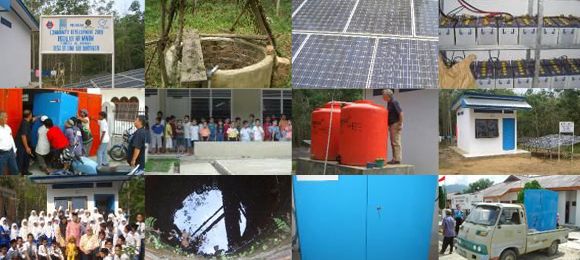
A remote community project illustrates why treatment must be matched to local water chemistry. The remote village case study demonstrates that arsenic control requires a targeted process rather than a general sediment filter. Particle-size information remains useful in that setting because it protects the treatment stage and improves overall system reliability.
Turning Particle Data Into Better Water Treatment
Particle size provides a practical link between laboratory analysis and real operating behavior. It indicates whether a source can be handled with screening and granular media, whether ultrafiltration is justified, or whether dissolved contaminants require adsorption or selective treatment. It also helps predict fouling, cleaning needs, and the pressure required to maintain flow.
Chemical-free filtration can be efficient when the process is designed around the water rather than selected from a generic equipment list. The correct media, bed depth, pore structure, pretreatment sequence, and monitoring strategy allow physical barriers to work with minimal waste and energy use.
Swiss Cleanwater Group develops water treatment solutions for drinking water, agriculture, industry, livestock, buildings, pools, and mobile applications. Contact the company to discuss source-water analysis, particle behavior, and a treatment configuration suited to the required flow and contaminant profile.
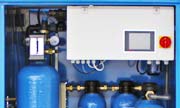
SCM 24
|
|
Cleans 24.000 liters per day
|
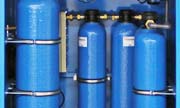
SCM 60
|
|
Cleans 60.000 liters per day
|
Video: How it works
The SCG Advantage
Our market-leading, water cleaning solutions have many advantages. To read more click the items below:
No Chemicals
Our machines and technology does not use any chemicals, at all.
Read more...
No Waste Water
Our machines do not waste any water. Yield = 100%.
Read more...
Low energy use
Uses 50 times less energy than a Reverse Osmosis Machine.
Read more...
Low ownership cost
Lower maintenance and operation costs due to our technology.
Read more...
Easy to install
Simple "plug and play" installation makes for easy deployment.
Read more...
Extremely compact
A compact system, contained in an easy to transport cabinet.
Read more...
Outperforms R.O.
SCG technologies outperform Reverse Osmosis systems.
Read more...
Faster ROI
Get a faster Return on Investment with our systems.
Read more...
Latest News
Latest Blog Posts
| Chemicals in water treatment? |
| Water storage - Whats best for keeping water clean and drinkable? |
| Case: Disaster Management Water Treatment |
Contact SCG
891 Showroom Place
Suite 101
Chula Vista, CA, 91914
Phone: +1 619-878-2730
Contact us by email