


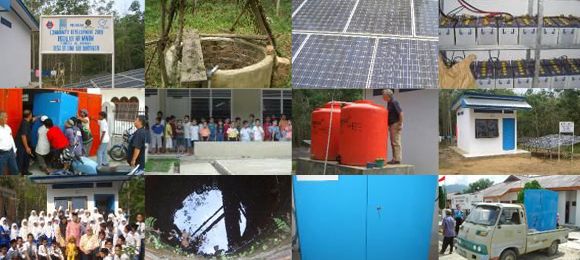







Case Study: Treating Arsenic-Contaminated Water in a Remote Village
A remote village may have a reliable-looking water source and still face a serious public health risk. Arsenic can occur naturally in groundwater, remain invisible and tasteless, and accumulate over time when contaminated water is used for drinking and cooking. Testing is therefore essential before any purification system is selected.
This case study describes a representative rural project based on the practical requirements faced by communities with arsenic-affected boreholes: limited electricity, difficult access, few technical staff, and a need for safe water every day. The treatment concept focuses on dependable arsenic removal without chemical dosing, excessive energy consumption, or a complicated operating routine.
The objective was larger than meeting a laboratory target. The village needed a complete drinking-water solution that could be maintained locally, protect the source from further contamination, and give residents confidence in the quality of the water at the collection point.
Establishing The Water Quality Problem
The village depended on two boreholes because surface water became turbid during the rainy season and was vulnerable to animal waste and microorganisms. Initial samples showed that the water was clear but contained arsenic above the applicable drinking-water limit. Iron and manganese were also present, while bacterial contamination appeared in storage containers and distribution points.
The results demonstrated why visual inspection alone is not enough. Arsenic does not necessarily produce an unusual colour, smell, or taste. A treatment plant designed only for sediment or bacteria could leave the primary hazard untouched. The project team therefore assessed arsenic speciation, pH, iron concentration, turbidity, conductivity, and seasonal changes before finalising the process.
A second survey examined the practical setting. The borehole pump could not support a large continuous load, replacement parts might take weeks to arrive, and operators had limited formal training. These constraints shaped the design as strongly as the laboratory analysis. A technically effective unit would fail if it required frequent chemical deliveries, specialist calibration, or a stable grid connection.
Designing A Chemical-Free Treatment Train
The selected process began with a raw-water holding stage and controlled aeration. Introducing oxygen helped convert dissolved iron and manganese into forms that could be retained by filtration. It also supported the conversion of arsenic into a form more suitable for capture by the downstream treatment media. The system was configured to avoid routine chemical dosing while preserving a consistent contact time.
A dedicated filtration stage then removed the oxidised particles and arsenic-bearing compounds. The treatment media and flow rate were chosen through pilot testing rather than by applying a generic specification. This was important because arsenic removal depends on water chemistry, including pH, competing ions, and the relationship between arsenic and iron.
Final disinfection protected the water after filtration and before distribution. The exact method can vary according to the project’s energy supply and operating conditions, but the design principle remained constant: arsenic removal, particle reduction, and microbiological safety had to be treated as connected objectives. A clean-looking outlet was not accepted as proof of safe water.
Waste handling was included at the design stage. The project avoided a process that would create a large stream of chemical sludge requiring regular transport from an isolated location. The principles described in chemical-free sludge reduction were especially relevant because disposal options in the village were limited.
Installing The System In A Remote Location
The treatment unit was assembled in a compact plant room close to the borehole and elevated storage tank. Locating the equipment near the existing water infrastructure reduced the length of new pipework and made routine inspection easier. A covered area protected pumps, valves, and media vessels from sun, dust, and heavy rainfall.
Installation was completed in stages so that the village could continue using an interim water point. Technicians first connected the raw-water line, installed isolation valves, and checked the holding tank. They then commissioned aeration, filtration, and disinfection separately before operating the complete sequence. This approach made it easier to identify pressure losses or flow restrictions before the system entered normal service.
Because electricity was limited, the controls were designed for low consumption and simple status checks. Where possible, water moved by gravity between stages, reducing pump demand. The control panel displayed essential information such as operating status, alarm conditions, and filter pressure. Operators did not need to interpret complex data to carry out basic daily checks.
Training covered sampling, valve operation, cleaning, safe access, and response to an alarm. A local operator was also shown how to record flow volumes and maintenance actions. These records created a practical history of the plant and allowed unusual changes in arsenic, turbidity, or pressure to be investigated before they became service interruptions.
Measuring Performance From Source To Tap
Commissioning samples were taken from the untreated borehole, after the arsenic-removal stage, and at the final collection point. This sequence distinguished treatment performance from problems that could arise in storage or distribution. Independent laboratory testing was used for verification, while field checks supported more frequent operational monitoring.
The project team looked for stable performance rather than a single favourable result. Sampling continued through different pumping conditions and after periods of heavy rain. The results showed that the treatment train consistently reduced arsenic to below the project limit while also lowering iron, manganese, turbidity, and bacterial risk after final disinfection.
The following figures illustrate the type of performance record used in the project. They are presented as representative case-study values; actual targets and results must always be confirmed through site-specific testing and the governing drinking-water standard.
| Water-quality indicator | Raw borehole water | Treated water | Project objective |
|---|---|---|---|
| Arsenic | 0.086 mg/L | <0.005 mg/L | Below 0.010 mg/L |
| Iron | 1.8 mg/L | <0.10 mg/L | Clear, non-staining water |
| Manganese | 0.42 mg/L | <0.05 mg/L | Below local guideline |
| Turbidity | 6.4 NTU | <0.5 NTU | Below 1 NTU |
| E. coli | Detected | Not detected | No detection in 100 mL |
| Treated flow | — | 18 m³/day | Meet daily village demand |
These measurements also helped the community understand the value of the plant. Residents could see that the clear raw water contained a hidden contaminant and that safe water required a verified treatment barrier. Public communication was handled in plain language, with emphasis on testing and results rather than fear.
Keeping Operating Costs Under Control
Remote water treatment must be evaluated over its full service life. A low purchase price can become expensive if the plant consumes large amounts of power, depends on imported chemicals, or requires frequent specialist visits. The village system reduced these risks through gravity-assisted flow, modest pumping requirements, durable components, and a maintenance schedule based on actual operating conditions.
The absence of routine chemical dosing simplified storage and procurement. Operators did not need to maintain a supply of coagulants or manage chemical handling in a small community facility. The system still required disciplined inspection, periodic media servicing, sanitary tank management, and laboratory verification. Chemical-free treatment does not mean maintenance-free treatment.
Water efficiency was another consideration. Backwash and cleaning cycles were set according to pressure and water-quality changes rather than an unnecessarily rigid timetable. Where a larger facility has several water streams, the same approach can support industrial water reuse, helping reduce freshwater demand and operating costs.
A simple maintenance calendar assigned responsibilities for each task. Daily checks covered flow, leaks, unusual noise, and basic disinfectant status where applicable. Weekly checks included valves, pressure readings, and storage-tank condition. Laboratory testing remained the authority for arsenic confirmation, while operational records provided early warning of changing performance.
Building A Reliable Local Water Service
The strongest result was the creation of a dependable service rather than the delivery of a machine. Once the plant was commissioned, the village committee established a small operating budget for spare parts, laboratory samples, and planned technical support. Water-point opening hours were aligned with storage capacity so that demand did not exceed the treatment rate.
The project also created a clear response procedure. If an alarm appeared, flow became unusually low, or a routine sample failed, the operator could isolate the affected stage and contact technical support. The community was advised not to bypass the treatment system or reconnect an untested source during an interruption. This kept safety decisions consistent under pressure.
The approach can be adapted for schools, health posts, farming settlements, livestock operations, and emergency camps. Arsenic may be the dominant concern in one location, while manganese, uranium, pesticides, bacteria, or salinity may control the design elsewhere. The correct sequence always begins with a complete water analysis and an understanding of the local operating environment.
Priorities For Similar Village Projects
A successful arsenic-removal project should be planned around health protection, operational simplicity, and long-term verification. The following priorities help prevent an apparently suitable installation from becoming unreliable:
- Test raw water at different times of year and include arsenic speciation, pH, iron, manganese, turbidity, and microbiological indicators.
- Select treatment media and flow rates through pilot testing or validated site data rather than relying on a generic equipment size.
- Design for local electricity, spare-part availability, operator skills, storage capacity, and safe waste handling.
- Include sampling points before and after treatment so that arsenic removal and distribution hygiene can be checked independently.
- Fund training, laboratory monitoring, and preventive maintenance as part of the water project, not as optional extras.
For a remote community, clean drinking water is achieved when safe treatment continues after the installation team leaves. A properly assessed, chemical-free system can reduce arsenic exposure while limiting energy use, waste generation, and dependence on complex supply chains. To discuss a site-specific water analysis and treatment concept with Swiss Cleanwater Group, contact the water specialists.
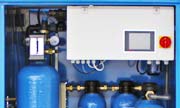
SCM 24
|
|
Cleans 24.000 liters per day
|
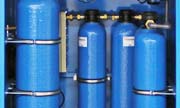
SCM 60
|
|
Cleans 60.000 liters per day
|
Video: How it works
The SCG Advantage
Our market-leading, water cleaning solutions have many advantages. To read more click the items below:
No Chemicals
Our machines and technology does not use any chemicals, at all.
Read more...
No Waste Water
Our machines do not waste any water. Yield = 100%.
Read more...
Low energy use
Uses 50 times less energy than a Reverse Osmosis Machine.
Read more...
Low ownership cost
Lower maintenance and operation costs due to our technology.
Read more...
Easy to install
Simple "plug and play" installation makes for easy deployment.
Read more...
Extremely compact
A compact system, contained in an easy to transport cabinet.
Read more...
Outperforms R.O.
SCG technologies outperform Reverse Osmosis systems.
Read more...
Faster ROI
Get a faster Return on Investment with our systems.
Read more...
Latest News
Latest Blog Posts
| Chemicals in water treatment? |
| Water storage - Whats best for keeping water clean and drinkable? |
| Case: Disaster Management Water Treatment |
Contact SCG
891 Showroom Place
Suite 101
Chula Vista, CA, 91914
Phone: +1 619-878-2730
Contact us by email