







How A Rural Kenyan School Improved Drinking Water Quality
In rural Kenya, a school water supply can be affected by several risks at once. A shallow well may collect bacteria from nearby sanitation systems, while iron and manganese can create unpleasant taste, staining, and visible sediment. During rainy periods, runoff may introduce additional particles and organic matter.
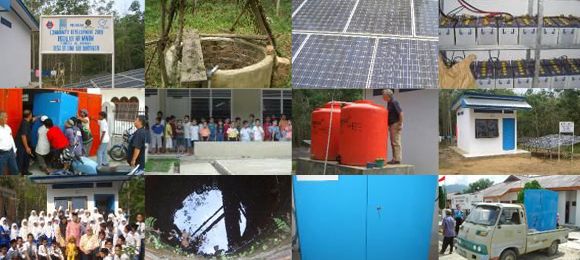
A school in rural Kenya addressed these concerns by combining two low-energy treatment stages: bio-sand filtration and catalytic filtration. The approach was designed for a setting where electricity was unreliable, maintenance resources were limited, and water had to be safe and acceptable for pupils, teachers, cooking, and handwashing.
The project demonstrates how a carefully selected treatment chain can work with local conditions instead of depending on complex infrastructure. It also shows why water testing, correct sizing, and simple operator routines are essential to long-term performance.
The Water Challenge At The School
The school relied on a local groundwater source for daily use. Although the water was available throughout much of the year, it was not automatically suitable for drinking. Microbiological contamination was the primary health concern, especially because the source was vulnerable to poor sanitation, surface infiltration, and damaged collection points.
The water also contained naturally occurring minerals that affected its appearance and taste. Manganese and iron can produce dark or orange staining, discolor sinks and containers, and reduce confidence in the supply. When pupils reject treated water because of its color or flavor, they may return to less protected sources.
A further constraint was the operating environment. The school could not depend on continuous grid power, specialist technicians, or frequent deliveries of treatment chemicals. The selected system therefore needed to operate with low energy demand, minimal consumables, and a maintenance routine that school staff could understand.
Why Bio-Sand Filtration Was Selected
Bio-sand filtration is well suited to decentralized drinking-water projects because it can operate without electricity. Water passes slowly through layers of prepared sand and gravel. Over time, a biologically active layer develops near the upper surface of the filter. This layer, together with physical straining and natural biological processes, helps reduce bacteria, parasites, suspended solids, and some organic impurities.
The filter requires consistent use and periodic cleaning, but it does not need a constant supply of disinfectant. This was valuable for the Kenyan school, where supply interruptions and transport costs could make chemical dosing unreliable. The system also gave the school a visible, understandable first treatment step.
Bio-sand filtration is not a universal solution. Its performance depends on flow rate, filter design, water temperature, source quality, and correct operation. It should be paired with testing and, where necessary, additional disinfection or advanced treatment. For practical guidance on low-power treatment, the discussion of bacteria-free well water provides useful context for similar rural applications.
Adding Catalytic Media For Mineral Reduction
The second stage used catalytic filtration to address dissolved contaminants that a conventional sand bed may not remove effectively. Catalytic media can promote oxidation and capture of substances such as iron and manganese. Depending on the selected medium and water chemistry, it may also be considered as part of a wider treatment strategy for other contaminants.
This stage improved the visual and sensory quality of the school’s water. Cleaner-looking water was easier to store in containers, less likely to stain fixtures, and more acceptable to children. The improvement in appearance also helped reinforce hygiene messages because pupils could see that the treatment process made a practical difference.
The treatment sequence mattered. Bio-sand filtration reduced suspended material and biological loads before the water reached the catalytic stage. Pre-treatment can protect downstream media from premature clogging, while the catalytic filter provides a targeted barrier for mineral-related problems. The result was a compact system using gravity and controlled flow rather than a high-pressure, energy-intensive plant.
| Treatment stage | Main purpose | Operating requirement | Benefit for the school |
|---|---|---|---|
| Source protection | Reduce contamination entering the supply | Secure wellhead and clean surroundings | Lowers the burden on treatment |
| Bio-sand filter | Reduce bacteria, particles, and some parasites | Regular use and surface maintenance | Operates without continuous electricity |
| Catalytic filter | Target iron, manganese, and related mineral issues | Correct media and periodic servicing | Improves taste, color, and fixture protection |
| Safe storage | Prevent recontamination after treatment | Covered tanks and clean outlets | Preserves water quality until use |
| Monitoring | Confirm treatment performance | Routine sampling and observation | Supports safe, accountable operation |
A System Designed For School Conditions
The installation had to match the school’s daily rhythm. Water demand increases before lessons, during meal preparation, and at break times, so storage capacity was important. A tank allowed treatment to take place gradually while providing a reserve for peak consumption.
Gravity-fed operation reduced the dependence on pumps and protected the system from power cuts. The treatment unit could be positioned near the water collection and storage area, reducing unnecessary pipe runs. Clear labels and simple instructions helped staff identify the inlet, outlet, backwashing or cleaning points, and safe storage connection.
The project also treated water management as a hygiene issue rather than an equipment purchase alone. Collection vessels were covered, outlets were protected from hand contact, and staff were expected to keep the treatment area clean. These details reduced the risk that treated water would become contaminated again after filtration.
The equipment selection followed the same principle. A broader range of water cleaning products can be evaluated when source analysis reveals additional concerns such as arsenic, pesticides, uranium, or elevated bacterial loads. Treatment should always follow the test results rather than relying on a standard unit for every location.
Operation, Maintenance, And Verification
The school assigned responsibility for daily checks to trained staff. These checks included observing flow, looking for leaks, confirming that storage tanks were covered, and recording unusual changes in color, smell, or taste. Simple records made it easier to identify gradual performance changes before they became a complete failure.
Maintenance focused on keeping the filter surfaces and pipework in working order. Bio-sand units need correct resting and operating conditions, while catalytic filters may require backwashing, media management, or other servicing based on the selected design. Excessive flow can reduce contact time, and neglected cleaning can cause pressure loss or treatment deterioration.
Laboratory testing remained the most reliable way to verify safety. Samples should be assessed for indicators such as E. coli, turbidity, iron, manganese, and pH, with additional analysis for locally relevant contaminants. Testing at the source, after filtration, and at the point of use can reveal whether recontamination is occurring during storage or collection.
The school’s experience highlights an important distinction: clear water is not automatically safe water. Visual improvement supports acceptance, but microbiological and chemical results must guide decisions about drinking-water use.
What The Project Demonstrates
The Kenyan school case illustrates the value of combining complementary technologies. Bio-sand filtration provided a low-energy biological and physical barrier, while catalytic filtration addressed mineral quality problems. Together, the stages created a practical treatment train for a rural institution with limited infrastructure.
The project also shows that sustainability involves more than avoiding electricity or chemicals. A sustainable system must be maintainable, affordable to operate, understandable to local users, and resilient when supplies or technical support are delayed. Equipment that performs well in a laboratory but cannot be serviced locally will not deliver dependable protection.
For municipalities, farms, clinics, livestock operations, and remote facilities, the same evaluation principles apply. Source testing should come first, followed by a review of daily demand, available power, storage, operator skills, and acceptable maintenance. Swiss Cleanwater Group presents its broader approach to sustainable treatment through water purification solutions, including systems intended for different contaminants and operating environments.
Practical Lessons For Similar Projects
- Test raw water for microbiological, physical, and chemical contaminants before selecting filtration media.
- Combine treatment stages according to the source profile instead of expecting one filter to remove every contaminant.
- Use gravity and storage where possible to reduce dependence on unreliable electricity.
- Train at least two local operators and keep a simple maintenance and sampling log.
- Protect treated water during storage, collection, and distribution to prevent recontamination.
A rural school does not need a large industrial plant to make meaningful improvements in drinking-water quality. It needs a treatment system matched to its source, people, budget, and daily routine. The combination of bio-sand and catalytic filtration offers a strong example of how low-energy technology can support safer water, better acceptance, and more reliable school operations.
Swiss Cleanwater Group can help organizations assess water-quality challenges and identify suitable purification technologies for schools and other remote applications. Review the available treatment options and arrange a project discussion based on the source analysis, required capacity, and local operating conditions.
SCM 24
|
|
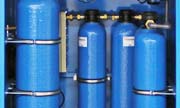
Cleans 24.000 liters per day
|
SCM 60
|
|
Cleans 60.000 liters per day
|
Video: How it works
The SCG Advantage
Our market-leading, water cleaning solutions have many advantages. To read more click the items below:
No Chemicals
Our machines and technology does not use any chemicals, at all.
Read more...
No Waste Water
Our machines do not waste any water. Yield = 100%.
Read more...
Low energy use
Uses 50 times less energy than a Reverse Osmosis Machine.
Read more...
Low ownership cost
Lower maintenance and operation costs due to our technology.
Read more...
Easy to install
Simple "plug and play" installation makes for easy deployment.
Read more...
Extremely compact
A compact system, contained in an easy to transport cabinet.
Read more...
Outperforms R.O.
SCG technologies outperform Reverse Osmosis systems.
Read more...
Faster ROI
Get a faster Return on Investment with our systems.
Read more...
Latest News
Latest Blog Posts
| Chemicals in water treatment? |
| Water storage - Whats best for keeping water clean and drinkable? |
| Case: Disaster Management Water Treatment |
Contact SCG
891 Showroom Place
Suite 101
Chula Vista, CA, 91914
Phone: +1 619-878-2730
Contact us by email