


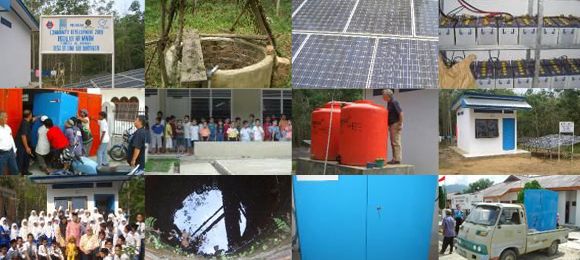







How a Small African Town Removed Arsenic with Local Media
A small town in Africa faced a problem familiar to many groundwater-dependent communities: the water looked clear, tasted acceptable and still contained arsenic at a level unsafe for long-term consumption. The source was a deep bore used by households, a clinic, schools and small businesses. Conventional treatment options were expensive, difficult to supply and dependent on regular chemical deliveries.
The project took a practical route. Engineers tested an iron-rich catalytic filtration medium that could be sourced within the region, adapted the treatment train to the town’s existing pumping system and trained local operators to manage routine backwashing and monitoring. The aim was to produce safe drinking water without complex chemical dosing, high energy demand or a continuous stream of liquid waste.
This experience has relevance far beyond one African community. Australian water authorities, remote settlements, agricultural properties and mining operations also need treatment systems that are robust, serviceable and economical at small scale. The work reflects the approach of Swiss Cleanwater Group, which develops water purification solutions for arsenic, manganese, bacteria, pesticides and other contaminants.
Why arsenic required a different answer
Initial sampling showed that arsenic was the critical contaminant, rather than turbidity or salinity. The concentration varied during the year as pumping levels changed, but remained high enough to require a dedicated treatment barrier. Arsenic is particularly difficult for a small utility because it cannot be removed reliably by basic sediment filters, chlorination or ordinary activated carbon.
The town had limited access to specialist technicians and no dependable supply chain for ferric salts or other coagulants. A system relying on imported chemicals would have exposed the water service to stock-outs, transport delays and rising operating costs. It could also have created a sludge-management burden that the local authority was not equipped to handle.
The design therefore focused on adsorption and catalytic surface reactions. In simple terms, the treatment medium provided iron-rich surfaces that attracted dissolved arsenic and retained it within the filter bed. The water could move through the unit at a controlled rate, while the existing bore pump and storage tank remained part of the overall arrangement.
Site assessment and design
The project began with repeated laboratory analysis rather than a single source-water sample. The team measured arsenic species, pH, alkalinity, iron, manganese, turbidity and competing ions. These details matter because arsenite and arsenate behave differently, and high phosphate or silica can reduce the capacity of some iron-based media.
A pilot column was then operated using the local groundwater. This established the appropriate empty-bed contact time, pressure-drop behaviour and expected media life. Pilot testing also revealed how often the filter needed backwashing and whether the raw water required pre-filtration. That information allowed the final system to be sized around the town’s actual demand instead of a theoretical maximum.
The finished plant used a compact treatment line: raw-water screening, catalytic media filtration, treated-water storage and final disinfection where required by the local drinking-water plan. The media was selected for local availability and could be transported in standard bags rather than specialised containers. This reduced dependence on overseas procurement and simplified future replenishment.
How local catalytic media worked
The selected medium was a granular, iron-rich material prepared and graded within the wider region. Its value came from its active surface, not simply its physical ability to trap suspended solids. Arsenic in the dissolved water attached to the iron oxide sites as the flow passed through the bed.
The filter did not make arsenic disappear. It concentrated the contaminant in the media, which meant the operators still needed a clear management plan for spent material. The project included controlled removal, secure storage and disposal procedures consistent with local requirements. This distinction is essential: a treatment claim is credible only when it accounts for the captured contaminant after the filter reaches capacity.
No continuous coagulant dosing was required, and the pressure-driven system used little electricity beyond the existing bore-pumping cycle. Backwash water was kept to a practical minimum and managed separately from the treated supply. The result was a low-waste process suited to a community where water, power and technical labour were all limited.
Building operation into daily routines
Technology alone would not have solved the town’s problem. Operators received straightforward instructions for checking flow, recording pressure, inspecting valves and taking samples. A colour-coded schedule showed when to backwash, when to inspect the media and when to call for technical support.
Training also covered unusual conditions. If the bore became cloudy after heavy rain, the operator could reduce flow or isolate the unit until the pre-treatment stage was clear. If pressure increased across the filter, the trend could be identified before production stopped. These basic routines helped convert a sophisticated treatment principle into manageable daily work.
This operational focus is important in Australia as well. A rural property outside Toowoomba, a livestock site near Wagga Wagga or a remote community in Western Australia may have reliable pumps but limited access to a water-treatment specialist. Equipment that can be understood and maintained locally is more useful than a technically impressive plant that depends on frequent interstate visits.
Verification from source to tap
Performance verification used samples from the bore, the filter inlet, the filter outlet and the distribution tank. Arsenic results were reviewed alongside flow rate and operating hours, because a filter can perform well in a laboratory and behave differently when overloaded in the field.
After commissioning, the treated water consistently met the project’s target for arsenic reduction during the monitored period. The team also checked that pH remained stable and that the process did not introduce an unacceptable taste, colour or odour. Routine laboratory testing remained part of the safety system; field observations were useful for operations but could not replace analytical confirmation.
Australian buyers will recognise the same principle under the Australian Drinking Water Guidelines. The guidelines provide the national health-based framework, while states, territories and water providers apply their own approval, reporting and operational rules. A system installed in Adelaide, Perth or a regional Queensland town still needs a documented validation pathway, sampling plan and responsible operating authority.
Financial and environmental value
The economic case extended beyond the purchase price. The town avoided recurring chemical deliveries, reduced the number of specialist interventions and used existing pumping infrastructure. Local sourcing also limited freight costs and shortened the lead time for replacement media.
A useful assessment should include capital cost, electricity, labour, laboratory testing, media replacement, waste handling and the financial consequences of an outage. Swiss Cleanwater Group’s return-on-investment guidance reflects this broader view, where the value of treatment includes dependable production and lower exposure to operating risk.
The environmental benefits were equally practical. There was no routine transport of liquid coagulants, no large chemical storage area and less sludge than a conventional coagulation process would have produced. Energy demand remained modest, which matters in locations where electricity is generated by diesel or supplied through an unstable grid.
What Australian water managers can take
The African case does not provide a universal template. Australian groundwater can contain different combinations of arsenic, fluoride, nitrate, salinity, iron and organic matter. A treatment medium that performs well in one bore may need pre-treatment or a different contact time in another. Site-specific testing remains essential.
Local context also shapes the business case. Many Australian households use rainwater tanks, install point-of-use filters or buy bottled water when they distrust a source. In remote areas, councils, mining companies, farms and Indigenous communities may share responsibility for water infrastructure. A small modular plant can be more appropriate than a centralised upgrade when demand is dispersed.
Legislation and procurement requirements must be considered from the beginning, particularly where water is supplied to the public, a food business or a workplace. Buyers can compare this approach with chemical-free plant upgrades while checking certification, media safety, waste arrangements, commissioning evidence and ongoing testing obligations.
The central lesson is straightforward: arsenic treatment does not always require a complex imported process. With careful groundwater analysis, pilot testing and a suitable iron-based catalytic medium, a small community can build a dependable barrier around an existing water source. The strongest design is one that local operators can run, local institutions can afford and regulators can verify.
For municipalities, farms, industrial sites and remote facilities assessing arsenic in groundwater, the next step is a site-specific water analysis and treatment review. Contact Swiss Cleanwater Group to discuss source-water testing, catalytic media selection, pilot validation and a practical path to safe drinking water.
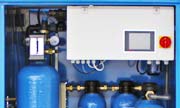
SCM 24
|
|
Cleans 24.000 liters per day
|
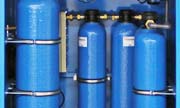
SCM 60
|
|
Cleans 60.000 liters per day
|
Video: How it works
The SCG Advantage
Our market-leading, water cleaning solutions have many advantages. To read more click the items below:
No Chemicals
Our machines and technology does not use any chemicals, at all.
Read more...
No Waste Water
Our machines do not waste any water. Yield = 100%.
Read more...
Low energy use
Uses 50 times less energy than a Reverse Osmosis Machine.
Read more...
Low ownership cost
Lower maintenance and operation costs due to our technology.
Read more...
Easy to install
Simple "plug and play" installation makes for easy deployment.
Read more...
Extremely compact
A compact system, contained in an easy to transport cabinet.
Read more...
Outperforms R.O.
SCG technologies outperform Reverse Osmosis systems.
Read more...
Faster ROI
Get a faster Return on Investment with our systems.
Read more...
Latest News
Latest Blog Posts
| Chemicals in water treatment? |
| Water storage - Whats best for keeping water clean and drinkable? |
| Case: Disaster Management Water Treatment |
Contact SCG
891 Showroom Place
Suite 101
Chula Vista, CA, 91914
Phone: +1 619-878-2730
Contact us by email