








How a soft drink bottler removed chemical additives from process water
A regional soft drink bottler needed dependable process water for syrup preparation, bottle rinsing, equipment protection, and final product consistency. Its source water met basic regulatory requirements, yet seasonal changes brought fluctuations in turbidity, hardness, manganese, and microbiological quality. The plant responded with a conventional treatment train that relied on chemical dosing.
That approach worked, but it created a second set of operating problems. Chemical deliveries had to be scheduled, dosing equipment required calibration, and residual products generated sludge and additional handling procedures. The bottler also wanted to reduce the number of substances entering its production environment without compromising food safety or beverage quality.
The resulting project shows how a chemical-free water purification system can support beverage manufacturing. By combining physical filtration, membrane treatment, and controlled disinfection, the plant produced stable process water while reducing consumables, waste, and maintenance pressure.
The bottler’s water treatment challenge
The facility used municipal and well water sources, depending on availability. Both sources were generally suitable for production after treatment, but their characteristics were not identical. The well supply occasionally carried elevated manganese and suspended particles, while the municipal supply showed changes in hardness and chlorine levels.
These variations affected several stages of production. Mineral deposits appeared on rinsing equipment, fine particles shortened filter life, and inconsistent water chemistry made it harder to maintain the same operating settings throughout the year. The bottler therefore used additives for clarification, oxidation, pH adjustment, and microbial control.
The company was not trying to remove every chemical from its factory. Cleaning-in-place processes and sanitation protocols still required carefully controlled products. The specific objective was narrower and practical: eliminate chemical additives from the water treatment stage that prepared water for beverage processing and packaging.
Moving from dosing to physical separation
The redesigned system began with pretreatment to protect the core purification equipment. Screening and staged filtration removed larger particles, while specialized media targeted dissolved contaminants such as manganese. This reduced the load on downstream membranes and helped maintain consistent flow.
Membrane filtration then provided a physical barrier for fine solids, bacteria, and other unwanted substances. Depending on the production stream, the treatment train could use ultrafiltration or reverse osmosis to achieve the required quality. The selection was based on the source water analysis, the intended use of the water, and the bottler’s required mineral profile.
Disinfection was handled without adding a persistent chemical residual to the treated process water. A controlled ultraviolet stage provided microbial protection at the point of treatment, while hygienic tank design, closed pipework, and routine monitoring prevented recontamination. This combination replaced the need to dose the process stream with conventional oxidants or coagulants.
The same design logic can apply to remote facilities that lack reliable utility infrastructure. Guidance on off-grid water solutions illustrates why low-consumable systems are useful where deliveries, storage, and waste removal are difficult.
How the new system operated
Raw water first passed through a buffer and prefiltration stage. The buffer absorbed short-term changes in demand, which was important because bottling plants often move between quiet periods and rapid production runs. Automatic backwashing kept the filters operational and reduced the need for manual intervention.
The manganese removal stage used an appropriate filtration medium and oxygen exposure rather than relying on a chemical dosing pump. Once oxidized, manganese could be retained by the filter bed. The system was monitored for pressure changes and breakthrough, allowing operators to schedule maintenance before water quality drifted into the production area.
Fine filtration and membrane treatment followed. These stages removed remaining particles and microbiological contaminants while controlling dissolved solids where necessary. A polishing step could be added for water used in syrup production, since flavor, mineral balance, and consistency are especially important in that application.
The finished water was stored in a hygienic tank and distributed through a closed loop. Online instruments tracked conductivity, turbidity, flow, pressure, and selected quality indicators. Operators retained the ability to divert water automatically if readings moved outside the approved range.
| Area | Previous arrangement | Updated arrangement | Operational effect |
|---|---|---|---|
| Particle removal | Chemical clarification and cartridge filters | Staged mechanical filtration | Less sludge and fewer dosing adjustments |
| Manganese control | Oxidizing additive and filtration | Media-based oxidation and filtration | Lower chemical consumption |
| Microbial control | Chemical residual in the process stream | UV disinfection and hygienic distribution | No added disinfectant residual |
| Fine purification | Variable filter loading | Membrane separation with pretreatment | More stable process water |
| Monitoring | Periodic manual checks | Online sensors with automatic alarms | Faster response to changes |
| Waste management | Spent chemicals and treatment sludge | Backwash water and replaceable filter media | Simpler waste planning |
What changed for production and maintenance
The most visible improvement was the removal of routine chemical dosing from process water treatment. Operators no longer had to receive, store, and handle the same volume of additives, and the plant reduced its dependence on delivery schedules. This also simplified the risk assessment around chemical storage and transfer.
Waste volumes changed as well. Chemical clarification had produced sludge that required collection and disposal. The upgraded system still generated backwash water and used filter media, but these waste streams were easier to characterize and manage. In some installations, backwash recovery or controlled discharge can reduce the water footprint further.
Water quality became more predictable across production shifts. Stable conductivity and lower particulate loading helped protect rinsers, pumps, valves, and filling equipment. The bottler also gained better control over the water used to prepare concentrates and syrups, where small changes in source water can influence taste and batch repeatability.
Maintenance work shifted from dosing equipment and chemical pumps toward filter inspection, membrane care, sensor verification, and planned backwashing. This did not eliminate maintenance; it made maintenance more systematic. Operators could use pressure and flow trends to identify fouling before it caused an unplanned interruption.
Measuring the business case
The project was evaluated through more than laboratory water results. The bottler reviewed chemical consumption, waste handling, operator hours, equipment reliability, water losses, and production interruptions. This broader view was important because a treatment system can appear inexpensive at purchase while creating substantial operating costs later.
Energy use was also assessed. Membrane systems require pumping, so the design had to balance purification performance against pressure requirements. Efficient pretreatment, correctly sized pumps, and demand-based operation helped avoid unnecessary energy consumption. The plant did not run every treatment stage at maximum capacity when production demand was low.
Food and beverage manufacturers also need traceability. The upgraded arrangement allowed the bottler to document source water conditions, treatment performance, alarm events, maintenance, and release decisions. That record supported internal quality programs and made it easier to investigate any deviation.
The business case became strongest where several benefits occurred together: fewer consumables, reduced chemical handling, lower sludge production, steadier water quality, and improved protection for production equipment. Removing additives was therefore part of a wider resource-efficiency strategy rather than an isolated purchasing decision.
Conditions that made the transition successful
The bottler began with a detailed analysis of each water source. Testing included turbidity, hardness, conductivity, manganese, iron, microbiological indicators, and other parameters relevant to the beverage recipe and equipment. This prevented the company from choosing a generic filter arrangement that might perform well for one contaminant but poorly for another.
It also separated water uses across the plant. Water for syrup preparation may require a different mineral profile from water used for crate washing, cooling, or general utility work. Treating every stream to the highest specification would increase capital and operating costs, while treating none of them adequately would create quality risks.
Automation was another important factor. Automatic valves, sensor-based alarms, and programmed backwash cycles reduced dependence on constant manual adjustment. The control system could protect production by stopping or diverting water when a quality value moved beyond its permitted range.
Finally, the project included operator training and a maintenance schedule from the beginning. Staff learned how to interpret pressure differentials, conductivity trends, UV intensity, and filter performance. For organizations assessing a similar installation, a direct technical discussion can be arranged through Skype consultations to review source water, capacity, and application requirements.
Practical recommendations for beverage plants
A chemical-free process water project should be planned around the entire operating environment, not just the treatment skid. The following principles helped this bottler achieve a reliable result:
- Test every available source during different seasons before selecting filtration and membrane stages.
- Define separate quality targets for ingredients, rinsing, utilities, and cleaning operations.
- Use pretreatment to protect membranes and reduce pressure, fouling, and replacement costs.
- Install online monitoring for the parameters that can affect product quality or equipment safety.
- Include backwash management, hygienic storage, staff training, and preventive maintenance in the initial design.
For soft drink manufacturers, eliminating chemical additives from process water can deliver benefits beyond a smaller chemical inventory. It can improve consistency, simplify plant logistics, reduce treatment waste, and support a more transparent sustainability program. The right combination of physical filtration, contaminant-specific media, membranes, ultraviolet treatment, and monitoring makes that transition practical.
Swiss Cleanwater Group helps organizations assess water quality and match treatment technology to industrial requirements. Beverage producers can submit their source water information, intended applications, and daily flow needs to develop a treatment concept that protects both product quality and long-term operating efficiency.
SCM 24

|
|
Cleans 24.000 liters per day
|
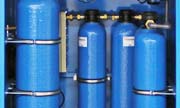
SCM 60
|
|
Cleans 60.000 liters per day
|
Video: How it works
The SCG Advantage
Our market-leading, water cleaning solutions have many advantages. To read more click the items below:
No Chemicals
Our machines and technology does not use any chemicals, at all.
Read more...
No Waste Water
Our machines do not waste any water. Yield = 100%.
Read more...
Low energy use
Uses 50 times less energy than a Reverse Osmosis Machine.
Read more...
Low ownership cost
Lower maintenance and operation costs due to our technology.
Read more...
Easy to install
Simple "plug and play" installation makes for easy deployment.
Read more...
Extremely compact
A compact system, contained in an easy to transport cabinet.
Read more...
Outperforms R.O.
SCG technologies outperform Reverse Osmosis systems.
Read more...
Faster ROI
Get a faster Return on Investment with our systems.
Read more...
Latest News
Latest Blog Posts
| Chemicals in water treatment? |
| Water storage - Whats best for keeping water clean and drinkable? |
| Case: Disaster Management Water Treatment |
Contact SCG
891 Showroom Place
Suite 101
Chula Vista, CA, 91914
Phone: +1 619-878-2730
Contact us by email