







Chemical-Free Boiler Feed Water Treatment for Australian Industry
Reliable steam depends on reliable feed water. When dissolved minerals, iron, manganese, silica, suspended solids or microbiological contaminants enter a boiler, they can contribute to scale, corrosion, foaming and inefficient heat transfer. The effects range from higher fuel consumption to unplanned shutdowns and expensive repairs.
Chemical-free treatment of boiler feed water for industrial facilities offers an alternative to routine chemical conditioning where the incoming water and boiler design allow it. By combining appropriate source-water analysis, physical filtration and carefully controlled operation, Australian sites can reduce contaminant loading without creating additional chemical handling or wastewater-management obligations.
Why feed water quality matters
Boilers concentrate impurities as water is converted into steam. Calcium and magnesium can form hard deposits on heat-transfer surfaces, while silica may create difficult-to-remove scale or carry over with steam. Dissolved oxygen and low-pH water can accelerate corrosion in feed lines, deaerators and boiler components. Iron and manganese may also stain equipment, foul filters and indicate a wider raw-water quality issue.
The challenge varies significantly across Australia. A food-processing plant using town water in Melbourne may face a different mineral profile from a regional Queensland facility drawing from a bore. Mining and agricultural operations in Western Australia may need to manage iron, salinity or seasonal turbidity, while sites around Sydney can experience changing source-water conditions during drought response or infrastructure changes.
A chemical-free approach begins with testing rather than assuming that all water needs the same treatment. Useful information includes conductivity, total dissolved solids, hardness, alkalinity, silica, chloride, sulphate, iron, manganese, turbidity and microbiological indicators. Existing boiler pressure, return-condensate quality, blowdown rate and steam-use requirements are equally important.
Filtration before the boiler
The most efficient treatment train removes contaminants before they reach the boiler. Depending on the source, this can include screening, sediment filtration, catalytic media, activated carbon, ultrafiltration or other membrane technologies. The objective is to match each treatment stage to a specific contaminant instead of applying a broad process that consumes unnecessary energy or generates avoidable concentrate.
Catalytic filtration is particularly useful where groundwater contains iron and manganese. Dissolved iron can influence the performance of filtration media and the oxidation pathway used to capture manganese, so understanding that relationship is essential when selecting and sizing equipment. A detailed explanation of dissolved iron effects can help engineers assess whether pretreatment or media conditioning is needed.
Reverse osmosis may be appropriate when the feed contains high dissolved salts or when very low conductivity is required. It is not automatically the best option for every boiler, however. It can require significant pressure, produce a reject stream and depend on pretreatment to protect membranes. In lower-salinity applications, a targeted filtration system may deliver the required water quality with less energy and less waste. The performance comparison in this treatment approach provides useful context when evaluating alternatives.
Reducing chemical and operational burdens
Traditional boiler-water programmes may use oxygen scavengers, phosphate, alkalinity builders, dispersants and other products. These chemicals can be effective, but they require storage, dosing equipment, staff training, monitoring and safe disposal. They also add substances to blowdown, which can complicate discharge management or water reuse.
Removing contaminants upstream reduces the load placed on the boiler and may allow a facility to reduce its dependence on chemical conditioning. It does not mean that every boiler can operate without any chemical control. Pressure, metallurgy, steam purity, condensate return and the manufacturer’s requirements must be reviewed before changing an established treatment programme. A gradual transition with regular testing is safer than abruptly stopping all dosing.
For Australian operators, the practical benefit can extend beyond the treatment skid. Smaller regional sites may have limited access to specialist water-treatment technicians, while large facilities often need to coordinate environmental reporting, procurement and occupational health procedures. A system that uses fewer consumables can simplify logistics, particularly for remote mines, livestock operations and seasonal manufacturing sites.
Designing for local conditions
A successful installation must account for the water source and the way the facility operates. Municipal water is usually more consistent than untreated bore water, but it can still contain hardness, disinfectant residuals and seasonal variations. Rainwater tanks may contribute low-mineral water but can introduce organic matter, roof debris or microbial contamination. Surface water typically needs more extensive solids and biological control.
A plant in Brisbane, for example, may need to prepare for humid conditions and intermittent high demand, while a facility near Adelaide may focus closely on salinity and water scarcity. In Perth and other locations with groundwater-dependent operations, iron, hardness and dissolved solids can affect the treatment sequence. These conditions make a site survey and representative laboratory testing more valuable than selecting equipment from boiler capacity alone.
Water conservation is also a commercial consideration. Australian businesses are increasingly reviewing blowdown, cooling-tower discharge and opportunities to reuse treated water. A well-designed feed-water system can reduce the volume of contaminants entering the boiler, potentially lowering blowdown requirements. Any reuse plan still needs careful assessment of concentration cycles, microbial risks and discharge limits.
Automation should support, rather than replace, water-quality control. Online conductivity and pH monitoring can indicate changes in feed-water conditions, while pressure gauges across filters show when cleaning or media replacement is required. Operators should have clear alarm limits, sampling points and maintenance records. These controls help identify a failing pretreatment stage before it causes scale or corrosion inside the boiler.
Integrating treatment with the steam system
Feed-water purification works best when it is considered alongside condensate recovery. Clean condensate is valuable because it is already warm and generally has lower mineral content than raw make-up water. Leaking heat exchangers, process contamination or poorly maintained return lines can undermine an otherwise effective treatment system, so condensate should be tested and segregated when necessary.
The boiler house should also be reviewed as a complete system. Storage tanks, pumps, deaeration, pipe materials, filters and blowdown controls all influence results. A treatment unit that produces excellent water may still perform poorly if tanks are open to contamination, pumps introduce air or filters are undersized for peak demand.
Designers should define the required feed-water specification in relation to boiler pressure and steam use. A low-pressure hot-water or process-steam system may need a different treatment level from a high-pressure turbine installation or a facility producing steam for sensitive manufacturing. Food, beverage and pharmaceutical businesses may also require additional hygienic controls and documented validation.
Maintenance planning is just as important as initial equipment selection. Media beds need periodic backwashing or replacement, membranes need appropriate cleaning, and sensors need calibration. Operators in Australian facilities commonly schedule this work during planned shutdowns, often around holiday periods or seasonal production changes. Building these tasks into the maintenance calendar protects availability and avoids emergency intervention.
A practical path to implementation
The first stage is a complete water audit. Measure the raw-water quality, boiler feed, condensate and blowdown over representative operating periods. Review current chemical use, fuel consumption, scaling history, corrosion findings and maintenance costs. This creates a baseline for determining whether filtration, membrane treatment, condensate improvement or a combination will provide the strongest return.
The next stage is process design. Engineers can compare treatment options according to contaminant removal, flow rate, footprint, energy demand, wastewater production and operator requirements. Where iron, manganese or arsenic is present, the system should be designed around verified removal performance rather than generic claims. Pilot testing may be appropriate for difficult groundwater or variable industrial sources.
Implementation can be phased. A facility might begin with sediment and catalytic filtration, introduce improved monitoring, then optimise blowdown and condensate recovery. This approach allows the boiler team to observe changes in conductivity, hardness, corrosion indicators and chemical consumption. It also reduces the operational risk of changing several controls at the same time.
The wider value of clean water extends to other site systems. For example, businesses managing amenity or recreational water can apply the same principle of matching treatment to contaminants and operational goals; the guidance on pool water treatment illustrates how targeted purification supports water quality without relying on a single universal process.
For industrial facilities across Australia, chemical-free feed-water treatment is best viewed as an engineered water-management strategy rather than a simple equipment purchase. With accurate testing, suitable pretreatment and disciplined monitoring, it can reduce mineral loading, chemical dependence, waste and energy use while supporting dependable steam production.
Swiss Cleanwater Group can assess source water, process requirements and treatment objectives for municipal, industrial, agricultural and remote applications. Contact the company to discuss a site-specific feed-water evaluation and identify a practical purification system for your boiler operation.
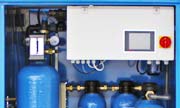
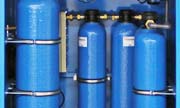
SCM 24
|
|
Cleans 24.000 liters per day
|
SCM 60
|
|
Cleans 60.000 liters per day
|
Video: How it works
The SCG Advantage
Our market-leading, water cleaning solutions have many advantages. To read more click the items below:
No Chemicals
Our machines and technology does not use any chemicals, at all.
Read more...
No Waste Water
Our machines do not waste any water. Yield = 100%.
Read more...
Low energy use
Uses 50 times less energy than a Reverse Osmosis Machine.
Read more...
Low ownership cost
Lower maintenance and operation costs due to our technology.
Read more...
Easy to install
Simple "plug and play" installation makes for easy deployment.
Read more...
Extremely compact
A compact system, contained in an easy to transport cabinet.
Read more...
Outperforms R.O.
SCG technologies outperform Reverse Osmosis systems.
Read more...
Faster ROI
Get a faster Return on Investment with our systems.
Read more...
Latest News
Latest Blog Posts
| Chemicals in water treatment? |
| Water storage - Whats best for keeping water clean and drinkable? |
| Case: Disaster Management Water Treatment |
Contact SCG
891 Showroom Place
Suite 101
Chula Vista, CA, 91914
Phone: +1 619-878-2730
Contact us by email