







Designing A Chemical-Free Filtration System For A Golf Course Irrigation Pond
A golf course irrigation pond is more than a water-storage basin. It is a changing treatment environment that receives runoff, suspended soil, organic matter, fertilizer residues, groundwater minerals, and biological growth. If that water enters pumps and sprinklers without adequate conditioning, it can cause clogged nozzles, stained turf, unpleasant odors, scaling, and premature equipment wear.
A chemical-free filtration system uses physical separation, engineered filter media, aeration, ultraviolet treatment, or a combination of these methods to improve irrigation water without routine chlorine, coagulants, or other dosing chemicals. The correct design depends on pond size, replenishment sources, irrigation demand, contaminant levels, and the quality required at the sprinkler heads.
The most effective approach begins with a site assessment rather than a standard equipment package. Water testing and hydraulic calculations identify which treatment stages are necessary, how often filters will require cleaning, and whether the system should operate continuously or only during irrigation cycles.
Assess The Pond And Irrigation Demand
Begin by mapping the complete water pathway, from inflow to storage pond, pump station, distribution network, and return flow. Record pond volume, average and peak irrigation rates, make-up water sources, seasonal water-level changes, and the distance between the intake and filtration equipment. These details establish the design flow and determine whether a single treatment train or several parallel units are needed.
Water samples should be collected at different times of year when possible. A laboratory analysis can reveal turbidity, total suspended solids, pH, hardness, iron, manganese, arsenic, pesticides, bacteria, algae-related compounds, and electrical conductivity. A single sample may miss problems that appear after heavy rain, fertilizer application, drought, or turnover of bottom sediments.
The system should also account for irrigation scheduling. A golf course may require a high flow for a short overnight window, while a slower treatment rate could be suitable if water is filtered into a clean-water buffer tank throughout the day. This distinction affects capital cost, filter size, pump energy, and the amount of backwash water produced.
Remove Sediment Before Fine Filtration
Pond water normally carries leaves, grass clippings, silt, insects, and fine clay particles. A screened intake with a floating or elevated withdrawal point can prevent the pump from drawing in bottom sludge and floating debris. Intake protection should be accessible for inspection and designed to maintain adequate flow as the screen accumulates material.
A settling zone, coarse strainer, hydrocyclone, or self-cleaning screen can provide an initial barrier. These components protect downstream media beds and reduce the frequency of manual cleaning. Where land is available, a forebay or sedimentation basin can slow incoming runoff before it reaches the main irrigation reservoir.
Fine filtration should follow the solids-removal stage, not replace it. Sand, multimedia, disc, or automatic screen filters can capture smaller particles, but their performance and service life decline rapidly when exposed to heavy organic loading. A differential-pressure gauge across each filter gives operators a practical signal that cleaning or backwashing is required.
Select Media For Dissolved Contaminants
Suspended solids are visible, but dissolved minerals can create equally serious operating problems. Iron and manganese may oxidize after exposure to air, leaving brown or black deposits on turf, concrete, valves, and sprinkler components. In these cases, aeration or oxidation followed by catalytic media can convert dissolved compounds into filterable particles. Guidance on manganese staining control can help clarify how this media fits into a wider treatment train.
Media selection should follow the laboratory results. Manganese-removal media, activated carbon, specialized adsorbents, and ion-exchange materials each address different contaminants and operating conditions. Activated carbon may help reduce certain pesticides or organic compounds, while a manganese-focused medium will not automatically remove every dissolved pollutant.
A chemical-free system still needs controlled operating conditions. Some media require sufficient contact time, a specific pH range, periodic backwashing, or exposure to oxygen. The design should state the expected loading rate, bed depth, pressure loss, cleaning method, and media replacement interval. These specifications are essential for consistent performance during peak irrigation periods.
Match Treatment Stages To Water Quality
A practical treatment sequence may include an intake screen, coarse solids separator, aeration or oxidation stage, multimedia filter, specialized media vessel, and final polishing filter. Ultraviolet disinfection can be added when microbiological control is important, particularly for water used around public facilities or where aerosol exposure from sprinklers is a concern. UV does not remove sediment, dissolved minerals, or chemicals, so water must be sufficiently clear before it reaches the UV chamber.
The following comparison illustrates how common stages contribute to a golf course irrigation application:
| Treatment stage | Main target | Typical function | Design consideration |
|---|---|---|---|
| Intake screen | Leaves, debris, aquatic growth | Protects pumps and pipework | Needs easy access and regular inspection |
| Settling or hydrocyclone unit | Sand and heavy particles | Reduces solids loading | Performance depends on particle size and flow |
| Multimedia filter | Suspended solids and turbidity | Provides broad physical filtration | Requires backwash capacity |
| Catalytic media vessel | Iron and manganese | Converts or captures dissolved metals | Check pH, contact time, and media requirements |
| Activated carbon | Selected organic compounds and odors | Adsorbs certain dissolved contaminants | Must be sized for contaminant load and replacement |
| UV reactor | Bacteria and other microorganisms | Inactivates organisms without chemical residual | Requires low turbidity and reliable lamp maintenance |
This arrangement is not universal. A pond with low turbidity but elevated manganese may need a different configuration from a pond affected by agricultural runoff. A qualified water-treatment provider can use test results and operating goals to determine whether each stage is necessary.
Design For Backwashing And Seasonal Change
Backwashing is central to reliable filtration. Water must flow through a filter bed in reverse at a sufficient rate to expand and clean the media. The design therefore needs a backwash pump, storage volume, valves, controls, and a lawful method for handling the resulting dirty water. Discharging concentrated sediment or treatment residues into a stream, wetland, or drainage channel may create environmental problems.
Automatic controls can initiate cleaning according to pressure differential, elapsed time, treated volume, or a combination of these signals. A manual override remains useful for maintenance and unusual events such as storm runoff. Clear isolation valves and sample points make it easier to identify which stage is causing a pressure increase or water-quality change.
Seasonal conditions deserve specific attention. Warm weather can increase algae and biological growth, while storms can create sudden turbidity spikes. Winterization may be required in freezing climates, and low-water conditions can expose an intake to concentrated sediment. Flexible controls, variable-speed pumping, and bypass arrangements help the system respond without sending untreated water directly to sensitive sprinkler equipment.
Integrate The System With Course Operations
Filtration should be coordinated with the pump station, irrigation controller, and maintenance schedule. Flow meters, pressure sensors, turbidity monitoring, and water-level controls can show whether the system is meeting its design target. Alarm conditions may include high differential pressure, low UV intensity, insufficient flow, empty chemical-free media vessels, or a low pond level.
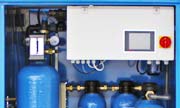
A compact packaged unit may suit a small irrigation zone, pilot installation, or remote application. For example, the Water Cleaning Unit 600 can be evaluated as part of a broader system where its flow capacity and treatment functions align with the project requirements. Larger golf courses may need parallel vessels, multiple pumps, or a dedicated treatment building.
Operators should receive a simple maintenance schedule covering screen cleaning, filter backwashing, media inspection, UV lamp replacement, sensor checks, and laboratory sampling. The system should include bypass protection so that a failed component does not damage pumps or contaminate the irrigation network. However, bypass water should be directed to an approved holding or return location rather than automatically sent to the sprinklers.
Establish A Practical Design Specification
A clear specification prevents undersizing and avoids paying for treatment stages that the pond does not require. It should include the following points:
- Design flow, peak flow, daily operating hours, and expected seasonal variation
- Laboratory results for suspended solids, turbidity, metals, pesticides, bacteria, pH, and hardness
- Required water quality at the pump discharge and sprinkler heads
- Filter type, media depth, loading rate, pressure limits, and backwash procedure
- Instrumentation, alarms, sampling ports, bypass logic, and remote monitoring needs
The project should also define performance targets in operational terms. Examples include a maximum turbidity after filtration, acceptable manganese concentration, minimum UV dose, allowable pressure loss, or a specified reduction in nozzle blockages. Measurable targets make commissioning and future troubleshooting far more effective.
Before construction, review local regulations for pond modification, backwash disposal, groundwater protection, and irrigation reuse. Independent testing after commissioning can verify that the treatment system performs under realistic flow conditions rather than only during a short demonstration.
Turn Water Testing Into A Working System
A well-designed chemical-free filtration installation protects the irrigation network while reducing reliance on consumable chemicals and unnecessary waste. Its success depends on matching each treatment stage to a documented contaminant, providing enough hydraulic capacity, and making cleaning and monitoring straightforward for course staff.
Start with representative water samples, a site survey, and an irrigation demand profile. Then develop a treatment layout that can be tested, maintained, and expanded as course conditions change. For technical background on treatment choices and operating considerations, the company’s water treatment FAQs provide a useful reference before detailed system planning begins. Contact Swiss Cleanwater Group to discuss the pond analysis, filtration objectives, and a site-specific path toward dependable chemical-free irrigation water.
SCM 24
|
|
Cleans 24.000 liters per day
|
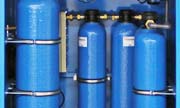
SCM 60
|
|
Cleans 60.000 liters per day
|
Video: How it works

The SCG Advantage
Our market-leading, water cleaning solutions have many advantages. To read more click the items below:
No Chemicals
Our machines and technology does not use any chemicals, at all.
Read more...
No Waste Water
Our machines do not waste any water. Yield = 100%.
Read more...
Low energy use
Uses 50 times less energy than a Reverse Osmosis Machine.
Read more...
Low ownership cost
Lower maintenance and operation costs due to our technology.
Read more...
Easy to install
Simple "plug and play" installation makes for easy deployment.
Read more...
Extremely compact
A compact system, contained in an easy to transport cabinet.
Read more...
Outperforms R.O.
SCG technologies outperform Reverse Osmosis systems.
Read more...
Faster ROI
Get a faster Return on Investment with our systems.
Read more...
Latest News
Latest Blog Posts
| Chemicals in water treatment? |
| Water storage - Whats best for keeping water clean and drinkable? |
| Case: Disaster Management Water Treatment |
Contact SCG
891 Showroom Place
Suite 101
Chula Vista, CA, 91914
Phone: +1 619-878-2730
Contact us by email