


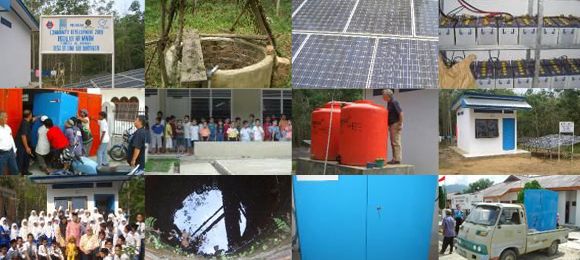







Designing Chemical-Free Drinking Water for a Rural School
A small rural school needs a drinking-water system that is safe, understandable, and dependable throughout the school year. Limited staff, seasonal changes, modest budgets, and distance from specialist contractors all affect the design. A treatment process that works in a laboratory may be unsuitable if it requires frequent chemical deliveries or complex adjustments.
Chemical-free water treatment generally means avoiding routine chemical dosing while using carefully selected physical, biological, or electrochemical processes. The right solution depends on the source water, the contaminants present, the number of pupils and staff, and the site’s electricity and maintenance conditions.
The design should begin with evidence rather than assumptions. A complete water analysis establishes which contaminants must be removed, while daily-use estimates determine the required flow rate, storage volume, and treatment capacity. Safety also requires a plan for monitoring treated water after the system is installed.
Start With The Water Source
A rural school may use a borehole, spring, shallow well, rainwater collection system, or a combination of sources. Each presents different risks. Groundwater can contain arsenic, manganese, iron, uranium, or excessive hardness, while surface water is more likely to carry bacteria, pesticides, sediment, and changing organic loads.
Sampling should cover raw water and, when possible, water at the point of consumption. Testing needs to reflect local geology and agricultural activity, rather than relying on a general package alone. Arsenic and uranium can be invisible and tasteless, while manganese may create staining or an unpleasant appearance before reaching a visibly severe level.
Seasonal samples are valuable for schools that depend on shallow wells or surface sources. Heavy rainfall can increase turbidity and bacterial contamination, while drought can concentrate dissolved minerals. A treatment design based on one sample may fail when the school’s water chemistry changes during the year. A rural arsenic case study shows why source-specific assessment is essential when selecting a chemical-free removal process. Read the rural arsenic case study for an example of this type of challenge.
Build A Treatment Train
A reliable system usually combines several stages, with each stage assigned a clear task. A coarse screen or prefilter can protect pumps and downstream equipment from sand, leaves, and larger particles. Depending on the analysis, the next stage may address turbidity, iron, manganese, arsenic, uranium, pesticides, or microorganisms.
The sequence matters. Removing suspended solids before a finer purification step can reduce clogging and maintain performance. If bacteria are the main concern, a validated disinfection stage may be required after filtration. Ultraviolet treatment can provide chemical-free microbial control when water has sufficiently low turbidity and the lamp is monitored correctly. It does not remove dissolved metals or pesticides, so it should not be presented as a complete treatment process.
A school system should also include protected storage and a controlled distribution line. Tanks need covers, inspection access, overflow protection, and cleaning procedures. Pipework should avoid dead legs where water can stagnate. Taps used for drinking should be easy to clean and positioned where pupils can access them without contaminating outlets.
Match Technology To Daily Demand
Sizing must account for normal consumption and short periods of intense use. Children may use drinking fountains heavily during breaks, while kitchens, sanitation facilities, and cleaning activities create additional demand. A system that is sized only for the average hourly flow may struggle during morning arrival or lunchtime.
The design team should calculate daily volume, peak flow, source recovery, and storage requirements. A small buffer tank can allow the treatment unit to operate steadily while meeting temporary demand. However, excessive storage can increase stagnation time, so the tank should be large enough for resilience without becoming an uncontrolled reservoir.
| Design factor | Why it matters | Practical design response |
|---|---|---|
| Raw-water quality | Determines which contaminants require treatment | Use laboratory testing for metals, bacteria, turbidity, and locally relevant pollutants |
| Peak demand | School breaks can create short, high-flow events | Combine suitable treatment flow with hygienic buffer storage |
| Electricity supply | Rural sites may experience outages or voltage changes | Protect equipment, define backup needs, and assess solar or generator compatibility |
| Maintenance capacity | Staff may have limited technical training | Choose accessible components, clear indicators, and simple service routines |
| Seasonal variation | Rainfall and drought can alter source conditions | Test at different times and allow for changing operating conditions |
| Waste management | Some treatment methods create reject water or spent media | Prefer low-waste processes and define handling requirements before installation |
| Microbial safety | Bacteria can enter through the source or distribution network | Use validated barriers, hygienic storage, and routine verification sampling |
Energy consumption is another important consideration. Pumps, ultraviolet lamps, controls, and pressure systems all affect operating costs. A low-energy system may be preferable, but lower power use must not compromise contact time, flow control, or treatment reliability. For off-grid schools, the treatment process should be evaluated alongside solar generation, battery storage, and backup power.
Make Operation Simple And Visible
A school should not depend on a specialist being present every day to know whether its water system is working. Pressure gauges, flow indicators, lamp-status displays, alarms, and sampling points can make performance easier to check. Labels should explain what each component does and identify isolation valves clearly.
Chemical-free does not mean maintenance-free. Filters may need cleaning or replacement, ultraviolet lamps have service intervals, sensors require verification, and treatment media may need inspection. A maintenance schedule should state who performs each task, how often it occurs, what result is expected, and what action is required if the result is outside limits.
The system should include a bypass or shutdown procedure for failures. If a sensor detects inadequate treatment, the school needs a safe response that prevents untreated water from reaching drinking taps. This may involve isolating the system, using an approved temporary water supply, and contacting a trained service provider.
Control Costs Across The System Life
The purchase price is only one part of a school water project. Pumps, replacement filters, electricity, laboratory testing, transport, servicing, and downtime can have a greater effect over several years. A modestly priced unit may become expensive if it uses proprietary consumables or requires frequent visits from distant technicians.
A life-cycle review should compare capital cost, energy demand, expected service intervals, replacement parts, and waste handling. It should also account for the value of a stable local water supply, reduced bottled-water purchases, and fewer interruptions to lessons or meal preparation. This broader assessment helps decision-makers avoid selecting equipment solely on its initial quotation.
Schools and municipalities can use low ownership costs as a central evaluation criterion when comparing treatment options. A system designed for accessible maintenance and efficient operation can be more practical than a technically impressive installation that staff cannot support over time.
Procurement documents should request evidence of contaminant removal under conditions similar to the school’s raw water. They should specify flow rates, treated-water targets, power requirements, warranty terms, training, and availability of spare parts. Vendors should also explain what happens when raw-water quality exceeds the design range.
Protect Pupils Through Routine Checks
Water safety belongs to the school’s daily safeguarding culture. Staff need a short, written operating procedure covering startup, shutdown, alarms, cleaning, sample collection, and emergency supply arrangements. The procedure should be available to the headteacher, facilities staff, and any person responsible for kitchen or health matters.
A practical school monitoring program can include:
- Check pressure, flow, alarms, and visible leaks at the start of each school day.
- Keep treatment records with dates, readings, maintenance actions, and unusual observations.
- Test treated water at intervals defined by local regulations and the original risk assessment.
- Inspect tanks, taps, filters, and ultraviolet equipment according to the manufacturer’s schedule.
- Train at least two staff members so essential knowledge is not lost during absence or staff turnover.
Results should be reviewed against clear limits, with escalation steps written in advance. If a sample fails, the school should stop drinking-water use until the cause is identified and corrective testing confirms safety. Communication should be calm and factual, with temporary drinking water provided where necessary.
Turn The Design Into A Safe Water Supply
The best small-school water system is the one that matches the source, the users, and the people who will operate it. Begin with a complete water analysis, define treatment objectives, calculate demand, and choose a process that removes the confirmed contaminants without creating an unreasonable maintenance burden.
A site assessment can then translate those findings into equipment, storage, monitoring, training, and a long-term service plan. Contact Swiss Cleanwater Group to discuss a chemical-free drinking-water solution suited to the school’s source, capacity, and operating environment, and move from test results to a dependable supply for pupils and staff.
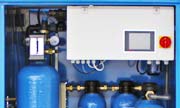
SCM 24
|
|
Cleans 24.000 liters per day
|
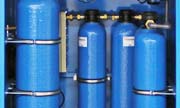
SCM 60
|
|
Cleans 60.000 liters per day
|
Video: How it works
The SCG Advantage
Our market-leading, water cleaning solutions have many advantages. To read more click the items below:
No Chemicals
Our machines and technology does not use any chemicals, at all.
Read more...
No Waste Water
Our machines do not waste any water. Yield = 100%.
Read more...
Low energy use
Uses 50 times less energy than a Reverse Osmosis Machine.
Read more...
Low ownership cost
Lower maintenance and operation costs due to our technology.
Read more...
Easy to install
Simple "plug and play" installation makes for easy deployment.
Read more...
Extremely compact
A compact system, contained in an easy to transport cabinet.
Read more...
Outperforms R.O.
SCG technologies outperform Reverse Osmosis systems.
Read more...
Faster ROI
Get a faster Return on Investment with our systems.
Read more...
Latest News
Latest Blog Posts
| Chemicals in water treatment? |
| Water storage - Whats best for keeping water clean and drinkable? |
| Case: Disaster Management Water Treatment |
Contact SCG
891 Showroom Place
Suite 101
Chula Vista, CA, 91914
Phone: +1 619-878-2730
Contact us by email