









Designing Closed-Loop Water Reuse Systems for Car Washes
A modern car wash can reuse most of its process water instead of sending every litre to the sewer. A well-designed closed-loop water reuse system captures wash water, removes solids and pollutants, treats the stream through several stages, and returns suitable water to vehicle-washing operations. Fresh mains water is then reserved for final rinses, staff facilities, and the volume lost through evaporation, carry-off and sludge removal.
For Australian operators, the business case is becoming stronger. Water restrictions, rising trade waste charges and pressure to demonstrate responsible resource use affect independent wash bays, fleet depots and large franchise sites alike. The right system must suit local water quality, council conditions, site space, vehicle volumes and the finish expected by customers.
Map Water Use Before Selecting Equipment
The first step is a water balance based on real operating data. Measure water used per vehicle, daily throughput, peak washing periods, final-rinse demand, filter backwash and losses from wet vehicles leaving the bay. A small suburban wash facility may have a very different profile from a high-volume operation near a transport depot or a mining town.
Separate the water streams wherever practical. Initial wheel and underbody cleaning can produce heavy sediment, grit, oils and road grime. Foam application and brush stages contain detergents, suspended solids and organic material. The final rinse has a much lower contaminant load and may require finer treatment to prevent spotting. Combining every stream in one tank makes treatment harder and increases energy consumption.
Allow for Australian conditions when calculating storage. Summer heat in Western Australia, Queensland and inland New South Wales can increase evaporation and biological activity in tanks. A site in Melbourne may need capacity for intense rainfall entering outdoor wash areas, while a Perth facility may need to manage naturally hard or saline source water. Accurate sizing prevents shortfalls during busy periods and avoids oversized equipment that sits idle.
Build Capture And Pre-Treatment Around The Site
A closed-loop arrangement starts with physical capture. Sloped wash bays, grated drains and collection pits should direct wastewater away from stormwater systems and into a contained treatment train. Drainage should be designed so that rainwater, clean roof runoff and process water do not mix unnecessarily. This reduces tank volume and protects treatment performance.
Screens, settlement pits and hydrocarbon separation remove the coarse material first. Hair, leaves, stones, sand and plastic should be stopped before pumps and fine filters. Grit chambers or lamella settlers can reduce the load on later stages, while an oil-water separator helps manage hydrocarbons from engines, tyres and road surfaces. Sludge must be removed on a defined schedule and disposed of through an approved pathway.
Equalisation is particularly useful where demand changes sharply throughout the day. A balance tank smooths flow, protects downstream membranes from sudden contaminant spikes and allows the system to operate at a steady rate. Tank design should include mixing or controlled circulation where needed, level sensors, overflow protection and safe access for inspection.
Australian councils and water authorities generally expect a wash-down facility to prevent polluted discharge to stormwater. Trade waste approval may be required before wastewater enters the sewer, and conditions can cover pH, oils, detergents, suspended solids and sampling. Engage the relevant council and water utility early rather than treating approvals as a final paperwork exercise.
Choose Treatment For Reuse Quality
After pre-treatment, dissolved and fine contaminants require a combination of processes. Multimedia filtration can reduce remaining suspended solids, while activated carbon helps adsorb organic compounds, detergent residues and odours. Ultrafiltration is useful when the target is low-turbidity process water with strong removal of bacteria and fine particles; this ultrafiltration guidance explains the wider role of membrane separation.
Disinfection provides an additional barrier against microbial growth. Ultraviolet treatment can disinfect a clear, filtered stream without adding a residual chemical, but UV performance depends on low turbidity and adequate lamp intensity. Ozone or carefully controlled dosing may suit some systems, although chemical storage, worker safety and residual management then become part of the design. The best choice depends on the water’s organic load, storage time and intended use.
Reverse osmosis is not automatically required. It can be valuable where dissolved salts, hardness or specific contaminants cause spotting or damage equipment, but it produces a concentrate stream and uses more pressure energy than simpler filtration. For many wash stages, sediment removal, carbon treatment, membrane filtration and disinfection provide an effective balance between water quality and operating cost.
Reuse water should be matched to the task. Treated process water may be appropriate for pre-soak, wheel cleaning, underbody washing and brush stages. A polished stream, potentially treated with finer membranes or reverse osmosis, may be needed for a spot-free final rinse. Keeping the highest-quality water for the final stage reduces both treatment demand and freshwater consumption.
Control Salts, Sludge And Concentration
A closed loop never means that every litre remains in circulation. Dirt, detergents, oils, dissolved minerals and biological material accumulate as water is reused. If the system has no controlled bleed, total dissolved solids and conductivity can rise until vehicles show spots, equipment scales up or the water becomes difficult to treat.
Use conductivity, turbidity, pH, oxidation-reduction potential and tank-level readings to determine when a partial purge is needed. Automated controls can divert a small volume for approved disposal and replace it with treated mains or rainwater, keeping the loop stable. This measured bleed is generally far more efficient than continuously using fresh water for every wash cycle.
Membrane systems also require cleaning and backwashing. Cleaning frequency depends on feed quality, flux, temperature and operating hours. A poorly protected ultrafiltration unit can foul quickly when exposed to grit, oil or detergent shock loads. Pre-treatment, low-shear pumping and correctly selected backwash cycles extend membrane life and reduce downtime.
Plan waste handling as carefully as water recovery. Settled sludge, separator residues, used carbon and membrane cleaning solutions may require different disposal arrangements. Records should show volumes removed, maintenance dates, test results and any discharge events. This documentation supports compliance and gives an operator evidence of actual water savings.
Make The System Practical To Run
The equipment should be easy for staff to understand during a busy shift. Use clear alarms for low tank levels, high turbidity, pump faults, UV failure and abnormal conductivity. Provide bypass protection so untreated water cannot accidentally enter the reuse tank, and include isolation valves that allow filters, pumps and membranes to be serviced without shutting down the entire wash.
Hygienic tank design matters. Dead legs, stagnant sections and warm, poorly ventilated tanks can encourage biofilm formation and odour. Smooth internal surfaces, suitable circulation, secure covers and scheduled cleaning help maintain water quality. Recycled water lines should be clearly identified and protected from cross-connection with potable plumbing. Any potable top-up arrangement should include approved backflow prevention.
Energy use should be assessed alongside water savings. Efficient pumps, gravity-assisted flows, variable-speed drives and pressure control can lower operating costs. Locating tanks close to collection points reduces pumping distances, while modular treatment equipment allows capacity to expand as vehicle numbers grow. For remote Australian sites, choose components with local technical support and keep critical spares on hand.
A staged design often delivers the best commercial result. Start with capture, solids separation and reuse for high-load wash stages, then add advanced filtration for final-rinse quality if testing shows it is needed. The Swiss Cleanwater Group provides water-treatment technologies and application information that can help operators compare treatment options for municipal, commercial and industrial settings.
Measure performance after commissioning rather than relying on projected figures. Track litres of mains water per vehicle, percentage of water reused, wastewater discharged, energy per kilolitre and maintenance cost. A wash business in Sydney, Brisbane or Adelaide can then compare actual results against its trade waste obligations and operating targets, while a regional site can identify whether tank capacity and service intervals suit local demand.
Begin with a site assessment, water balance and wastewater test before ordering equipment. Involve the local council, trade waste authority, plumbing professionals and an experienced treatment supplier so the system is compliant, serviceable and sized for the wash bay’s real workload. A properly engineered closed loop can reduce freshwater consumption, control discharge costs and give Australian car wash operators a dependable reuse strategy. Contact a qualified water-treatment provider to scope the process, test the source and recovery streams, and develop a practical installation pathway.
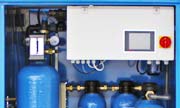
SCM 24
|
|
Cleans 24.000 liters per day
|
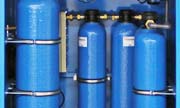
SCM 60
|
|
Cleans 60.000 liters per day
|
Video: How it works
The SCG Advantage
Our market-leading, water cleaning solutions have many advantages. To read more click the items below:
No Chemicals
Our machines and technology does not use any chemicals, at all.
Read more...
No Waste Water
Our machines do not waste any water. Yield = 100%.
Read more...
Low energy use
Uses 50 times less energy than a Reverse Osmosis Machine.
Read more...
Low ownership cost
Lower maintenance and operation costs due to our technology.
Read more...
Easy to install
Simple "plug and play" installation makes for easy deployment.
Read more...
Extremely compact
A compact system, contained in an easy to transport cabinet.
Read more...
Outperforms R.O.
SCG technologies outperform Reverse Osmosis systems.
Read more...
Faster ROI
Get a faster Return on Investment with our systems.
Read more...
Latest News
Latest Blog Posts
| Chemicals in water treatment? |
| Water storage - Whats best for keeping water clean and drinkable? |
| Case: Disaster Management Water Treatment |
Contact SCG
891 Showroom Place
Suite 101
Chula Vista, CA, 91914
Phone: +1 619-878-2730
Contact us by email