


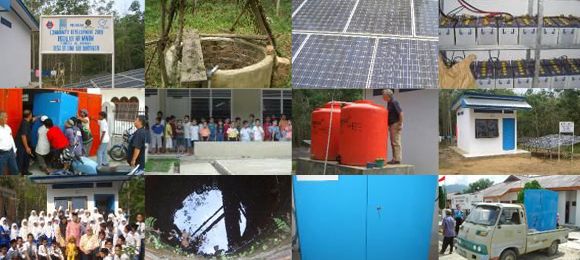







Designing a Mobile Water Treatment Unit for Disaster Response
When floods, bushfires, cyclones or infrastructure failures disrupt normal supplies, safe water becomes an immediate operational priority. A mobile water treatment unit must arrive quickly, work with uncertain source water and produce a dependable supply for drinking, hygiene, medical care, livestock and emergency accommodation.
The best design is more than a compact filtration skid. It combines source assessment, pre-filtration, contaminant removal, disinfection, pumping, power generation, storage, monitoring and operator training in one transportable system. Every component must remain accessible when the unit is operating from a muddy field or temporary recovery centre.
Australian conditions make this task especially demanding. A unit deployed by a council or State Emergency Service team may face silty floodwater near Brisbane, brackish coastal supplies after a cyclone, or remote bore water in the Northern Territory. The design therefore needs flexibility without becoming too complex for emergency crews.
A practical system also has to fit local procurement and transport expectations. Compatibility with 240-volt, 50-hertz power, Australian Drinking Water Guidelines, standard freight dimensions and local maintenance support can be as important as the treatment technology itself.
| Design priority | Suitable approach | Main benefit |
|---|---|---|
| Variable source quality | Modular treatment stages | Adaptable operation |
| High turbidity | Coarse screening and pre-filtration | Protects fine membranes and media |
| Microbiological risk | UV or validated disinfection | Safer treated water |
| Remote deployment | Generator, batteries or hybrid power | Independent operation |
| Fast relocation | Skid, trailer or container format | Efficient transport |
| Limited staff | Automated controls and clear alarms | Lower training burden |
Define The Mission And Source Water
The first design decision is the intended output, not the equipment list. A unit supplying bottled-water replacement for a small evacuation centre has different requirements from one filling tankers for a regional town. Establish the daily volume, peak flow, operating hours, treated-water quality, storage capacity and number of people or animals served.
Source water can change within hours. Floodwater may contain clay, organic matter, sewage, fuel residues, agricultural chemicals and pathogens. A bore may look clear while carrying manganese, arsenic, uranium or excessive salinity. Testing should cover turbidity, pH, conductivity, iron, manganese, microbial indicators and locally relevant chemicals before the treatment train is finalised.
A modular approach allows the same platform to work with surface water, bores, rainwater tanks or damaged municipal supplies. Quick-connect pipework and bypass arrangements can let operators isolate a stage when the source changes, provided the controls prevent untreated water from reaching the clean-water outlet.
Build A Protective Treatment Train
Pre-treatment is often the difference between a reliable emergency plant and repeated shutdowns. Screens remove leaves and larger debris, while settling, hydrocyclones or coarse filters reduce sand and suspended solids. Fine pre-filtration then protects membranes, adsorption media and disinfection equipment from rapid fouling.
The importance of this stage increases in flood response. Detailed pre-filtration guidance explains why high-turbidity water requires careful protection before advanced treatment. The right arrangement depends on particle loading, flow rate and the target contaminants, so the system should include pressure gauges and sampling points across each filter.
After clarification, treatment can combine oxidation and filtration for iron or manganese, adsorption for selected pesticides or organic compounds, and specialised media for arsenic or uranium. Reverse osmosis may be appropriate for dissolved salts and broad contaminant reduction, although it creates a concentrate stream that must be managed responsibly.
Engineer For Australian Conditions
A disaster unit must tolerate heat, dust, heavy rain and uneven ground. Enclosures should protect electrical controls and sensitive instruments while allowing ventilation and safe access. Stainless steel, suitable coatings and corrosion-resistant fittings are valuable in coastal Queensland, northern Australia and locations where salt spray or humid air accelerates deterioration.
Transport planning also matters. A trailer-mounted system may suit regional councils and rapid relocation, while a containerised plant can provide stronger protection and more internal workspace. Forklift pockets, lifting points, tie-down locations and clearly marked centre-of-gravity information simplify movement between a depot, staging area and field site.
Remote Australian deployments may involve long distances between service providers. Keeping pumps, filter elements, lamps, sensors, seals and common connectors in a local spare-parts kit reduces downtime. Designs should also account for unsealed access roads, limited crane availability and the need to unload equipment safely with ordinary fleet vehicles.
Select Power And Mobility Systems
Power demand should be calculated from the entire operating sequence, including raw-water pumps, high-pressure pumps, ultraviolet units, controls, lighting and communications. A diesel generator can provide dependable output, while battery storage may reduce fuel use during low-demand periods. Solar input can support monitoring and auxiliary loads in remote areas, but it should not be treated as the sole source unless the duty cycle has been verified.
The selected power system should match Australian electrical practice and field safety requirements. Residual-current protection, weatherproof distribution boards, earthing and cable management are essential around wet equipment. Automatic shutdowns for low tank levels, excessive pressure and loss of disinfection performance help protect both the plant and its operators.
Mobility is a treatment issue as well as a transport issue. Flexible hoses, camlock fittings and adjustable legs make connection easier on uneven ground. Clean-water and wastewater hoses should be physically distinguishable, with separate fittings where possible to prevent cross-connection during rushed deployment.
Make Operation Safe And Simple
Emergency teams may include council workers, contractors, military personnel or volunteers who have limited experience with water treatment. A clear start-up sequence, colour-coded pipework, large status indicators and plain-language alarms reduce mistakes. The system should guide operators through flushing, filter checks, sampling, cleaning and shutdown rather than relying on memory.
Automation is useful when it supports, rather than hides, the treatment process. A programmable controller can record flow, pressure, conductivity, turbidity and ultraviolet intensity. Remote telemetry may help a coordinating office track production and alarms, though local manual controls are still needed when mobile coverage fails.
Operators need training in more than normal running. They should know how to isolate contaminated water, respond to a failed sensor, handle filter waste, protect sampling bottles and report an out-of-specification result. Written procedures should include a clear hold-and-release rule so questionable water is not distributed while testing is underway.
Validate Performance And Compliance
Commissioning should use representative source water or a controlled test plan. Each treatment stage needs a defined purpose and acceptance limit, while the finished water should be tested for the contaminants relevant to the deployment. Validation should demonstrate that flow changes, filter loading and temperature do not reduce treatment performance below the required level.
The Australian Drinking Water Guidelines provide an important reference for health-based targets, monitoring and risk management. Emergency authorities may apply specific arrangements during a crisis, but the unit should still be designed around defensible water-quality controls. Independent laboratory testing is especially important where arsenic, uranium, pesticides or microbial contamination is suspected.
A treatment claim should be linked to a measured operating condition. For example, a membrane may achieve a stated reduction only within a specific pressure, recovery, temperature and feed-water range. Recording these limits in the operating manual helps procurement teams compare suppliers and helps field crews recognise when the plant is outside its validated envelope.
Plan Deployment And Lifecycle
A complete mobile package includes the treatment frame, raw-water intake, clean-water tank, waste handling, power supply, hoses, test instruments, spare parts, personal protective equipment and documentation. Omitting these supporting items can leave an otherwise capable plant unable to operate when it reaches an evacuation centre.
Storage and logistics should be planned before an emergency occurs. Filters and membranes need suitable shelf conditions, batteries require inspection, generators need servicing, and calibration equipment must remain within date. A scheduled exercise with a local council, water utility or SES team can expose connection, transport and staffing problems before a real disaster.
The unit should also be designed for changing missions. A municipal buyer may initially require flood response but later use the equipment for remote communities, agricultural operations, livestock watering or temporary construction camps. Modular media vessels and replaceable process sections extend the useful life of the investment while keeping future upgrades practical.
For organisations reviewing suppliers, Swiss Cleanwater Group provides treatment technologies and project support for applications ranging from municipalities and government programmes to mobile, industrial and livestock operations. Teams managing communications can also update their contact choices through the company’s email preferences page.
A well-designed mobile plant turns uncertain raw water into a controlled emergency resource. Define the mission, test likely sources, protect advanced treatment with proper pre-filtration, validate every performance claim and equip the crew for real field conditions. Contact Swiss Cleanwater Group to discuss a modular water treatment system matched to Australian disaster response requirements, transport limits and water-quality objectives.
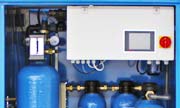
SCM 24
|
|
Cleans 24.000 liters per day
|
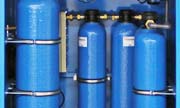
SCM 60
|
|
Cleans 60.000 liters per day
|
Video: How it works
The SCG Advantage
Our market-leading, water cleaning solutions have many advantages. To read more click the items below:
No Chemicals
Our machines and technology does not use any chemicals, at all.
Read more...
No Waste Water
Our machines do not waste any water. Yield = 100%.
Read more...
Low energy use
Uses 50 times less energy than a Reverse Osmosis Machine.
Read more...
Low ownership cost
Lower maintenance and operation costs due to our technology.
Read more...
Easy to install
Simple "plug and play" installation makes for easy deployment.
Read more...
Extremely compact
A compact system, contained in an easy to transport cabinet.
Read more...
Outperforms R.O.
SCG technologies outperform Reverse Osmosis systems.
Read more...
Faster ROI
Get a faster Return on Investment with our systems.
Read more...
Latest News
Latest Blog Posts
| Chemicals in water treatment? |
| Water storage - Whats best for keeping water clean and drinkable? |
| Case: Disaster Management Water Treatment |
Contact SCG
891 Showroom Place
Suite 101
Chula Vista, CA, 91914
Phone: +1 619-878-2730
Contact us by email