


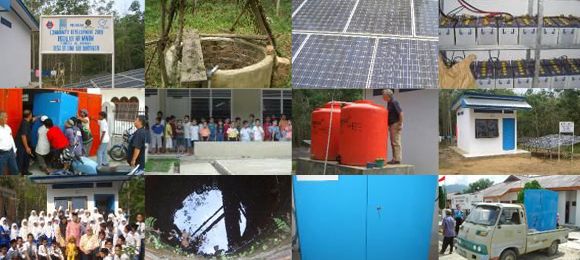







The importance of pre-filtration for chemical-free systems in high-turbidity water
High-turbidity water contains suspended particles that make purification more difficult before dissolved contaminants are even considered. Clay, silt, organic matter, algae, rust, and fine debris can enter a treatment plant through surface water, wells influenced by flooding, agricultural drainage, or aging distribution infrastructure. When these solids are not controlled early, they place avoidable stress on every stage that follows.
Pre-filtration provides the physical barrier between raw water and sensitive purification technologies. In a chemical-free treatment train, this first step becomes especially important because the system cannot rely on coagulants or flocculants to make particles settle more easily. Instead, filtration must be carefully selected, sized, and operated to manage the changing solids load.
For municipalities, farms, industrial facilities, livestock operations, and mobile water units, effective pre-treatment can improve reliability while reducing cleaning, maintenance, and waste. It also supports the broader objective of producing safe water with limited chemical consumption and reasonable energy use.
Why turbidity changes treatment performance
Turbidity is a measurement of how much suspended material is present in water. It does not identify every contaminant, but it signals that particles may interfere with disinfection, adsorption, membranes, ultraviolet treatment, and other purification stages. A water source can appear moderately clear during normal conditions and become heavily loaded with sediment after rainfall, snowmelt, construction activity, or changes in pumping.
Particles create several operational problems. They can block narrow passages, cover filter media, reduce membrane flux, and shield microorganisms from ultraviolet light. Organic solids may also consume treatment capacity or provide surfaces where bacteria attach and multiply. If manganese, arsenic, uranium, pesticides, or other dissolved substances must be removed downstream, suspended matter can make that process less stable and more expensive.
This is why turbidity should be assessed across seasons rather than through a single sample. Peak conditions often determine the required pre-filtration capacity. A system designed around average water quality may perform well for weeks and then experience rapid pressure loss when the source becomes muddy.
Swiss Cleanwater Group develops water treatment systems for varied applications, including municipal, agricultural, industrial, building, and mobile installations. The correct pre-filtration arrangement depends on the source, flow rate, target water quality, and purification technologies used after it.
What pre-filtration removes
Pre-filtration is designed primarily to reduce suspended solids before water reaches finer or more specialized treatment stages. Depending on the equipment, it may capture coarse debris, sand, silt, clay particles, organic fragments, and precipitated metals. Some systems use screens or strainers for larger material, while others use multimedia, cartridge, disc, bag, or self-cleaning filtration for finer particles.
The desired result is not necessarily the removal of every contaminant at the first stage. Instead, pre-filtration creates a more manageable feed stream for the processes responsible for dissolved pollutants and microbiological safety. This separation of duties helps each component operate within its intended range.
Particle size distribution matters as much as turbidity concentration. A water source containing mostly large sand grains behaves differently from one dominated by very fine clay. The first may require robust screening and sediment filtration, while the second may need deeper media filtration, staged barriers, or a design that allows frequent backwashing without excessive water loss.
Flow conditions also influence performance. A filter that works at a moderate flow may allow particles through when overloaded, or it may develop excessive pressure loss when the flow is forced through too quickly. Engineering should therefore consider peak demand, available backwash water, filter loading, and the consequences of temporary high-turbidity events.
How it protects chemical-free purification
Chemical-free treatment depends on physical separation, oxidation, biological processes, adsorption, membranes, ultraviolet light, or combinations of these methods. Each technology has a specific tolerance for suspended solids. Pre-filtration helps maintain that tolerance by reducing the contaminant burden before water enters the sensitive stages.
Ultraviolet disinfection illustrates the relationship clearly. UV light must pass through the water to inactivate microorganisms. Cloudy water reduces light transmission, while particles can protect bacteria in their shadows. A well-designed sediment barrier improves UV effectiveness by producing clearer water with fewer suspended surfaces.
Membranes benefit from pre-filtration because fouling can reduce output and increase the pressure required to maintain flow. Frequent chemical cleaning may then be needed, which conflicts with the aim of a low-chemical or chemical-free process. Protecting the membrane from abrasive particles and organic deposits can extend operating periods between cleaning events.
Pre-filtration can also improve the consistency of media filters and adsorbents used for dissolved pollutants. If the feed contains a high solids load, available treatment capacity may be consumed by deposits rather than by the contaminants the system was selected to remove. Stable upstream filtration helps preserve performance for targets such as arsenic, manganese, pesticides, and uranium.
Matching the barrier to the raw water
There is no universal pre-filter for every high-turbidity source. A suitable design begins with water analysis, including turbidity ranges, suspended solids, particle size, iron and manganese levels, organic content, microbiological indicators, temperature, and seasonal changes. Flow requirements and the acceptable frequency of maintenance are equally important.
A multi-stage arrangement is often more resilient than a single fine filter. Coarse screening can protect pumps and valves, followed by a sediment barrier that removes smaller particles. Where turbidity changes quickly, automatic backwashing or self-cleaning equipment may reduce manual intervention and maintain a stable pressure profile.
| Raw-water condition | Suitable pre-filtration focus | Main protection provided |
|---|---|---|
| Leaves, gravel, and large debris | Intake screen or coarse strainer | Protects pumps and valves |
| Sand and visible sediment | Hydrocyclone or sediment filter | Reduces abrasive solids |
| Fine silt and clay | Multimedia, disc, or depth filtration | Lowers turbidity before polishing |
| Algae and organic particles | Coarse-to-fine staged filtration | Reduces fouling and biological load |
| Sudden storm-related spikes | High-capacity, backwashable equipment | Maintains flow during peak events |
| Iron or manganese precipitates | Dedicated media or pre-separation stage | Protects downstream purification |
Hydraulic design is just as important as filter selection. A filter housing that is too small may create excessive pressure loss and require constant servicing. An oversized unit can increase capital cost without delivering meaningful benefits. Correct sizing should account for peak flow, loading rate, filter area, backwash cycles, and the required outlet turbidity.
Instrumentation supports timely decisions. Pressure gauges before and after the filter show when solids have accumulated, while turbidity monitoring verifies whether the barrier is achieving its purpose. Automated valves can initiate backwashing or divert water during abnormal conditions, reducing the risk that a heavily loaded filter will send particles into downstream equipment.
Reducing maintenance and operating costs
An effective pre-filtration stage can lower the total cost of water treatment by protecting expensive components. Fewer fouling events may mean less downtime, fewer replacement parts, and longer service intervals for membranes, UV lamps, pumps, and final filters. It can also reduce the amount of water rejected during cleaning or regeneration.
Chemical-free operation does not mean maintenance-free operation. Filters still require inspection, backwashing, media replacement, or periodic cleaning. The advantage is that maintenance can be focused on predictable physical processes rather than on managing chemical storage, dosing equipment, corrosion risks, and residual chemical waste.
The financial case should include the full operating picture rather than the purchase price alone. Energy demand, water used for backwashing, labor, spare parts, disposal, and production interruptions all influence lifecycle cost. The discussion of chemical-free treatment economics shows why treatment decisions for industrial water should account for long-term operating conditions.
For remote sites and mobile applications, this analysis is especially important. A system that needs frequent specialist attention may be unsuitable even if it performs well in a laboratory. Accessible filter components, clear pressure indicators, automated cleaning, and simple operating procedures can make a major difference where technical support is limited.
Building a reliable pre-filtration strategy
A strong design begins by identifying the role of every stage. The intake barrier should stop damaging debris, the sediment stage should manage suspended solids, and the downstream purification process should address dissolved contaminants or pathogens. Clear responsibilities prevent a fine final filter from being used as a substitute for inadequate upstream protection.
Operators should establish response limits before commissioning. These may include maximum differential pressure, outlet turbidity, minimum flow, and acceptable backwash frequency. Recorded data helps reveal whether the source is becoming more variable and whether the equipment is correctly sized for actual conditions.
Practical recommendations include:
- Test raw water during dry weather, normal operation, and high-turbidity events where possible.
- Use staged filtration when particle sizes and solids concentrations vary significantly.
- Install pressure and turbidity monitoring at meaningful points in the treatment train.
- Provide safe access for inspection, backwashing, media replacement, and cleaning.
- Size equipment for peak flow and realistic solids loading rather than average conditions.
The final configuration should also reflect the intended use of the treated water. Drinking-water production may require tighter monitoring and validation than process water, irrigation, livestock supply, or swimming-pool applications. A modular approach can allow capacity to expand as demand or source conditions change.
Pre-filtration is therefore a foundation for dependable chemical-free water treatment in high-turbidity environments. By controlling suspended solids before they reach sensitive purification stages, it supports clearer water, steadier operation, lower fouling risk, and more predictable maintenance. The result is a treatment system that uses each technology where it is most effective.
For site-specific guidance on raw-water challenges, equipment selection, and implementation, contact Swiss Cleanwater Group to discuss a treatment approach suited to your flow requirements and water quality objectives.
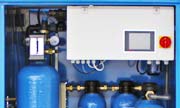
SCM 24
|
|
Cleans 24.000 liters per day
|
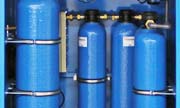
SCM 60
|
|
Cleans 60.000 liters per day
|
Video: How it works
The SCG Advantage
Our market-leading, water cleaning solutions have many advantages. To read more click the items below:
No Chemicals
Our machines and technology does not use any chemicals, at all.
Read more...
No Waste Water
Our machines do not waste any water. Yield = 100%.
Read more...
Low energy use
Uses 50 times less energy than a Reverse Osmosis Machine.
Read more...
Low ownership cost
Lower maintenance and operation costs due to our technology.
Read more...
Easy to install
Simple "plug and play" installation makes for easy deployment.
Read more...
Extremely compact
A compact system, contained in an easy to transport cabinet.
Read more...
Outperforms R.O.
SCG technologies outperform Reverse Osmosis systems.
Read more...
Faster ROI
Get a faster Return on Investment with our systems.
Read more...
Latest News
Latest Blog Posts
| Chemicals in water treatment? |
| Water storage - Whats best for keeping water clean and drinkable? |
| Case: Disaster Management Water Treatment |
Contact SCG
891 Showroom Place
Suite 101
Chula Vista, CA, 91914
Phone: +1 619-878-2730
Contact us by email