








Designing Chemical-Free Water Treatment for Apartments
A point-of-entry water treatment system serves a building from one controlled location, usually where mains water, rainwater, or another source enters the property. For a multi-family building, this approach can provide consistent treatment to every apartment, shared bathroom, laundry, kitchen, and common facility without installing separate devices under each sink.
The design must account for more than contaminant removal. Pipe size, peak demand, storage, pressure, maintenance access, backflow protection, drinking-water regulations, and the building’s existing plumbing all influence the final configuration. A system that works well for a detached home may be unsuitable for a 100-unit apartment block.
Chemical-free treatment generally means reducing or removing contaminants without continuous chemical dosing. Depending on the source water and test results, the treatment train may include physical filtration, catalytic media, membrane separation, ultraviolet treatment, or another low-waste technology. The correct combination should be selected from verified water data rather than from a standard product package.
Australian conditions make site assessment especially important. A high-rise in Sydney may receive reliable mains water but have long internal pipe runs and irregular morning demand. A complex in regional Queensland may depend on a bore or rainwater tanks, while an apartment development in Melbourne may need to manage hard-water deposits, ageing plumbing, or seasonal changes in source quality.
Start With The Building’s Water Profile
The first step is a complete water-quality and demand assessment. Samples should be taken from the incoming supply and, where relevant, from storage tanks and representative internal outlets. Testing may cover bacteria, turbidity, colour, pH, hardness, iron, manganese, arsenic, uranium, pesticides, salinity, and other contaminants identified by the local catchment or source.
A mains supply does not automatically remove the need for testing. Water quality can change between the utility connection and the point of use because of building plumbing, stagnant sections, rooftop tanks, corrosion, or cross-connections. Bore water and harvested rainwater require a different assessment again. The broader issue of contamination pathways is explained in Swiss Cleanwater Group’s water pollution guide, which can help building owners frame the initial investigation.
Demand calculations should include the number of dwellings, occupancy, bathrooms, kitchens, laundries, commercial tenancies, irrigation connections, and shared amenities. Designers normally consider both average daily consumption and the short periods when many residents shower, prepare breakfast, or use washing machines. In an Australian apartment block, a hot afternoon can also create a sharp increase in outdoor taps and cooling-related water use.
Build The Treatment Train Around Risk
A chemical-free system should be designed as a sequence of functions rather than a single appliance. A pre-filter may protect downstream equipment from sediment, while a dedicated process targets dissolved metals or other contaminants. Ultraviolet treatment can address microorganisms in suitable water, although it requires clear water, stable flow, and regular lamp maintenance. Where the source presents multiple risks, separate treatment stages may be necessary.
The treatment train should preserve acceptable pressure and avoid creating excessive wastewater. Systems that discharge a concentrated reject stream may be inappropriate where water restrictions, sewer capacity, or sustainability targets are important. This is relevant in drought-affected areas such as parts of New South Wales and South Australia, where building operators increasingly examine water efficiency as closely as purification performance.
Chemical-free does not mean maintenance-free. Filters, lamps, valves, sensors, and treatment media have service intervals. If an ultraviolet stage is used, it does not leave a disinfectant residual in the pipework, so the building must be designed and operated to reduce stagnation and microbial regrowth. Storage tanks should be covered, accessible for inspection, and managed according to the quality of the incoming source.
A useful reference point is the Maldives hotel case study, which demonstrates how an accommodation property can treat its own water without relying on conventional chemical dosing. A multi-family building will have different hydraulics and regulations, but the example illustrates the value of matching treatment technology to a site’s actual water supply and operating conditions.
Size For Peak Flow And Future Occupancy
The equipment should be sized using the building’s probable peak flow, not simply the sum of apartment averages. Diversity factors can prevent unnecessary oversizing, but the calculation must include simultaneous showers, toilets, kitchen use, laundry, fire-service interfaces where applicable, and any ground-floor retail or hospitality space. Oversizing may increase capital cost and reduce treatment effectiveness if water moves too slowly through the system.
The plant room should include isolation valves, bypass arrangements, sample points before and after treatment, pressure gauges, drain points, and enough clearance to replace cartridges or service vessels. It should be protected from flooding, excessive heat, freezing conditions, and accidental impact. In a basement plant room, drainage and sump capacity deserve particular attention because filter changes and faults can release significant volumes of water.
For apartment developments, the preferred location is often near the main water entry before the distribution network branches. However, the final position may be constrained by fire services, gas infrastructure, electrical switchboards, parking layouts, or strata access. A hydraulic engineer should coordinate the installation with the building’s pipework and confirm that treated water cannot flow backwards into untreated lines.
Protect Residents And Meet Australian Requirements
Water that enters a residential building must remain suitable for drinking at every occupied outlet. The design team should verify relevant Australian requirements, local authority expectations, plumbing rules, and product certification before procurement. WaterMark certification may apply to plumbing products and components, while the overall treatment design may require separate engineering, commissioning, and operational documentation.
Backflow prevention is essential where treated potable lines connect near irrigation, cooling systems, fire services, recycled water, or chemical storage. The arrangement should also include alarms for loss of power, low flow, excessive pressure, treatment failure, or a bypass left open. Clear labelling helps facility staff and contractors understand which valves control untreated and treated water.
Building managers need a practical water safety plan. It should record test results, service dates, alarm responses, replacement parts, cleaning procedures, and escalation contacts. Routine sampling should be based on the source risk and system design, with extra checks after extended vacancy, plumbing work, flooding, or a change in water source. This is particularly relevant to Australian buildings that experience holiday shutdowns or low occupancy during summer periods.
Residents also need clear communication. Strata committees and owners corporations should understand why the system was installed, what it treats, and how maintenance is funded. A short notice explaining that the plant is chemical-free but still requires inspection can prevent misunderstandings and discourage unauthorised bypassing or modifications.
Compare Performance, Cost, And Serviceability
Procurement should evaluate the full life cycle rather than comparing equipment prices alone. Important factors include water recovery, electrical demand, consumable replacement, automation, noise, spare-parts availability, warranty terms, response times, and the supplier’s experience with multi-residential installations. A low-cost unit can become expensive if it needs frequent cartridges, creates large wastewater volumes, or cannot be serviced locally.
The specification should require commissioning records and measurable acceptance criteria. These may include treated-water quality, minimum and maximum flow, pressure at critical outlets, alarm operation, bypass isolation, and the absence of untreated-water cross-connections. The building owner should receive as-built drawings, operating instructions, maintenance schedules, and a clear list of responsibilities between the installer, facility manager, and water-treatment provider.
| Design consideration | Why it matters in a multi-family building | Evidence to request |
|---|---|---|
| Source-water quality | Determines the treatment stages and replacement intervals | Recent laboratory analysis |
| Peak flow | Prevents pressure loss during busy periods | Hydraulic calculation |
| Contaminant targets | Defines whether filtration, UV, membranes, or combined processes are needed | Performance data for the selected system |
| Water recovery | Limits wastewater and supports Australian water-efficiency goals | Recovery or discharge figures |
| Plumbing protection | Reduces cross-connection and backflow risks | Hydraulic drawings and certification |
| Service access | Keeps treatment available throughout the system’s life | Plant-room layout and maintenance plan |
| Monitoring | Identifies failures before residents are affected | Alarm schedule and sampling programme |
A chemical-free point-of-entry installation is most successful when it is treated as building infrastructure rather than a stand-alone filter. For a new development, the plant room, pipework, drainage, electrical supply, and monitoring can be coordinated before construction. For an existing property, staged upgrades may be needed to correct tank hygiene, dead legs, pressure problems, or outdated plumbing first.
Swiss Cleanwater Group can help assess the source water, identify suitable treatment stages, and develop a system for residential, commercial, or other demanding applications. Contact the company with the building location, number of dwellings, water source, available test results, and estimated peak demand to begin a site-specific design.
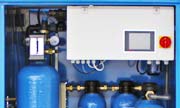
SCM 24
|
|
Cleans 24.000 liters per day
|
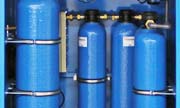
SCM 60
|
|
Cleans 60.000 liters per day
|
Video: How it works
The SCG Advantage
Our market-leading, water cleaning solutions have many advantages. To read more click the items below:
No Chemicals
Our machines and technology does not use any chemicals, at all.
Read more...
No Waste Water
Our machines do not waste any water. Yield = 100%.
Read more...
Low energy use
Uses 50 times less energy than a Reverse Osmosis Machine.
Read more...
Low ownership cost
Lower maintenance and operation costs due to our technology.
Read more...
Easy to install
Simple "plug and play" installation makes for easy deployment.
Read more...
Extremely compact
A compact system, contained in an easy to transport cabinet.
Read more...
Outperforms R.O.
SCG technologies outperform Reverse Osmosis systems.
Read more...
Faster ROI
Get a faster Return on Investment with our systems.
Read more...
Latest News
Latest Blog Posts
| Chemicals in water treatment? |
| Water storage - Whats best for keeping water clean and drinkable? |
| Case: Disaster Management Water Treatment |
Contact SCG
891 Showroom Place
Suite 101
Chula Vista, CA, 91914
Phone: +1 619-878-2730
Contact us by email