









Designing a chemical-free point-of-use water filter for one home
A point-of-use water treatment system purifies water at the location where it is consumed, usually beneath the kitchen sink or beside a drinking-water tap. This approach can be more practical than treating every litre entering a house, especially when the main concern is drinking and cooking water rather than showers, toilets, or laundry.
A chemical-free design does not mean a system operates without any treatment media, electricity, or maintenance. It means the process avoids routine dosing with chlorine, coagulants, acids, or other reagents. Depending on the source-water profile, treatment may combine sediment filtration, catalytic media, adsorption, membrane separation, and ultraviolet disinfection.
The correct design begins with laboratory testing rather than a preferred product. Groundwater, rainwater, and municipal supplies can contain very different contaminants, and a filter that performs well for bacteria may have little effect on dissolved arsenic or uranium. A well-designed household unit targets measured risks while limiting water waste and unnecessary energy use.
Start with a complete water analysis
A laboratory report should cover physical, chemical, and microbiological indicators. Basic testing often includes turbidity, pH, hardness, conductivity, alkalinity, nitrate, iron, manganese, arsenic, uranium, chloride, sulfate, and total coliforms. Pesticides, volatile compounds, or other substances may need separate tests based on nearby agriculture, industrial activity, old plumbing, or the type of water source.
The result should distinguish between dissolved contaminants and particles. Sediment, rust, and suspended matter are comparatively easy to capture with a prefilter. Dissolved metals and salts require a different process, while bacteria and viruses require disinfection or a validated barrier with suitable pore size.
Testing should be repeated when source conditions change. A private well may vary after heavy rainfall, drought, flooding, or nearby construction. Municipal water can also change after pipe repairs or seasonal treatment adjustments. A single sample is useful for initial design, but periodic verification confirms that the system continues to protect the household.
Match each contaminant to a treatment barrier
No single cartridge is a universal purifier. A sediment filter protects downstream components by removing sand, silt, and pipe debris. Activated carbon can reduce chlorine, many organic compounds, pesticides, and unpleasant tastes, although its performance depends on the carbon type, contact time, flow rate, and contaminant concentration.
Catalytic media are useful when a contaminant must be transformed before it is retained. Certain media can oxidize and capture iron or manganese without continuous chemical dosing. Arsenic and uranium require carefully selected adsorption or ion-exchange media, and their capacity must be verified for the local pH and competing minerals. Media replacement should be based on treated volume, laboratory data, or a validated service interval rather than appearance alone.
Reverse osmosis can reduce a broad range of dissolved substances, including salts and some metals, but it normally produces a concentrate stream and uses more pressure energy than ordinary filtration. A low-waste membrane may be appropriate when the analysis shows a need for broad dissolved-solids removal. If only one or two contaminants are present, a targeted media filter may be simpler and more sustainable.
Build the treatment train in the right order
A practical under-sink arrangement usually begins with a shutoff valve, pressure gauge, and coarse sediment stage. A finer prefilter can follow when the source contains small particles. Protecting the main treatment medium from fouling helps preserve capacity and keeps flow resistance manageable.
The contaminant-specific stage comes next. This may be catalytic media for manganese, an arsenic adsorber, an uranium-selective cartridge, activated carbon, or a membrane. If several contaminants are present, the order matters. For example, sediment and iron removal may be needed before an adsorption cartridge so that its active surface does not become blocked prematurely.
Disinfection belongs near the final outlet. Ultraviolet treatment can inactivate microorganisms without adding chemicals, but it does not remove sediment, metals, pesticides, or dissolved salts. UV performance depends on clear water, sufficient lamp intensity, and a flow rate within the equipment specification. A final polishing filter may improve taste, while a hygienic faucet and protected storage vessel reduce the chance of recontamination.
Choose between pressure, flow, and water efficiency
The system must deliver enough treated water during real household use. A drinking tap may require only a few litres per minute, but a slow cartridge can become frustrating when filling a cooking pot or bottle. Calculate peak demand, available inlet pressure, and the pressure loss across each stage before selecting housings and media volumes.
Point-of-use treatment is generally efficient because it avoids treating water used for flushing toilets or washing floors. Still, reverse osmosis systems can discharge reject water, and backwashing media filters may require a drain connection. Chemical-free does not automatically mean zero waste. Compare the treated-water ratio, regeneration requirements, backwash frequency, and replacement-material footprint.
Electricity needs should also be considered. UV lamps, pumps, sensors, and control valves may improve reliability but add energy use and failure points. A gravity-fed or pressure-driven system can be suitable where the source is already clean microbiologically and the main challenge is dissolved contamination. Where biological safety is uncertain, a monitored UV stage or another validated disinfection barrier may justify the additional power.
| Water concern | Suitable treatment approach | Important design check |
|---|---|---|
| Sand, silt, and rust particles | Sediment cartridge or washable prefilter | Micron rating, flow loss, and cleaning interval |
| Chlorine, taste, and some pesticides | Activated carbon | Contact time, carbon capacity, and replacement date |
| Iron and manganese | Catalytic oxidation and media filtration | pH, oxidation conditions, media loading, and backwash needs |
| Arsenic | Arsenic-selective adsorption media | Arsenic species, pH, competing ions, and laboratory verification |
| Uranium | Uranium-selective ion exchange or adsorption | Water chemistry, capacity, and spent-media disposal |
| Bacteria and viruses | UV or validated microbiological barrier | Turbidity, dose, lamp monitoring, and electrical reliability |
| High dissolved salts | Reverse osmosis or another membrane process | Recovery rate, reject-water handling, pressure, and remineralization |
Make operation and maintenance part of the design
A household filtration unit should be easy to inspect without dismantling the entire installation. Transparent sediment housings can show loading, while pressure gauges before and after a filter reveal rising resistance. A sudden pressure drop may indicate clogging; a sudden increase in flow through a damaged stage may indicate bypass or a ruptured cartridge.
Every component needs a service rule. Sediment cartridges require replacement or washing, carbon media lose adsorption capacity, catalytic beds may need backwashing, and UV lamps gradually lose output even when they still appear illuminated. If the system includes a membrane, it also needs periodic flushing, performance checks, and attention to scaling.
For a clear explanation of a chemical-free treatment philosophy and its wider applications, review the company’s sustainable water mission. The same principle applies at household scale: select a process that removes the identified contaminant while avoiding needless chemical consumption, excessive reject water, and oversized equipment.
A maintenance log should record installation dates, cartridge changes, measured flow, pressure, and test results. Keep replacement media sealed and labelled. If the property is vacant for an extended period, follow the manufacturer’s procedure for draining, sanitizing, or replacing components before drinking the water again.
Protect the treated water after filtration
The clean side of a system can become contaminated if it is connected to an unhygienic faucet, an open reservoir, or poorly maintained tubing. Use food-grade materials, short tubing runs, secure fittings, and a dedicated drinking-water tap. Prevent backflow from appliances or untreated branches with suitable check valves and plumbing protection.
Storage deserves special attention. A tank may be useful when a membrane produces water slowly, but stagnant water can support microbial growth if the vessel is not designed and cleaned correctly. A direct-flow system reduces storage risk, while a sealed and regularly disinfected tank can provide a practical buffer during peak demand or power interruptions.
Water quality should be verified at the tap, not only at the inlet. Sampling after installation confirms that the complete treatment train works under household conditions. Further tests should be scheduled according to the contaminant risk, local regulations, and the expected capacity of the media.
Refine the design for the household
A compact system is often preferable when it treats only drinking and cooking water. It reduces installation space, replacement-material use, and the cost of treating nonessential flows. However, a whole-house system may be justified when contaminated water can be inhaled during showers, damage plumbing, stain fixtures, or affect sensitive appliances.
Avoid choosing technology because it has the longest list of claimed removals. A technically appropriate system may contain fewer stages, operate at lower pressure, and produce less wastewater than a complex unit. The specification should state tested contaminant reduction, maximum flow, operating pressure, media life, and conditions under which performance was measured.
Ozone is sometimes discussed alongside chemical-free water treatment, particularly for recreational water. Its role differs from a drinking-water point-of-use filter, and it should not be substituted casually for a validated barrier against household contaminants. A useful comparison of ozone and catalytic media illustrates why treatment selection must follow the water chemistry and the intended application.
Design priorities for a reliable home system
- Test the source water and identify contaminants before selecting equipment.
- Use sediment protection and contaminant-specific media in a logical sequence.
- Include a validated microbiological barrier when bacteria or viruses are a concern.
- Calculate peak flow, pressure loss, water recovery, and electricity requirements.
- Create a written maintenance and laboratory-testing schedule before commissioning.
A point-of-use purifier should be treated as a small engineered water system, not simply a collection of replacement cartridges. The best design is measurable, serviceable, and matched to the household’s actual water chemistry. Begin with a current laboratory report, define the required treated flow, and ask a qualified water-treatment provider to verify the media, disinfection stage, installation, and monitoring plan before the first glass is drawn.
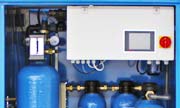
SCM 24
|
|
Cleans 24.000 liters per day
|
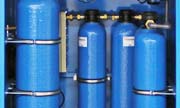
SCM 60
|
|
Cleans 60.000 liters per day
|
Video: How it works
The SCG Advantage
Our market-leading, water cleaning solutions have many advantages. To read more click the items below:
No Chemicals
Our machines and technology does not use any chemicals, at all.
Read more...
No Waste Water
Our machines do not waste any water. Yield = 100%.
Read more...
Low energy use
Uses 50 times less energy than a Reverse Osmosis Machine.
Read more...
Low ownership cost
Lower maintenance and operation costs due to our technology.
Read more...
Easy to install
Simple "plug and play" installation makes for easy deployment.
Read more...
Extremely compact
A compact system, contained in an easy to transport cabinet.
Read more...
Outperforms R.O.
SCG technologies outperform Reverse Osmosis systems.
Read more...
Faster ROI
Get a faster Return on Investment with our systems.
Read more...
Latest News
Latest Blog Posts
| Chemicals in water treatment? |
| Water storage - Whats best for keeping water clean and drinkable? |
| Case: Disaster Management Water Treatment |
Contact SCG
891 Showroom Place
Suite 101
Chula Vista, CA, 91914
Phone: +1 619-878-2730
Contact us by email