


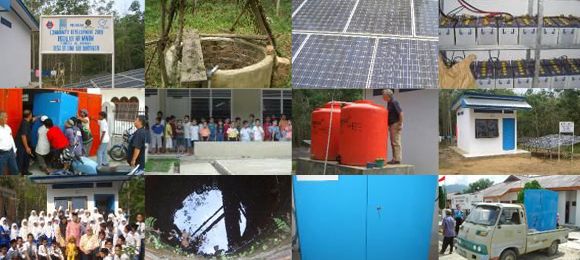







How to design a chemical-free system for high-flow municipal applications
Designing a chemical-free system for high-flow municipal applications begins with a clear definition of the raw water, the required output, and the operating conditions. A plant treating a stable groundwater source has different needs from one handling river water after storms, seasonal agricultural runoff, or a well affected by uranium and manganese.
The term “chemical-free” should describe the treatment objective precisely. It generally means avoiding routine chemical dosing for oxidation, coagulation, disinfection, or pH correction, while still achieving reliable pathogen control and contaminant reduction. The selected process must be validated against local regulations, source-water variability, and the municipality’s public health responsibilities.
A successful design balances treatment performance with hydraulic capacity, maintenance access, energy demand, residual management, and future expansion. The most efficient plant is rarely the one with the most treatment stages. It is the system that matches each stage to a measured water-quality risk and can maintain performance during peak demand.
Establish the design basis
The first step is a comprehensive source-water survey. Samples should represent normal conditions, seasonal changes, heavy rainfall, drought, and any known pollution events. Laboratory testing may include turbidity, color, pH, conductivity, hardness, alkalinity, dissolved organic carbon, iron, manganese, arsenic, uranium, pesticides, bacteria, and other site-specific contaminants.
Flow data is equally important. Designers need average daily demand, maximum day flow, peak hourly flow, minimum nighttime flow, fire-flow requirements, and the expected production schedule. A plant sized only for average demand may perform well during routine operation but become a bottleneck during tourism peaks, irrigation periods, or emergency supply conditions.
The design basis should also state the target water quality at the plant outlet and within the distribution network. This includes microbiological limits, aesthetic parameters, contaminant thresholds, pressure requirements, and acceptable downtime. Defining these values early prevents the process from becoming an expensive collection of disconnected technologies.
Match treatment stages to contaminants
A chemical-free treatment train usually combines physical separation, adsorption, biological activity, membrane processes, ultraviolet treatment, or other oxidation-free technologies. The correct sequence depends on the contaminants and on how each stage affects the next one. For example, turbidity removal may be necessary before ultraviolet disinfection, while manganese control may require contact time and an appropriate filtration medium.
The water treatment products available for a project should be assessed against actual water analysis rather than selected from a generic catalog. Pilot trials can reveal fouling behavior, breakthrough rates, backwash requirements, and the effect of temperature or flow changes. This is particularly valuable for arsenic, uranium, pesticides, and dissolved organic compounds, where media performance varies significantly between sources.
For microbial safety, ultraviolet systems can provide chemical-free disinfection when the water has sufficiently low turbidity and good UV transmittance. Redundancy, validated dose delivery, lamp monitoring, and automatic shutdown logic are essential. Where residual protection is required in a long distribution network, the municipality may need an additional strategy, such as maintaining network hygiene and using storage and pressure controls to limit contamination risks.
Size hydraulics for real operating conditions
High-flow municipal treatment is a hydraulic design problem as much as a purification problem. Every vessel, pipe, valve, pump, and filter must handle normal production and short-term peaks without excessive pressure loss. Parallel treatment lines are often preferable to one oversized line because they allow maintenance on a train while the remaining units continue operating.
Designers should calculate empty bed contact time, filtration velocity, membrane flux, UV dose, backwash flow, and headloss at different stages of the operating cycle. The system should also account for gradual fouling, lower temperatures, rising turbidity, and reduced media capacity. Pumps should be selected near efficient operating ranges, with variable-speed control where demand changes throughout the day.
| Design element | Key question | Practical response |
|---|---|---|
| Peak flow | What is the highest short-term demand? | Size duty and standby capacity for the approved peak profile |
| Treatment trains | Can one line be isolated? | Use parallel modules with independent valves and instrumentation |
| Contact time | Is contaminant reduction stable at maximum flow? | Confirm vessel volume and residence time through pilot testing |
| Filtration | How will solids loading change? | Provide automatic backwash and sufficient wash-water capacity |
| Disinfection | Is the delivered dose verified? | Install calibrated sensors, alarms, and validated control logic |
| Expansion | Will demand increase? | Reserve space, pipe connections, and electrical capacity |
Hydraulic modeling can identify bottlenecks before construction. It should include raw-water intake conditions, elevation changes, storage tanks, emergency bypasses, and the pressure needed at the distribution interface. A bypass should never compromise drinking-water safety; it must be physically controlled and integrated into the risk-management plan.
Build monitoring into the process
Chemical-free operation depends on precise observation. Online instruments may track turbidity, flow, pressure, conductivity, pH, oxidation-reduction conditions, UV intensity, UV transmittance, and selected contaminant indicators. Continuous measurement helps operators identify a blocked filter, exhausted adsorption medium, lamp failure, or an unusual source-water event before treated water quality declines.
Instrumentation should be selected for the environment in which it will operate. Sensors need suitable ranges, automatic cleaning where appropriate, calibration access, and clear alarm thresholds. Critical measurements should have redundancy or a safe fallback mode. A control system that records trends is more useful than one that only displays current values, because gradual changes often reveal fouling or breakthrough before a limit is exceeded.
Remote supervision can reduce response times for municipal operators, especially where the treatment site is distant from the main office. However, automation should support trained staff rather than replace operating procedures. Every alarm needs a defined response, and operators should know when to reduce flow, isolate a module, collect a confirmation sample, or place the plant in a safe standby state.
Plan residuals and resource use
Removing contaminants does not make them disappear. Backwash water, spent adsorption media, membrane concentrate, and settled solids must be characterized and managed. A design that avoids treatment chemicals can still create a waste stream requiring storage, transport, discharge authorization, or further processing.
The residuals plan should be developed alongside the process design. Backwash frequency and volume influence tank sizing, pumping energy, and discharge infrastructure. If the source contains arsenic, uranium, pesticides, or concentrated metals, the waste may require specialized handling. Where water recovery is a priority, the feasibility of zero-liquid discharge should be evaluated carefully rather than assumed. Technical complexity, concentrate composition, energy consumption, and final solids disposal all affect the result.
Energy efficiency comes from reducing unnecessary pressure loss, selecting high-efficiency pumps, recovering energy where practical, and using treatment intensity that reflects actual demand. A modular system can operate fewer trains during low-consumption periods while retaining reserve capacity for peak conditions. This approach also reduces wear and can simplify maintenance scheduling.
Protect lifecycle value
Capital cost is only one part of municipal procurement. The long-term cost includes electricity, replacement media, lamps, membranes, sensors, laboratory testing, operator training, spare parts, residual handling, and planned downtime. A system with a low purchase price may become expensive if it requires frequent specialist service or has difficult-to-source components.
A lifecycle comparison should use the same water-quality targets and flow assumptions for every option. It should include a realistic operating horizon, inflation assumptions, expected component life, and the cost of lost production during maintenance. Municipal decision-makers can use the guidance on low ownership cost when comparing solutions that have different maintenance and energy profiles.
Procurement documents should specify performance guarantees, testing methods, commissioning requirements, training, documentation, and response times for technical support. They should also identify which parts are standard, which are proprietary, and how the plant will be supported after the initial warranty. Clear responsibilities reduce disputes when raw-water conditions differ from the original assumptions.
Use a staged delivery process
A reliable project moves through characterization, pilot testing, detailed design, construction, commissioning, and performance verification. Pilot work should reproduce the intended hydraulic loading and include the most difficult expected water conditions. It should measure treated-water quality, pressure loss, cleaning frequency, residual production, and energy use.
During detailed design, provide safe access to filters, pumps, instruments, valves, and sampling points. Operators need room to remove components, inspect vessels, and perform maintenance without shutting down the entire facility. Electrical systems, drainage, ventilation, frost protection, and chemical-free does not mean maintenance-free; practical plant layout remains essential.
Before handover, the municipality should receive operating manuals, calibration records, spare-parts lists, training, emergency procedures, and verified baseline data. Performance testing should cover normal flow, peak flow, startup, shutdown, alarm conditions, and a representative range of source-water quality.
Review these design decisions
A final technical review can prevent expensive changes after construction:
- Confirm that the source-water dataset covers seasonal and extreme conditions.
- Verify treatment performance at maximum hydraulic loading, not only at average flow.
- Provide parallel trains, standby equipment, and safe isolation points for critical units.
- Define the destination, quality, and legal requirements for every residual stream.
- Compare energy, maintenance, replacement, and service costs across the full asset life.
Swiss Cleanwater Group can support municipalities and engineering teams with water-treatment technology, process selection, product information, and project-specific evaluation. Share the source-water analysis, flow profile, treatment targets, and site constraints with the company to develop a chemical-free high-flow concept that is technically defensible, operationally practical, and ready for detailed validation.
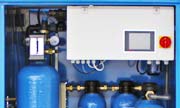
SCM 24
|
|
Cleans 24.000 liters per day
|
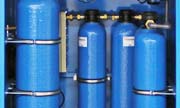
SCM 60
|
|
Cleans 60.000 liters per day
|
Video: How it works
The SCG Advantage
Our market-leading, water cleaning solutions have many advantages. To read more click the items below:
No Chemicals
Our machines and technology does not use any chemicals, at all.
Read more...
No Waste Water
Our machines do not waste any water. Yield = 100%.
Read more...
Low energy use
Uses 50 times less energy than a Reverse Osmosis Machine.
Read more...
Low ownership cost
Lower maintenance and operation costs due to our technology.
Read more...
Easy to install
Simple "plug and play" installation makes for easy deployment.
Read more...
Extremely compact
A compact system, contained in an easy to transport cabinet.
Read more...
Outperforms R.O.
SCG technologies outperform Reverse Osmosis systems.
Read more...
Faster ROI
Get a faster Return on Investment with our systems.
Read more...
Latest News
Latest Blog Posts
| Chemicals in water treatment? |
| Water storage - Whats best for keeping water clean and drinkable? |
| Case: Disaster Management Water Treatment |
Contact SCG
891 Showroom Place
Suite 101
Chula Vista, CA, 91914
Phone: +1 619-878-2730
Contact us by email