







Meeting WHO drinking water guidelines without chemicals
Safe drinking water depends on measured performance, not on whether a treatment system uses chemicals. The World Health Organization (WHO) guidelines set health-based targets for microbiological, chemical and radiological hazards, while each country applies those targets through its own laws, standards and operating rules. A chemical-free process can support compliance when it is properly selected, validated and monitored.
For Australian operators, the practical reference is the Australian Drinking Water Guidelines (ADWG), used by water utilities, councils, state authorities and many private schemes. The requirements can vary according to the source, population served and risk profile. A bore supplying a remote community in Western Australia needs a different control strategy from a town plant drawing water from the Murray or a rainwater system on a Queensland property.
Chemical-free treatment generally means avoiding routine coagulants, disinfectant dosing or regeneration chemicals. It does not mean that testing, electricity, maintenance or a controlled disinfection barrier can be avoided. Processes such as oxidation by air, physical filtration, ultraviolet treatment, membrane separation and specialised adsorption can reduce contaminants without creating chemical sludge or requiring continuous chemical storage.
The strongest approach begins with a source-water assessment and ends with evidence that treated water remains within target limits. This includes sampling at the right points, documenting operating conditions, checking alarms and planning for changing seasons. Floods, drought, bushfires and agricultural runoff can all alter raw water quality across Australia.
| Compliance concern | Chemical-free control | Evidence to retain |
|---|---|---|
| Bacteria and viruses | UV, ultrafiltration, membranes and protected storage | UV dose or membrane integrity records, microbial results |
| Manganese and iron | Aeration or oxygen enrichment followed by catalytic filtration | Raw and treated concentration data, backwash records |
| Arsenic and uranium | Selective adsorption or membrane treatment | Laboratory results, media capacity and replacement records |
| Pesticides and organic compounds | Activated or engineered adsorption and membrane barriers | Target-compound testing, breakthrough monitoring |
| Taste, odour and turbidity | Filtration, adsorption and appropriate pre-treatment | Turbidity trends, inspection and maintenance logs |
Translate health targets into treatment objectives
WHO guideline values are useful benchmarks, but compliance involves more than comparing one final sample with one number. A water safety plan should identify hazards from the catchment through to the tap, assess how likely each hazard is, and assign preventive controls. Microbial risks usually receive the highest priority because contamination can cause illness quickly, while arsenic, uranium, pesticides and manganese require reliable long-term reduction.
The first step is a representative water-quality profile. Test raw water for E. coli, turbidity, pH, conductivity, hardness, iron, manganese, arsenic, uranium, nitrate and relevant pesticides. Add parameters linked to local geology or land use. In parts of regional New South Wales and Queensland, groundwater chemistry can change between bores; in farming districts, seasonal fertiliser and pesticide movement may affect surface water.
A target should include a safety margin below the applicable guideline where practical. It should also define the treated-water flow, peak demand, temperature range and expected contaminant load. This prevents a filter that performs well in a laboratory from being treated as automatically suitable for a busy caravan park, livestock facility or remote health service.
Build barriers around the real source water
A single device rarely provides dependable protection against every hazard. A treatment train may begin with screening and sediment removal, followed by aeration, media filtration, adsorption, ultraviolet treatment or a membrane barrier. The sequence matters: removing turbidity before UV improves light transmission, while reducing iron and manganese before a fine membrane can protect the membrane surface and reduce fouling.
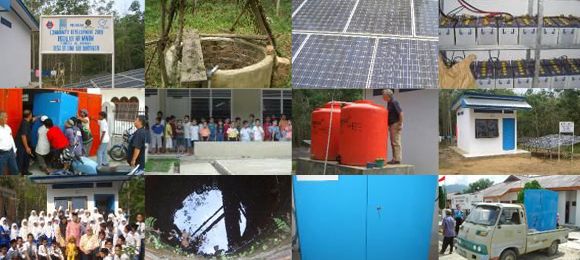
For a remote clinic, reliability and ease of operation are as important as removal efficiency. A useful example is this rural clinic treatment design, where source conditions, available skills, monitoring and continuity of supply need to be considered together. A system that requires frequent specialist visits may be unsuitable for an isolated community, even if its initial laboratory results look impressive.
Physical separation and adsorption can remove many dissolved contaminants without routine chemical dosing. However, the selected media must match the contaminant, pH and competing ions in the source. A supplier should provide performance data at the expected loading, not simply a general claim that a product “treats” arsenic or uranium.
Control microbiological risks without routine dosing
Chemical-free microbial control commonly combines source protection, particulate removal, ultraviolet irradiation, ultrafiltration or reverse osmosis. UV can inactivate bacteria, viruses and protozoa when the delivered dose is adequate and the water is clear enough. It does not remove dissolved chemicals, and it does not provide lasting protection if treated water is stored in a contaminated tank or pipe network.
Ultrafiltration and reverse osmosis create a physical barrier, but they need pressure, good pre-treatment and a plan for concentrate or reject water. Membrane integrity testing, flow monitoring and automatic shutdowns can provide evidence that the barrier is working. For small Australian systems, the choice may depend on whether reject water can be managed responsibly and whether trained operators are available.
WHO-aligned verification should include routine E. coli testing and, where appropriate, additional indicator organisms and operational checks. Record UV intensity, lamp age, turbidity, pressure, flow and storage conditions. A low-cost alarm that identifies loss of UV output or an unusual pressure change can prevent an unnoticed failure between laboratory sampling dates.
Remove chemical and radiological contaminants selectively
Arsenic and uranium are often associated with groundwater and local geology. Manganese can cause black staining, metallic taste and operational problems even when the immediate health risk is lower than a microbial event. The treatment method should be selected after laboratory analysis because the same media can behave differently in water with varying pH, alkalinity, iron and dissolved organic matter.
Aeration can convert dissolved iron and manganese into particles that are captured by specialised filtration. Adsorption media can target arsenic, uranium, pesticides or other dissolved compounds, while membranes can provide broad removal. These are different mechanisms with different maintenance requirements; a design should state the expected removal range, contact time, flow rate and end-of-life indicator.
A useful starting point for site managers is an overview of water pollution risks, particularly when a source may be affected by agriculture, industry, mining or poor sanitation. In Australia, local catchment information and bore construction records can add important context to a laboratory report.
Prove performance through monitoring and records
Compliance is demonstrated through a monitoring programme that connects risks with controls. Raw-water sampling shows what the system receives, process monitoring confirms that barriers are operating, and finished-water sampling shows what reaches consumers. Sampling frequency should reflect the hazard, system size, source variability and advice from the relevant Australian authority.
Keep calibration certificates, laboratory reports, maintenance logs, filter changes, backwash cycles, media replacement dates and alarm events. Trend results rather than filing them as isolated pass-or-fail figures. A gradual rise in treated arsenic, increasing turbidity after backwash or falling UV intensity can reveal deterioration before a formal limit is exceeded.
Operators should also define corrective actions in advance. These may include isolating a bore, switching to stored water, reducing demand, cleaning a membrane, replacing media or issuing a public health notice through the responsible authority. Clear procedures are particularly important for remote Aboriginal communities, mining camps, farms and mobile or emergency systems where the usual technical support may be several hours away.
Manage media, energy and end-of-life responsibly
Chemical-free treatment reduces chemical handling, transport and sludge in many applications, but it is not maintenance-free. Filters need backwashing or replacement, UV lamps lose output, membranes foul and adsorption media eventually become saturated. Backwash water and concentrated membrane reject still need a lawful disposal or reuse pathway.
Media life depends on contaminant loading and operating conditions, not just calendar time. Routine sampling and pressure monitoring are better indicators than replacing every component on an arbitrary schedule. Guidance on media regeneration can help operators assess whether extending media service is technically and economically sound.
Energy use should be considered across the complete system. Gravity-fed filtration may suit some rural sites, while UV, pumps and reverse osmosis require dependable power. Solar and battery systems can support remote installations, but their capacity must cover peak flow, cloudy periods and restart requirements. Designing for repairable components and locally available spares can matter more than achieving the smallest footprint.
A compliant system is a managed chain of decisions: understand the source, select validated barriers, monitor critical limits, maintain equipment and respond quickly when conditions change. Swiss Cleanwater Group can help organisations assess chemical-free treatment options for municipal, rural, agricultural, industrial, livestock, building, pool and mobile applications. Contact the company with recent raw-water analyses, expected flow and the intended use so a practical treatment pathway can be evaluated against WHO and Australian requirements.
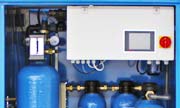
SCM 24
|
|
Cleans 24.000 liters per day
|
SCM 60
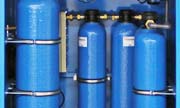
|
|
Cleans 60.000 liters per day
|
Video: How it works
The SCG Advantage
Our market-leading, water cleaning solutions have many advantages. To read more click the items below:
No Chemicals
Our machines and technology does not use any chemicals, at all.
Read more...
No Waste Water
Our machines do not waste any water. Yield = 100%.
Read more...
Low energy use
Uses 50 times less energy than a Reverse Osmosis Machine.
Read more...
Low ownership cost
Lower maintenance and operation costs due to our technology.
Read more...
Easy to install
Simple "plug and play" installation makes for easy deployment.
Read more...
Extremely compact
A compact system, contained in an easy to transport cabinet.
Read more...
Outperforms R.O.
SCG technologies outperform Reverse Osmosis systems.
Read more...
Faster ROI
Get a faster Return on Investment with our systems.
Read more...
Latest News
Latest Blog Posts
| Chemicals in water treatment? |
| Water storage - Whats best for keeping water clean and drinkable? |
| Case: Disaster Management Water Treatment |
Contact SCG
891 Showroom Place
Suite 101
Chula Vista, CA, 91914
Phone: +1 619-878-2730
Contact us by email