








Maintaining Reliable Water Quality Through Seasonal Demand
Water quality can change when demand rises faster than a treatment system was designed to handle. Holiday populations, heatwaves, irrigation periods and emergency supply conditions may increase flow rates, alter storage times and place additional pressure on pumps, filters and disinfection stages.
For Australian operators, these shifts are familiar. Coastal towns can experience sharp summer tourism peaks, while inland communities may face long dry periods, bushfire-related disruptions and high agricultural demand. Facilities in Sydney, Melbourne, Brisbane and regional centres must maintain consistent water quality even when daily consumption changes quickly.
A reliable approach combines treatment capacity, operational monitoring and planned maintenance. The objective is to keep water within specification at the point of use, rather than simply increasing production whenever demand rises. This requires attention to raw water conditions, peak flow, storage tanks and the performance of each treatment stage.
Swiss Cleanwater Group develops systems for municipal, agricultural, industrial, building and mobile applications. Its focus on low-chemical and energy-conscious treatment can help operators build a more resilient supply strategy while addressing contaminants such as manganese, arsenic, bacteria, pesticides and uranium.
Map Seasonal Demand Before It Arrives
A useful demand assessment begins with historical production and consumption data. Compare average daily flow with maximum hourly flow, then identify the months when schools, hotels, farms, swimming pools or food-processing sites use the most water. In Australia, summer demand may rise through garden irrigation, evaporative cooling and increased visitor numbers.
Demand forecasting should include unusual events rather than relying only on annual averages. A regional facility near a popular beach may need additional capacity during the Christmas and New Year period. A livestock operation may require greater volumes during prolonged heat, while a council may need reserve capacity during a bushfire response.
Use these forecasts to review the treatment plant’s hydraulic loading, storage volume and recovery time. A system that performs well at its average flow may have insufficient contact time or filtration capacity during short, intense peaks.
Protect Treatment Performance at Peak Flow
Higher flow can reduce the time water spends inside a filter, reactor or contact vessel. When this happens, contaminants may pass through before the treatment media has completed its work. Pumps operating near their upper limit may also create unstable pressure, uneven flow distribution or frequent shutdowns.
Flow pacing, parallel treatment trains and variable-speed pumping can help match output to demand. Where practical, operators should keep a standby unit available so maintenance can occur without taking the entire plant offline. Automatic controls should be tested under both low-flow and high-flow conditions.
Pressure gauges and flow meters provide early warnings when a filter is loading or a pump is losing efficiency. Recording these readings during peak periods makes it easier to distinguish a temporary demand surge from a developing equipment fault.
Monitor Raw Water and Finished Water
Seasonal changes in rainfall, temperature and groundwater levels can alter raw water quality. Heavy rain may carry sediment and organic matter into surface water, while drought can concentrate naturally occurring minerals. Warm conditions may increase biological activity in tanks, pipes and source waters.
A monitoring programme should track turbidity, pH, conductivity, temperature and disinfectant residual where relevant. Site-specific testing may also be needed for manganese, arsenic, iron, pesticides, bacteria or uranium. Operators should establish trigger levels that prompt investigation before finished water moves outside its target range.
The chemistry of hydrogen sulfide is another example of why source monitoring matters. Changes in groundwater conditions can produce odour and taste problems, and this catalytic filtration guide explains how specialised media can support treatment without relying on a simple seasonal increase in chemical dosing.
Manage Storage Tanks and Distribution Networks
Storage provides flexibility when demand varies, but tanks can also create quality risks if water remains stagnant for too long. Low turnover may encourage sediment accumulation, temperature stratification or loss of disinfectant residual. During a sudden demand increase, disturbed sediment can then enter the distribution network.
Review tank sizing against both peak demand and minimum turnover requirements. Inspect internal surfaces, confirm inlet and outlet arrangements and schedule cleaning according to risk and water quality data. Where several tanks exist, operational controls should prevent one vessel from becoming an overlooked dead-end.
Distribution mains also require attention. Pressure changes caused by rapid pump starts or high consumption can expose leaks and draw contaminants into damaged sections. Maintaining stable pressure, checking backflow prevention and flushing selected low-use areas can protect quality across the network.
Schedule Maintenance Around Demand Patterns
Preventive maintenance is most effective when it is completed before the high-use period begins. Replace worn seals, inspect valves, calibrate instruments and verify alarms during a planned service window. Filter media should be assessed for fouling, channeling or exhaustion rather than replaced solely on a fixed calendar date.
A seasonal maintenance plan should identify critical spares and the personnel responsible for each response. Remote Australian sites may face long delivery times for pumps, sensors or specialised media, so holding essential components locally can reduce downtime.
Backwashing and cleaning schedules may need adjustment during high demand. Excessive backwashing can waste treated water, while insufficient cleaning can increase head loss and reduce treatment efficiency. The correct interval should be based on differential pressure, water quality and actual operating conditions.
Choose Contaminant Control for Local Conditions
A demand increase does not create every water quality problem, but it can expose weaknesses in treatment. For example, higher production may increase the amount of manganese or arsenic entering the process each day, while changing source conditions may affect the form in which a contaminant appears.
Treatment selection should follow source-water testing and the required output quality. Operators investigating arsenic in drinking water should consider concentration, chemical form, competing minerals, flow rate and media replacement requirements. The same principle applies to pesticides, bacteria, uranium and other contaminants.
Chemical-free or low-chemical processes can reduce handling requirements and residual waste, but they still require correct sizing and monitoring. A system should be evaluated for its performance at the expected peak flow, not just its nominal or average capacity.
Build a Practical Response Plan
A seasonal water-quality plan should set out normal operating ranges, alert levels and escalation steps. Staff need to know when to increase sampling, reduce production, switch treatment trains or notify a responsible manager. Clear procedures are particularly important for councils, schools, farms and remote industrial sites where operators may work across several duties.
The plan should include communication with laboratories, contractors, regulators and customers. Australian water providers commonly work within the framework of the Australian Drinking Water Guidelines, while individual projects may have additional licence, health or industrial requirements. Records should show what changed, when it changed and how the response affected water quality.
The following comparison can help operators match common controls to seasonal risks:
| Seasonal risk | Likely effect | Useful control | Performance check |
|---|---|---|---|
| Summer tourism surge | Higher hourly demand and faster storage turnover | Parallel treatment trains and flow pacing | Peak-flow pressure and outlet quality |
| Prolonged drought | Concentrated minerals and reduced source availability | More frequent source testing and adaptive treatment | Conductivity, contaminant levels and recovery |
| Heavy rainfall | Turbidity and organic matter increase | Pre-treatment, staged filtration and extra sampling | Turbidity before and after treatment |
| Irrigation or livestock peak | Large short-term withdrawals | Dedicated storage and priority controls | Tank levels, pump duty and demand records |
| Low winter occupancy | Stagnant sections and reduced turnover | Controlled flushing and tank management | Residual disinfectant and microbiological results |
Consistent water quality depends on preparation well before demand reaches its seasonal high. Review flow data, test source water, maintain treatment equipment and verify storage turnover before the next peak period begins.
For municipalities, farms, industries, buildings and mobile applications, Swiss Cleanwater Group can help assess treatment needs and develop systems suited to changing operating conditions. Explore the available water treatment technologies and contact the company to discuss a dependable approach for your site.
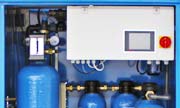
SCM 24
|
|
Cleans 24.000 liters per day
|
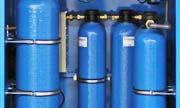
SCM 60
|
|
Cleans 60.000 liters per day
|
Video: How it works
The SCG Advantage
Our market-leading, water cleaning solutions have many advantages. To read more click the items below:
No Chemicals
Our machines and technology does not use any chemicals, at all.
Read more...
No Waste Water
Our machines do not waste any water. Yield = 100%.
Read more...
Low energy use
Uses 50 times less energy than a Reverse Osmosis Machine.
Read more...
Low ownership cost
Lower maintenance and operation costs due to our technology.
Read more...
Easy to install
Simple "plug and play" installation makes for easy deployment.
Read more...
Extremely compact
A compact system, contained in an easy to transport cabinet.
Read more...
Outperforms R.O.
SCG technologies outperform Reverse Osmosis systems.
Read more...
Faster ROI
Get a faster Return on Investment with our systems.
Read more...
Latest News
Latest Blog Posts
| Chemicals in water treatment? |
| Water storage - Whats best for keeping water clean and drinkable? |
| Case: Disaster Management Water Treatment |
Contact SCG
891 Showroom Place
Suite 101
Chula Vista, CA, 91914
Phone: +1 619-878-2730
Contact us by email