







Retrofitting a Chemical Water Treatment Plant Without Chemicals
Converting an existing chemical water treatment plant to chemical-free operation is rarely a matter of replacing one dosing pump with one new filter. It is a process redesign that must account for raw-water quality, seasonal variation, hydraulic conditions, operator routines, discharge requirements, and the condition of the current assets.
A well-planned retrofit can reduce chemical purchasing, sludge production, storage risks, transport requirements, and energy consumption. It can also make drinking-water production more predictable when the treatment train is designed around the specific contaminants present in the source.
The objective is not simply to remove chemicals from the process diagram. The objective is to achieve reliable contaminant removal through physical separation, controlled oxidation, adsorption, biological activity, ultraviolet disinfection, membranes, or combinations of these technologies while using as much existing infrastructure as practical.
Establish The Retrofit Baseline
The first stage is a detailed assessment of the water source and the existing plant. Test results should cover ordinary operating conditions as well as difficult periods, such as heavy rainfall, drought, snowmelt, flooding, or changes in groundwater levels. Important parameters may include turbidity, pH, alkalinity, temperature, hardness, iron, manganese, arsenic, uranium, pesticides, nitrate, organic matter, bacteria, and emerging contaminants.
Historical operating data is equally valuable. Review chemical consumption, backwash frequency, sludge volumes, filter run times, pressure losses, pump performance, laboratory results, maintenance records, and regulatory incidents. This information shows whether the current problems come from the chemistry itself, unsuitable contact time, poor hydraulics, inadequate filtration, or inconsistent operation.
A plant survey should map tanks, pipework, valves, electrical panels, control systems, chemical rooms, sludge lines, and available floor space. Existing basins may be suitable for aeration, contact filtration, or biological treatment. However, a tank that appears usable may have damaged coatings, inaccessible internals, or hydraulic short-circuiting. Early verification prevents costly assumptions later.
Match Treatment Technology To Contaminants
Chemical-free treatment works best when each contaminant is matched with a process that uses its natural physical or chemical behavior. Dissolved manganese and iron, for example, can often be treated through aeration or oxygen enrichment followed by catalytic media filtration. The media promotes oxidation and captures the resulting particles without continuous chemical dosing.
Arsenic removal may depend on oxidation state, competing ions, pH, and the concentration of iron in the raw water. Adsorptive media, specialized filtration, or membrane treatment may be appropriate, but pilot testing is essential. Uranium can require ion-selective adsorption, membrane separation, or another targeted process. Pesticides and other dissolved organic compounds may call for activated carbon or advanced membrane systems.
Microbiological safety requires a separate design decision. Ultraviolet treatment can provide disinfection without adding residual chemicals, provided that turbidity, ultraviolet transmittance, dose, lamp maintenance, and flow control are managed correctly. In some distribution networks, a residual disinfectant may still be required by local rules. A chemical-free production process must therefore be evaluated together with the complete supply system, not only the treatment building.
Use Existing Assets Strategically
Retrofitting does not mean preserving every component. Existing clarifiers, rapid filters, clear-water tanks, pumps, and pipe galleries can often be reused, while obsolete dosing equipment, poorly performing filters, or sludge-handling systems may be removed. The most economical design usually combines retained civil works with new treatment modules and upgraded controls.
Hydraulic compatibility is central. New equipment must operate within the available head, flow range, and backwash capacity. A filter that performs well in a factory test can fail on site if the available backwash rate is too low or if the inlet arrangement distributes water unevenly. Engineers should check peak flow, minimum flow, bypass routes, drainage, air supply, and the effect of each new pressure loss.
Control systems also deserve attention. Chemical plants often regulate dosing according to flow, pH, oxidation-reduction potential, or online contaminant readings. A chemical-free plant may instead need controls for air injection, valve sequencing, filter loading, ultraviolet intensity, membrane pressure, conductivity, or media regeneration. Automated alarms should identify declining performance before treated water quality is affected.
The change in sludge management can be substantial. Conventional coagulation and precipitation can produce large quantities of chemically bound sludge, while physical filtration, adsorption, and oxidation-based processes may reduce waste volumes. This analysis of sludge reduction methods explains why waste minimization should be considered during process selection rather than treated as an afterthought.
Compare Treatment Options Before Construction
A practical comparison should include capital cost, operating cost, waste generation, footprint, energy use, operator requirements, and sensitivity to changes in raw-water quality. The cheapest equipment purchase may not be the least expensive solution over its service life. Media replacement, membrane cleaning, lamp renewal, backwashing, disposal, and monitoring all influence the total cost.
| Treatment approach | Typical role | Main operating needs | Waste and energy profile |
|---|---|---|---|
| Aeration with catalytic filtration | Iron and manganese removal | Air control, filter backwash, media monitoring | Low chemical waste; modest energy use |
| Activated carbon adsorption | Pesticides, taste, odor, organic compounds | Breakthrough testing, carbon replacement | Limited liquid waste; media disposal or regeneration |
| Ultraviolet disinfection | Bacteria and viruses | Lamp cleaning, intensity monitoring, reliable prefiltration | No chemical residual; low to moderate electricity use |
| Membrane separation | Dissolved salts, uranium, microbes, selected contaminants | Pressure, pretreatment, cleaning, concentrate management | Higher energy; produces a concentrate stream |
| Biological filtration | Biodegradable organics, ammonia, selected nutrients | Stable loading, oxygen management, biomass control | Low chemical use; requires biological process stability |
Pilot testing should run long enough to capture changing water quality and realistic operating cycles. Short demonstrations may confirm removal efficiency but fail to reveal media exhaustion, biological instability, membrane fouling, or poor backwash performance. The pilot should measure treated-water quality, pressure loss, flow stability, cleaning frequency, waste production, and operator workload.
A pilot also provides the evidence needed for approval. Regulators and plant owners typically require validated performance under defined conditions, including startup, shutdown, peak flow, abnormal raw-water quality, and equipment failure scenarios. Data from a controlled pilot makes the final design easier to defend and refine.
Plan The Conversion In Phases
A phased conversion lowers operational risk. Where possible, one treatment line can remain in service while another is modified. Temporary pipework, bypass arrangements, storage capacity, or mobile treatment units may be required to maintain supply during construction. The commissioning schedule should identify periods when the plant can operate at reduced flow and when water must be supplied from another source.
The chemical system should not be disconnected until the replacement process has demonstrated stable performance. During the transition, chemical dosing may remain available as an emergency safeguard, but it should not conceal weaknesses in the new design. Clear changeover criteria should define the required treated-water quality, production rate, equipment availability, and duration of successful operation.
Operator training is part of the retrofit, not a final handover task. Staff need to understand new alarm conditions, filter ripening, backwash sequences, ultraviolet safety, membrane protection, media replacement, sampling points, and emergency response. Standard operating procedures should explain what to inspect daily, what trends to review, and when specialist support is required.
The project should also include a plan for decommissioning chemical storage, bunds, dosing lines, and unused pipework. Some rooms can be converted into electrical, instrumentation, laboratory, or spare-parts areas. Other equipment may contain residues that require safe cleaning and disposal. Removing redundant infrastructure can improve workplace safety and release valuable space for future expansion.
Verify Performance After Startup
Performance verification should continue beyond the commissioning week. Collect samples at the raw-water inlet, intermediate stages, final outlet, and distribution entry point where relevant. Compare results with the baseline and the pilot data, paying close attention to seasonal behavior and changes in filter loading.
Key indicators include contaminant removal, microbial compliance, flow rate, pressure loss, backwash water use, electricity consumption, media condition, ultraviolet dose, membrane performance, and unplanned downtime. A dashboard that combines water quality with operational data can reveal trends that individual laboratory results may miss.
The retrofit should have defined acceptance criteria and a documented optimization period. During this period, operators may adjust air flow, filter loading, backwash timing, ultraviolet dose, or treatment sequencing. Any adjustment should be recorded so that the final operating envelope is based on evidence rather than informal habits.
Experience from long-established water treatment projects can help guide this process. The history of water treatment shows how treatment methods have developed in response to changing public-health needs, available resources, and environmental expectations. Modern retrofits build on that progression by combining proven separation principles with better monitoring and automation.
Set Priorities For A Reliable Retrofit
A successful conversion depends on disciplined preparation and realistic expectations. The following priorities help keep the project focused:
- Characterize raw water across seasons before selecting equipment or media.
- Preserve useful civil infrastructure, but replace components that limit hydraulic or treatment performance.
- Run a pilot with realistic flow, backwash, cleaning, and contaminant-loading conditions.
- Design monitoring and controls around the new process rather than copying chemical-plant settings.
- Include waste handling, operator training, regulatory validation, and emergency operation in the budget.
The right design will vary between a rural groundwater station, a municipal surface-water plant, an industrial facility, and a mobile treatment unit. Independent verification, maintainable equipment, and access to technical support are especially important where local operators must manage the system with limited staff.
Swiss Cleanwater Group provides chemical-free water solutions for applications ranging from municipal drinking-water production to industry, agriculture, livestock, buildings, pools, and mobile operations. Its specialists can assess the existing process, identify retrofit opportunities, and develop a treatment concept based on the source water and required output.
Begin with a site survey, a complete water analysis, and a review of the current plant records. Those three steps create the foundation for a practical conversion that reduces chemical dependence while protecting drinking-water quality, operational continuity, and long-term sustainability.
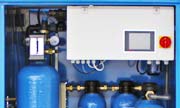
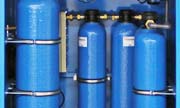
SCM 24
|
|
Cleans 24.000 liters per day
|
SCM 60
|
|
Cleans 60.000 liters per day
|
Video: How it works
The SCG Advantage
Our market-leading, water cleaning solutions have many advantages. To read more click the items below:
No Chemicals
Our machines and technology does not use any chemicals, at all.
Read more...
No Waste Water
Our machines do not waste any water. Yield = 100%.
Read more...
Low energy use
Uses 50 times less energy than a Reverse Osmosis Machine.
Read more...
Low ownership cost
Lower maintenance and operation costs due to our technology.
Read more...
Easy to install
Simple "plug and play" installation makes for easy deployment.
Read more...
Extremely compact
A compact system, contained in an easy to transport cabinet.
Read more...
Outperforms R.O.
SCG technologies outperform Reverse Osmosis systems.
Read more...
Faster ROI
Get a faster Return on Investment with our systems.
Read more...
Latest News
Latest Blog Posts
| Chemicals in water treatment? |
| Water storage - Whats best for keeping water clean and drinkable? |
| Case: Disaster Management Water Treatment |
Contact SCG
891 Showroom Place
Suite 101
Chula Vista, CA, 91914
Phone: +1 619-878-2730
Contact us by email